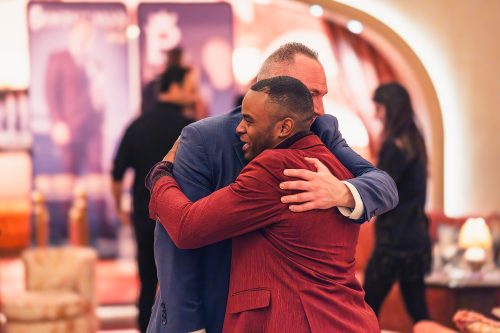
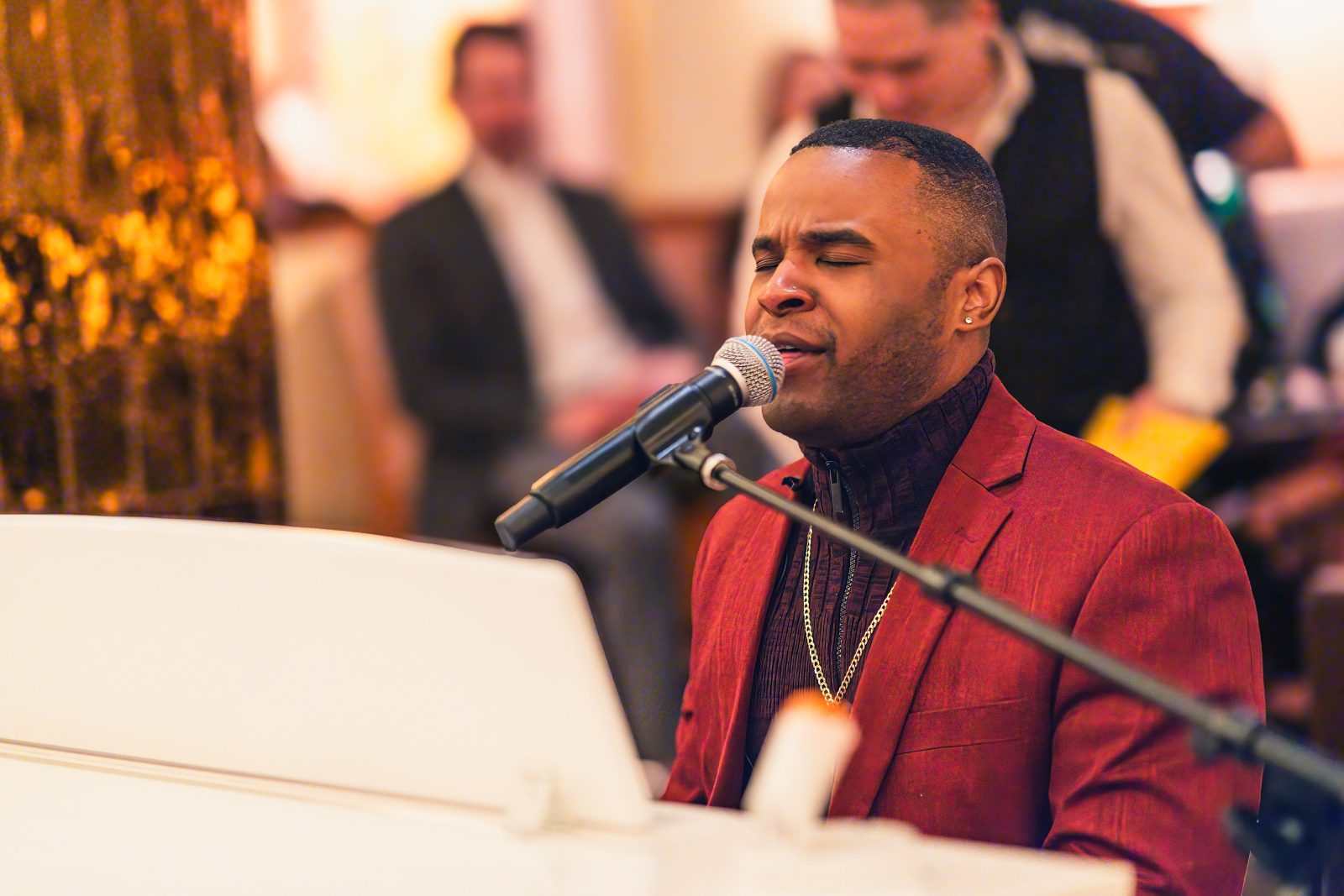
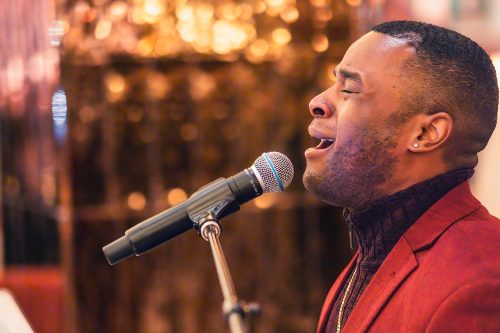
GREENVILLE, NORTH CAROLINA is the kind of place where the soil stains your canvas sneakers and the Sunday morning choir leaves a permanent residue on your soul. It’s a town built on tobacco, heat, and a very specific iteration of the Black musical tradition—one where the sacred and the secular don’t just coexist; they slow-dance. For me, Greenville was the launchpad. But Boston, Massachusetts, with its unforgiving winter asphalt and institutional cold, is where the currency of my Southern upbringing had to be cashed in.
To understand my journey is to understand the post-soul migratory aesthetic: taking the raw, unvarnished grace of the gospel circuit and dropping it squarely into the hyper-urban, competitive ecosystem of New England. It’s a sonic collision that defines my music—a blend of country-fried church phrasing and northern pavement hustle.
The Kinship of the Chord
Before there was the solo spotlight, there was the collective anonymity of blood. At just eight years old, I was hunting for melodies on the piano, bypassing formal sheet music to decode the instrument strictly by ear. It’s the classic, foundational marker of Black musical genius—intuitive, rhythmic, and deeply communal. Soon enough, I wasn’t playing alone. Along with my four brothers—Robert Jr., Erick, Derrick, and Christopher—I anchored The Price Boyz.
We hit the national gospel highway, vacuuming up trophies from competitions that demand absolute vocal perfection. On the gospel circuit, if your three-part or five-part harmony slips by a semi-tone, the congregation knows it instantly. That conditioning paid off when my brothers and I migrated north and took to the concrete of Downtown Crossing.
Street busking is the ultimate meritocracy. Passersby don’t care about your resume; they care about whether you can arrest their stride while they’re rushing to the subway. We had that arrest power. A local connector named James Mackey heard the vibration, stopped, and booked us our first institutional gig: a Black History Month showcase at the Massachusetts State House.
The Bivins Co-Sign and the Falsetto Currency
Inside the historically white, austere walls of the State House, my brothers and I unleashed a five-piece vocal architecture that fundamentally shifted the room. In the crowd was Terry “T-WALK” Walker, a man whose ears are tuned to the specific frequency of street-level talent. T-WALK didn’t just clap; he recognized a commodity. He stepped in as my manager and, within days, bypassed the usual industry red tape to orchestrate a sit-down at the Teen Center of the Roxbury YMCA.
The gatekeeper waiting for us was Michael Bivins, the architect of New Edition and Bell Biv DeVoe—a man who understands exactly how to package Boston street style for global consumption.
The audition was intense, but Bivins saw the lineage. Crucially, it was my solo capability that disrupted the evaluation. Bivins singled me out, transfixed by a vocal range that weaponized melodic runs and climbed effortlessly into a piercing, crystalline falsetto. That falsetto wasn’t an accident of anatomy; it was genetic currency inherited directly from my parents, Robert Sr. and Tonya Price.
That audition punched my ticket. At sixteen years old, I found myself cast in the first episode of the cultural touchstone The New Edition Story, fronting the fictionalized “The Untouchables (Beano Boyz Crew)” and re-interpreting Blue Magic’s classic “Spell.” It was a masterclass in nostalgia, using yesterday’s R&B vocabulary to secure tomorrow’s check.
Going Solo on the Big Stage
The paradox of the family group is that the very harmony that sustains you eventually becomes a cage. My brothers and I made the difficult, calculated decision to disband, allowing me to pivot into the vulnerability of a solo career.
In the years since, I have systematically checked off the boxes of Boston’s secular sports cathedrals. My resume reads like a promoter’s dream:
- TD Garden & Fenway Park
- Gillette Stadium
- MGM Music Hall at Fenway
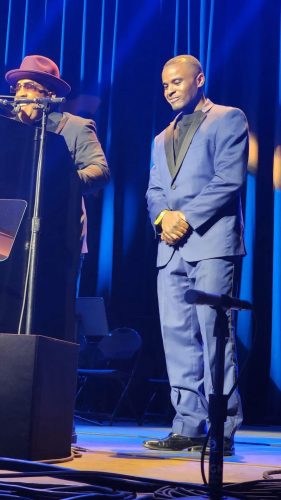
At the 2025 Boston Arts Academy Foundation HONORS Awards, the trajectory came full circle. Returning to the MGM Music Hall stage as an alumnus of the Boston Arts Academy, I shared the marquee with R&B royalty Johnny Gill. Navigating the same stage as an icon of the New Edition family line underscored the continuity of the genre for me.
That cultural impact is precisely why I find myself sharing the current pages of BostonMan Magazine with Denella Clark, the formidable President of BAAF (Boston Arts Academy Foundation) and the executive producer of HONORS. Clark understands what the record executives often forget: that the arts aren’t a luxury for urban youth; they are a lifeline.
The Long Road Ahead
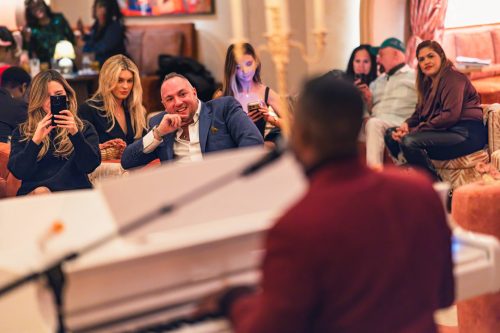
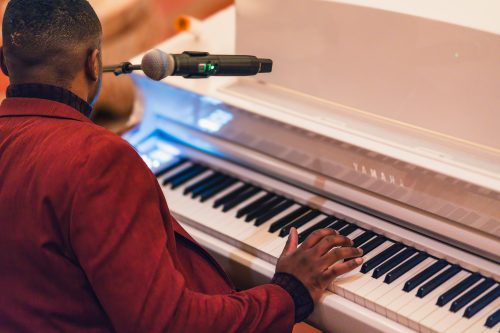
For all the stadium echoes and the high-profile media real estate—including intimate sets for publisher Matt Ribaudo’s Legacy Club at the My Girl Piano Lounge—I remain anchored by a foundational Southern piety. My operational ethic is sparse: “God First” and “Say Less & God Bless.” In an industry designed to chew up young talent and spit out hyper-commercially compromised shells, that spiritual ballast is what keeps my feet on the floorboards.
I’m not just looking for chart positions; I’m looking for institutional longevity. I talk openly about transitioning into a professional music educator, ensuring that the vernacular of Black vocal harmony isn’t lost to the digital algorithms.
Whether I’m teaching the next generation or standing at the fifty-yard line in a stadium full of screaming fans, the mission remains identical. From Greenville to the Commonwealth, I am proof that the voice, when rooted in the truth of the church and sharpened by the reality of the northern streets, will always find its audience.