How Kylian Mbappe, Boston Soccer 26 and the World Cup Reminded us of Who We Are
Posted byMatt Ribaudo
October 15, 2026
October 15, 2026
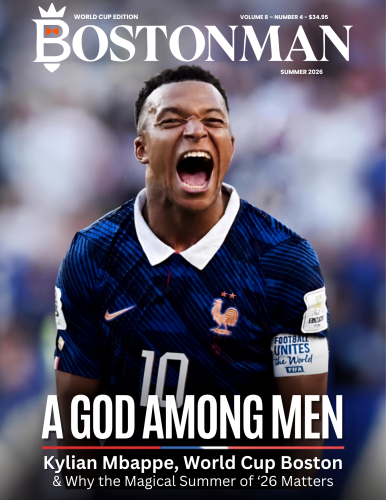
Cover Image by Buda Mendes // Cover Design by Matt Ribaudo
IF YOU WALKED into The Dubliner on Government Center or The Banshee in Dorchester on any given night during the blistering summer of 2026, you didn’t just hear the clinking of glasses or the roar of a crowd.
You heard a symphony of humanity.
You heard the deep, guttural chants of the Scottish Tartan Army harmonizing with the rhythmic drumming of Moroccan supporters. You saw local financial executives sharing tables with visiting families from Paris, Buenos Aires, and Bogota.
For forty unforgettable days, a city historically labeled by outsiders as insular did something breathtaking: it became what it once was, and always been meant to be: The Living Room of The World.
FIFA World Cup 2026 was not merely a sports tournament for Boston; it was a profound civic awakening. Across seven matches hosted at Boston Stadium, which drew nearly 450,000 stadium attendees and millions more to vibrant local fan zones, our city underwent a historic transformation.
In a region known for its rigorous work ethic and professional grit, the Summer of 2026 injected a powerful, unifying dose of love, embracement, and raw humanity into our daily lives.
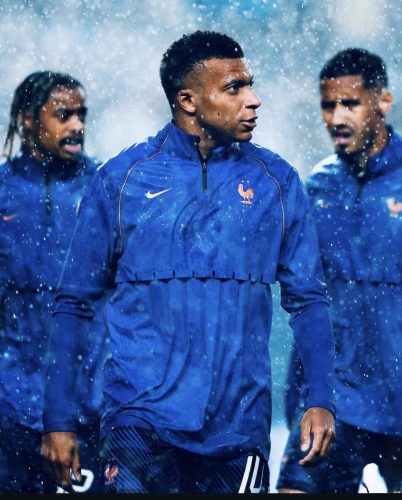
From the unmatched economic windfall that revitalized our hospitality sector to the awe-inspiring, superhuman presence of French captain Kylian Mbappé, Boston didn’t just host the world—it grew up with it.
Image via Boston World Cup 26
The Architectural Triumph
For the Boston professional community, the success of the World Cup is a masterclass in civic infrastructure, high-stakes negotiation, and corporate execution.
Leading up to June, critics wondered if the transit lines and localized governance could bear the weight of a truly global influx.
The massive obstacles stacked against the local organizing committee, known formally as Boston Soccer 26, were immense. They were a lean team racing against relentless deadlines while navigating funding gridlocks at the State House and high-profile disputes over regional security costs.
“The pressure leading up to this tournament was overwhelming,” admits Mike Loynd, President and CEO of the Boston Soccer 2026 host committee.
“We were running on fumes at times, balancing the strict operational requirements of FIFA against local logistical realities. Taking a massive asset like Gillette Stadium offline from its traditional summer business model for two full months to temporarily rebrand as Boston Stadium required a total, unified leap of faith from the Kraft family and our state officials.”
Rather than stumbling under the global spotlight, Loynd’s committee operated with corporate agility, establishingimmediate, iterative feedback loops. When transit delays bottlenecked South Station during the initial matches, the committee quickly collaborated with the MBTA to dynamically optimize train frequencies.
“I love the way Boston came together,” Loynd reflects warmly. “We worked tirelessly for over two years to build a framework capable of holding this tournament. When we look at the sheer joy of the fans from the first kickoff with Scotland and Morocco, it is clear we were blessed. We proved that when Boston’s civic, corporate, and political leaders row in the same direction, there is absolutely no international event we cannot flawlessly deliver.”
Geroge Regan, founder of PR powerhouse Regan Communications, knows the significance of flawless deliveries.
“A monumental civic victory requires an equally monumental messaging strategy,” he said.
To bridge the gap between regional skepticism and international prestige the local host committee relied heavily on community partners.
“It was important to position Boston not just as a sports city, but as an open, sophisticated global hub ready to embrace diverse cultures,” he explained. “Boston is Boston, but the Krafts paved the way so the World Cup would be a success.”
Through aggressive localized storytelling and precise crisis communications management, Regan’s team successfully converted commuter anxiety into immense civic pride, ensuring local corporate buy-in was absolute.
For sharp observers of Boston’s history, the supreme, poetic symmetry of Regan’s central role in the Summer of 2026 was deeply moving.
Exactly fifty years earlier, in 1976, a young George Regan was operating at the right hand of legendary Mayor Kevin White. The mid-1970s in Boston were defined by a city tearing itself apart at the seams—paralyzed by bitter racial bickering, historic desegregation turmoil, and fierce political infighting.
Yet, against all odds, Regan and Mayor White engineered a logistical and cultural miracle by welcoming Queen Elizabeth II to the Hub for America’s Bicentennial.
Just as it did under the gaze of Kylian Mbappé in 2026, the city in 1976 paused all internal fighting, laid down its tribal weapons, and stood together to celebrate with the world, with Boston shining brightly at its hub.
Regan’s career stands as the definitive bridge across half a century of Boston’s civic evolution, proving that whenever our city is called upon to open its doors to global majesty, we have always possessed the capacity to rise above our fractures and claim the world stage.
Image via Kylian Mbappe Instagram
Welcoming The Supreme Commander
It is easy to get caught up in the festive folklore of World Cup 2026.
The media loved the colorful sidebar of the Scottish Tartan Army—their kilts, their traffic-cone antics, and their wild, late-night revelry through the bars of downtown Boston.
They were happy to be here, content to leave American soil with a collection of tall tales, a legendary party reputation, and a collective participation trophy.
But anyone who thinks the core thesis of World Cup Boston was about standard tourism and tourist spectacles completely misses the point.
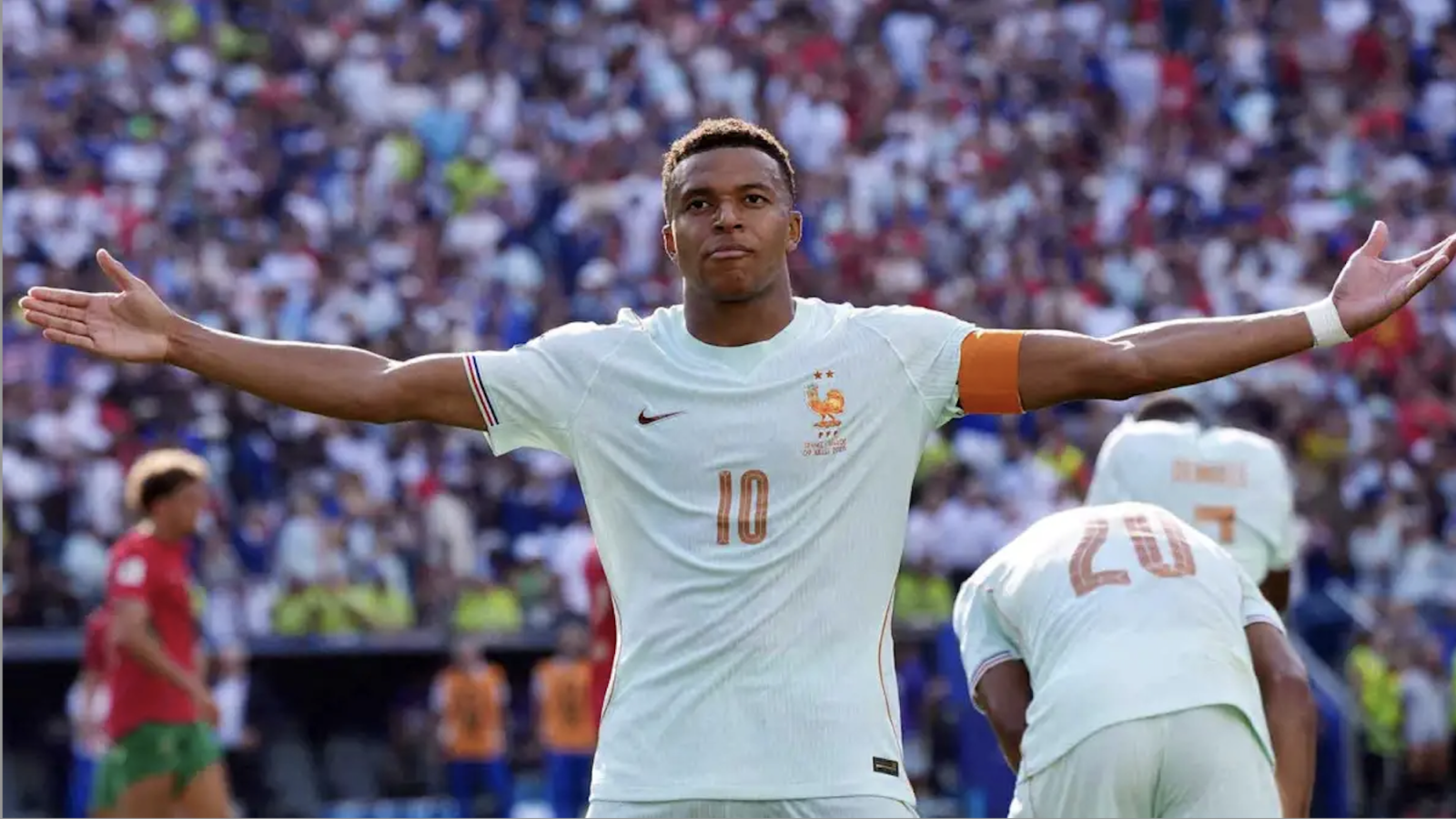
The true gravity of this summer rested on the shoulders of the great field dictator, Kylian Mbappé.
He and his French army did not cross the Atlantic to celebrate or mingle; they arrived with absolute, singular focus, operating as the elite, supreme footballing machine they are.
Their objective on the field was execution. Off it was something far more permanent.
Though their run did not conclude with lifting a golden trophy, the statement Mbappé left behind was grander than any piece of silverware. It was a calculated manifesto of global healing and raw humanity.
It is the very message staring back at us from the cover of BostonMan Magazine, wrapped tightly around the superstar’s left bicep: “Football Unites the World.”
“When I look down at my arm on the field, I do not just see a piece of plastic or a captain’s band,” the greatest soccer player in the world explains. “The words ‘Football Unites the World’ are a strict command.”
The message has deeper meaning for him.
In Europe, in Africa, and now here in America, our societies are fracturing under the weight of severe divisions. People are angry, they are isolated, and they have forgotten how to see each other’s humanity.
Soccer is the only remaining global canvas where two conflicting nations can stand in the same stadium, breathe the same air, and share a singular emotion.
I wear this brace as a reminder to myself and to every child watching from the streets of Boston or Paris: our talent is not a weapon to divide, it is a tool to heal.
Mbappé used the global stage of the Hub to prove that absolute power and elite discipline can be wielded to bridge divides, elevating the sport from a mere game into a profound tool for global solidarity.
Mbappe credits a built culture of “absolute internal discipline” which he noticed Bostonians respected and responded to, ultimately allowing the French team’s presence to forge a permanent signature on the city.
“We arrived in Massachusetts with a singular, supreme operational focus,” Mbappe said. “When you step onto that pitch under the eyes of millions, you are carrying the dreams of an entire republic. If your focus wavers for even one millisecond because you are caught up in the festival atmosphere, you fail your country. Boston identified with that.”
Image via Kylian Mbappe Instagram
The Presence of Immortality
Over my life and career, I have been incredibly fortunate to see many of the absolute greats play in person.
Brady, Bird, Gretzky, Tiger, Kobe.. the list goes on.
I was even fortunate enough on multiple occasions to watch Michael Jordan dominate the hardwood. And while Jordan commanded the arena, even he never received the same staggering, paradoxical level of awe, fear, love, inspiration, hate, respect, and outright worship that the great Mbappé inspired this summer.
On July 9th, as I sat there in Gillette Stadium trying to process the energy vibrating through the crowd, my mind raced backward through an encyclopedia of sports memories.
The closest—and frankly, the only thing—I can recall having a true resemblance to this feeling was watching Len Bias play when I was a young boy.
Bias carried an ethereal, larger-than-life aura that made you feel you were witnessing something transcendent, something that shifted the atmosphere around him.
Seeing Mbappé in Boston brought that exact, rare lightning back into a bottle. It wasn’t just a soccer match; it was an event that commanded a suspension of reality, forcing an entire stadium to collectively bow to generational genius.
Image via Boston World Cup 26
The French Alliance and America 250
The supreme irony of this cultural triumph was not lost on historians or sharp-minded Bostonians.
This magical tournament unfolded precisely as the nation marked its historic America 250 semi-quincentennial celebrations.
In the months leading up to the summer of 2026, the United States was locked in a familiar cycle of gridlock—paralyzed by extreme politics from both the left and the right, weighed down by public exhaustion, and buried under a thick cloud of national uncertainty.
Yet, looking through the lens of history, we often forget that the birth of our nation was defined by the exact same frailty. The American Revolution was not a monolith of unified patriotism; it was marked by brutal inner bickering, deep ideological conflict, factional infighting, and crippling doubt within the American ranks.
In those darkest hours, George Washington’s Continental Army was all but structurally defeated, starved of resources, and retreating.
It wasn’t until the arrival of the French forces and the youthful, idealistic Marquis de Lafayette on American soil that the tide finally turned, breathing life, funding, and tactical brilliance back into a fractured revolution.
History rhymed beautifully in the Summer of 2026. Into a modern America deeply fragmented by hyper-partisan noise stepped another great French leader of men: Kylian Mbappé.
And it happened here in Boston—the true, undisputed birthplace of American liberty.
When Mbappé took the pitch and walked our streets, something extraordinary happened to our political climate. For forty days, the shouting stopped. Americans on both the left and the right could not help but look up from their phones, step out of their ideological echo chambers, and be fundamentally inspired.
By watching a foreign captain lead with pure, unadulterated excellence, unselfishness, and profound humanity, a divided city found a common language.
The French National Team established their one-month base camp right in the heart of the Boston area, creating an intimate connection with the local community.
Rather than isolating themselves behind closed doors, Les Bleus integrated seamlessly into New England life. For Mbappé, the experience left an indelible mark on his worldview and his team’s identity.
“We did not just find a training camp in Boston; we found a home,” Mbappé stated. “The energy of the city is incredibly unique. It is a place of deep intellect and intense focus, but we felt an immense warmth from the people from the moment we arrived. To see the French flag flying outside historic brownstones and to hear children shouting ‘Allez les Bleus’ across Boston Common was deeply moving for our entire delegation.”
Mbappé emphasized that the month spent in the city forged a distinct bond that fueled their deep run to the final weekend.
“In soccer, your environment dictates your mindset. Training in an atmosphere of mutual respect, love, and humanity allowed us to play with free minds,” he said. “Boston’s passion for excellence mirrors our own. For France, the Summer of 2026 will always be defined by the beautiful spirit of this city.”
We didn’t just witness a sporting event; we witnessed a brief, crucial, and beautiful step toward collective healing, guided by a young man from Paris who reminded the Hub what it truly looks like to fight for something greater than oneself.
No single figure defined the magic of this summer more than Mbappe.
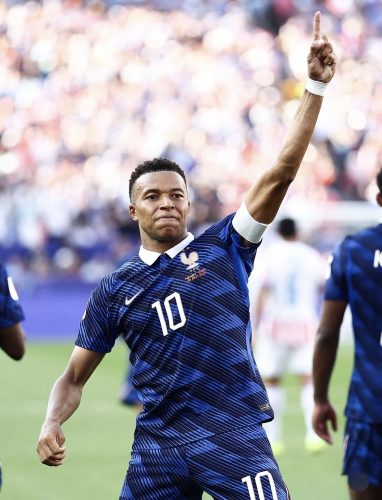
Coming off a blistering individual run where he claimed the tournament’s Golden Boot with an astonishing 10 goals—including a record-shattering 22 career World Cup goals—Mbappé gave Boston sports fans a front-row seat to athletic immortality.
Watching Mbappé live was like watching gravity bend. His acceleration left elite defenders looking stationary, a standard of excellence he immediately carried right back into Europe with a jaw-dropping LaLiga hat trick for Real Madrid just weeks later.
But what made Mbappé truly capture the hearts of Boston professionals wasn’t just his technical genius—it was his masterful approach to leadership, team chemistry, and humanity.
As the captain of France, Mbappé redefined what it means to be a modern executive on a global stage. In an era often dominated by individual brands and social media isolation, Mbappé operated with profound emotional intelligence.
As a field general, he was relentlessly unselfish, frequently seen distracting defenses to open passing lanes for younger teammates like Bradley Barcola and Michael Olise.
When a teammate missed a crucial play, Mbappé didn’t turn away in frustration; he was the first to sprint over, lift them by the jersey, and command focus.
Off the field, his humility stunned local volunteers. He spent hours engaging with Boston youth soccer initiatives likeBoston SCORES, echoing his long-standing commitment to donating tournament earnings to children’s charities.
He demonstrated that true power is not found in dominating others, but in elevating those around you.
As President and CEO of Boston Soccer 26, Loynd oversaw the staggering logistical symphony required to keep the tournament moving. Perhaps nobody knows better than him on what Mbappé’s physical presence meant to the region’s operational ecosystem:
From a pure management and corporate leadership standpoint, having Kylian Mbappé based in Boston was an absolute masterclass.
We have hosted massive corporate executives, legendary political titans, and iconic New England athletes, but Mbappé carries an entirely different type of energy. It is an unmatched aura of supreme competence mixed with profound emotional intelligence.
He wasn’t just an athlete executing plays at Gillette Stadium; he was an economic anchor and a cultural diplomat for our entire civic operation.
The way he carried himself off the pitch—his immense generosity with our local volunteers, his focus, and his willingness to use his global stature to stand up for human rights—challenged every professional in my committee to elevate their own standards.
He didn’t just play in our city. He made Boston a better, more unified version of itself.
Image via Boston World Cup 26
Boston’s Economic Boom
The structural agility of Boston Soccer 26 paved the way for an unprecedented commercial windfall.
According to data compiled by major payment platforms like Square and early municipal reporting, Boston’s restaurants and bars experienced a massive 28% increase in transaction volume during the peak weeks of the tournament.
This represented the sharpest economic spike among all U.S. host markets.
“Beer sales were up nearly 200% over our seasonal normal,” shared Brian McDonald, bar manager at The Dubliner, reflecting on the waves of fans who turned downtown into a festival of international solidarity.
Supported by a coordinated destination campaign from Meet Boston and seamless state execution praised by Governor Maura Healey, the commercial impact extended far past corporate hotel blocks into the bedrock of our neighborhood small businesses.
Boston took center stage on the global economic ladder and proved it could execute world-class commerce at the absolute highest level.
Fades, Faith, and a Viral WhatsApp Hookup
The ultimate testament though to Boston’s organic hospitality didn’t happen in a corporate boardroom—it happened in a makeshift barber chair at the Four Seasons Hotel.
Cándido “Coco” Fernández, a Dominican barber and the proud owner of Mobar Cuts in Waltham, Massachusetts, was going about a normal business day when an unknown, international number buzzed his phone via WhatsApp. The message read simply: “Can you cut KM’s hair tonight at 9:30 pm?”
“I thought it was just another standard house call or an athlete client from the Celtics or NBA,” Coco laughs, reflecting on his long history of styling stars like Jayson Tatum and Kyrie Irving.
“I didn’t even register who ‘KM’ was until I passed through heavy security checkpoint details at the hotel. When I walked into the room and saw Kylian Mbappé standing next to Ousmane Dembélé and Marcus Thuram, my heart dropped.”
Instead of panicking, Coco relied on the calm, blue-collar precision that built the Mobar brand since its inception in 2016.
He lined up his clippers, put his cape around the world’s most valuable soccer star, and went to work on a pair of signature, crisp mid-fades.
“I tried to stay completely calm, but inside I was realizing I had the hair of the best player on Earth under my blades,” Coco admits. “But Kylian was incredibly humble. We started talking about soccer, family, and the city. He looked in the mirror, gave me a high-five, and said, ‘We found the best in Boston’.“
Mbappé was so deeply impressed by the Waltham barber’s artistry that he immediately texted his close friend and upcoming World Cup opponent—Morocco’s superstar wingback Achraf Hakimi.
Hakimi was trying to get in touch with popular Moroccan-North Ender Soufiane ‘Lil Boss’ Boutrig for a barber recco, but upon seeing Mbappe’s cut he knew exactly where he would go.
Within forty-eight hours, Coco and his Mobar Cuts crew were invited into the Moroccan team camp, styling half their roster and their head manager.
By the time the quarterfinals kicked off, Coco Fernandez had become the official, trusted, cross-national barber for both squaring global squads.
“It’s my job to make them look right and feel right before they step out under those lights,” Coco proudly said.
“To see my fades on worldwide TV during the World Cup, knowing it all started with a random text to Waltham… that is the magic of what happened in Boston this summer.”
Why The Summer of ’26 Matters
To fully unpack why the Summer of 2026 was unlike any other in New England history, we must analyze the three core pillars that rewrote the city’s narrative:
The Disruption of Insularity Through “Radical Embracement”
Historically, Boston has worn a reputation for being fiercely tribal, protective, and slow to open up to outsiders.
The 2026 World Cup utterly dismantled this stereotype through what sociologists call “radical embracement.”
By transforming major public hubs like City Hall Plaza into centralized Fan Festivals, the city intentionally engineered collision points where diverse cultures could interact organically.
“Local professionals stepped out of corporate silos to share meals, exchange team scarves, and navigate language barriers with international tourists,” George Regan pointed out.
“This massive exercise in civic vulnerability proved that Boston’s true strength lies not in isolation, but in its capacity to act as an open, global harbor.”
The Symbiosis of Corporate Logistics and Human Solidarity
Major sporting events often feel transactional, dominated by sterile corporate branding and detached hospitality suites.
Boston 2026 succeeded because the technical, logistical triumphs outlined by Mike Loynd directly served to enhance human connection.
Transit adjustments weren’t just metrics on a spreadsheet; they were pathways that allowed tens of thousands of working-class fans to travel safely and affordably to experience a shared global celebration.
“The business community didn’t simply extract revenue,” Loynd stated. “It co-created a welcoming ecosystem that prioritized the safety, comfort, and inclusion of its global visitors, setting a new benchmark for corporate citizenship.”
Transcendental Leadership as a Collective Catalyst
In a city that prides itself on legendary sports icons—from Russell and Bird to Brady and Ortiz—Kylian Mbappé introduced a completely modernized paradigm of the superstar athlete.
Bostonians are conditioned to revere raw grit and unyielding intensity. Mbappé showcased that world-class execution is entirely compatible with deep human empathy, unselfish collaboration, and systemic philanthropy.
His presence challenged local leaders, coaches, and professionals to evaluate their own leadership styles. He proved that the highest form of leadership does not rest on individual accolades, but on a relentless commitment to elevating the collective humanity of the team.
From the Pitch to the Harbor: Summer Chic French Riviera
The magic of the Summer of 2026 did not vanish when the referee blew the final whistle at Boston Stadium.
Instead, the profound elegance, mystique, and allure that French captain Kylian Mbappé brought to the sport of football simply changed venues.
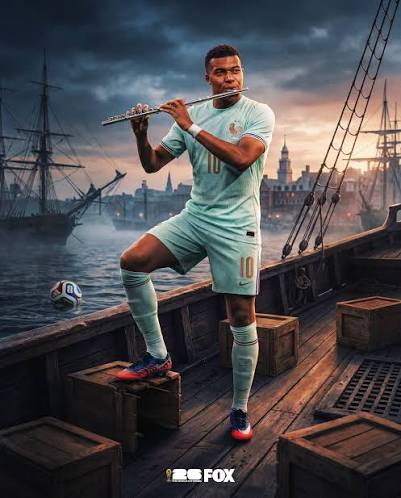
It drifted down from the grass of the pitch, floated past the historic bricks of the Hub, and anchored itself firmly in the shimmering waters of Boston Harbor, by way of Quincy’s Marina Bay.
This issue’s highly anticipated Summer Fashion was inspired around a Summer Chic French Riviera theme.
Watching Mbappé operate this summer was a lesson in pure, unadulterated aesthetic perfection. His intentional details—the crispness of his movements, the calculated precision of his acceleration—captivated global audiences with a breathtaking skill so rare, so pristine, it made you feel as though you were witnessing an exclusive exhibition meant only for an “invitation-only” elite.
BostonMan Magazine captured that exact, intoxicating blend of elegance, seduction, mystique, and allure that defines Summer Chic French Riviera yacht fashion.
Moving seamlessly from the intentional, bespoke details that captivate fits seen on elite, “invitation-only” yacht parties to ravishing, avant-garde swimwear, the spread -like Mbappe himself- served as a visual testament to pure freedom.
Heavily inspired by Europe’s most exclusive private beach clubs and shot aboard The Calais, a luxurious French yachtchartered in Marina Bay, was BostonMan Magazine nodding homage to an immersed world where sports dominance meets high-fashion artistry.
The Lasting Footprint
When the final fan departed and the stadium banners were taken down, Boston was fundamentally changed.
The economic boom proved our commercial capabilities, and the cultural exposure enriched our streets. But the true legacy of the tournament stretches far beyond the fiscal ledger.
“Imagine what we can do now that we’ve accomplished this?” Mike Loynd said smiling.
He emphasizes that the lasting impact of the World Cup isn’t just the memory of the goals scored or the revenue generated in our hotels.
It’s the infrastructure of trust we built across our communities.
“We proved to ourselves,” he concluded. “That Boston can welcome the entire world with open arms, handle the immense logistical pressure seamlessly, and emerge more unified, compassionate, and forward-thinking than ever before.”
Just as the arrival of a French fleet 250 years ago rewrote the destiny of fractured colonies, the French presence in the Summer of 2026 rewrote the modern spirit of the Hub.
It was a season of profound human love, punctuated by the unforgettable brilliance of Mbappé and the architectural grit of our civic leaders, leaving an inspiring blueprint that will push our city forward for generations to come.
An inspiration, a bond, and a brotherhood which was mutually felt by Kylian Mbappe:
Boston surprised my entire team. We knew about the history of the revolution, the deep intellect, and the intensity of New England sports fans, but we did not expect this level of emotional embracement. To see hundreds of local people lining the streets outside our hotel just to shout ‘Allez les Bleus’ touched us deeply.
Boston has permanently changed my worldview of what American soccer can be. I want to return here privately during the European winter break in late December. I want to experience the city without the security details, walk through the Common, visit the kids at the local schools again, and properly thank the neighborhood small businesses that treated us like family for forty days.
That is who Kylian Mbappe is. That is what Boston is. That is what World Cup 2026 was.
The Summer of ’26. We will never see another like it.