
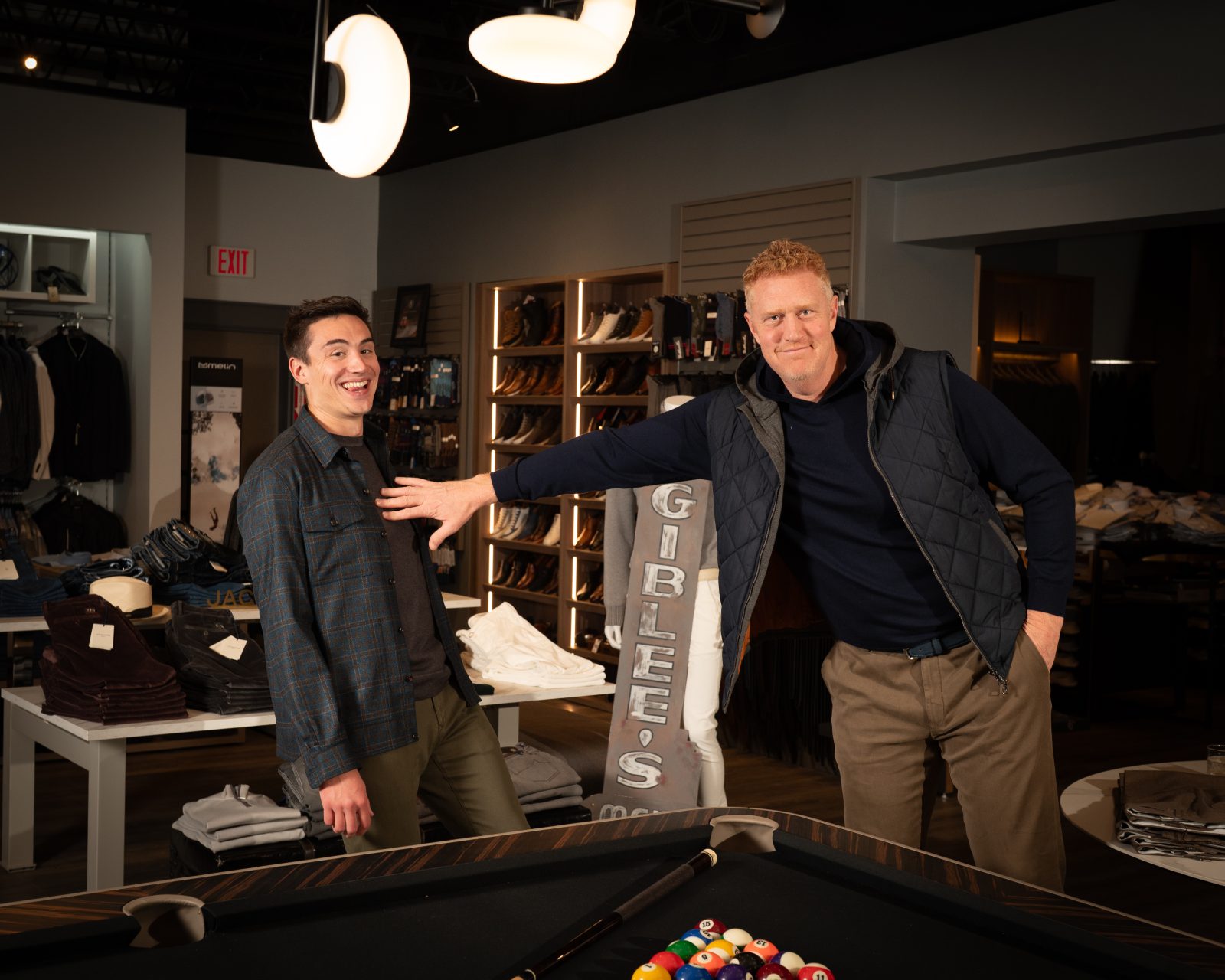



Following the immediate broadcast footsteps of legendary Boston Celtics commentators Tommy Heinsohn and Mike Gorman would seemingly be a daunting task. Yet, for Brian Scalabrine and Drew Carter, it was like answering their natural calling.
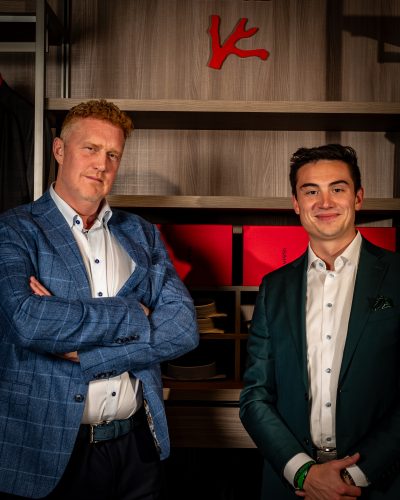
“I knew eight minutes in.”
Brian Scalabrine said it without hesitation. The Boston Celtics color analyst, better known around the league as Scal, remembers the exact moment during the audition when he turned in his chair, pointed to one of the NBC Sports cameramen, and effectively declared his future broadcast partner.
“This is the guy,” he mouthed. “He is the guy.”
Scal had worked with enough talent, mentors, and legends to recognize what he was looking for, and in that moment looking at; Drew Carter, the then twenty-six-year-old interviewing for one of the most coveted play- by-play roles in the NBA, had been in the hot seat for less than ten minutes, yet something clicked. The chemistry was instantaneous, with banter that felt natural, funny, and informative. After twelve prospective candidate interviews, Scal felt it before Carter was even halfway through.
With legendary play-by-play announcer Mike Gorman retiring after forty-three seasons, the Celtics were entering a new era of broadcasting and needed a voice who could make a new mark. The job meant becoming one of the next voices that fans would invite into their living rooms 82 nights every year. Replacing Gorman to find a strong voice to pair with Scal, who took over for the late Celtics color analyst Tommy Heinsohn, required finding a talent that could embody the standard of warmth, candor, and authority present for the last half a century. That is not an easy bar to clear.
Carter understood the stakes. “I knew this was a chance to land a job I could do for the rest of my career,” he said. “Not just any job, but with the best franchise in the league calling my favorite sport in a place that was amazing to live, and with family in the area.”
Still, when he received the initial email from NBC Sports Boston in February 2023 inviting him to audition, his composure cracked. He wrote back immediately in all capital letters. “YES!!!!!” His agent quickly followed with a quick-witted reminder. Act like you have been here before. Carter laughed retelling it. “I said, well, I haven’t. But I will try.”
The process stretched from February to September. Each step deepened his hope. “When I first started, I thought I had no chance,” said Carter. “I figured Boston would hire someone famous or someone from Boston. I was neither.” But after meeting the team, after calling the initial audition with Scal; after interviewing with Celtics president Rich Gotham, everything accelerated. “I started to dream a little bit,” he said.
By the time training camp opened, Carter had been offered the full-time role as the new television voice of the Celtics on NBC Sports Boston by the Vice President of Content & Strategy, Kevin Miller. Carter immediately started calling road games at the start of the 2023 season and was slated to take over all games in 2024 after Gorman finished his farewell home tour. Carter would continue his work for ESPN while assuming the chair once held by Gorman. Scal would be beside him as the color analyst, carrying forward the lineage he inherited from Heinsohn.
The audition tape, Scal recalls, said everything. “People were really stuffy next to me. I did not think they were themselves,” he said. “But Drew was just fun and talented. It didn’t seem like he was nervous at all.”
Carter admitted although he came across confidently in front of the camera that he was indeed anxious. “I was nervous as hell,” said Carter. “But Scal and I just hit it off. We had never met until five minutes before we walked into that room.”
Scal compared the certainty he felt to evaluating star talent.
“It was like when you see [Jayson] Tatum. You just know,” Scal said. “You are not overthinking it. You are not talking yourself out of it. He was the guy.”
It helped that both men share a reverence for the Celtics broadcast tradition.
Scal, himself somewhat of a local Celtics legend -affectionately known as ‘The White Mamba’ in New England- spent five of the eleven years during his playing career wearing Celtics green.
Over the course of 264 games in those five seasons, Scal bagged 130 three-pointers enroute to netting 723 points for the C’s. He hauled in 396 rebounds while dishing out 195 assists and established himself as a ‘whatever it takes’ type of contributor during the Paul Pierce/Kevin Garnett/Rajon Rondo ‘Big Three’ era.
He was a key part of the historic 2007-08 Celtics Banner 17 championship team, and in a 2009 playoffs series against eventual Eastern Conference champion Orlando, he rejuvenated an injured and battered Celtics squad by slowing down Magic flamethrower Hedo Turkoglu with the intensity of his full court ‘deny your man the ball’ pressure.
Upon retiring, he then spent the early years of his broadcasting career sitting beside another Celtics legend and champion, Heinsohn, at dinner before game nights, absorbing advice delivered with blunt precision.
“Tommy was super bright and I learned a ton from him,” Scal said. “He pushed me to be better and he told me when I was saying stuff that people did not understand. I am not the broadcaster I am today were it not for him. Mike Gorman is in the same category.”
Carter feels the same way about Gorman and his wife Terry. “I appreciate both of them so much for making me feel like I belonged,” he said. They took him to dinners, introduced him to their friends, and, in one surreal moment early in his tenure, took him out with Mike Breen, the very voice Carter grew up idolizing.
“It meant everything,” Carter said.
Carter’s first preseason game was at Madison Square Garden. He remembers seeing Breen nearby as he and Scal were gearing up for their broadcast.
“I was so nervous,” he said. “Mike Breen is the person I’ve watched on television with the NBA Finals my entire life basically. I had already felt the weight of how important this job is. There aren’t that many people who have called Celtics games.”
Scal saw him tightening up. “I kept telling him, when you are good, you do not have to worry,” he said. “Relax. You got this job for a reason.”
Carter credits that with grounding him. “Scal telling me that was the best advice I could have received,” he said. “Everyone else said be yourself, which is true, but I did not know yet who that person was in this job.”
The two now joke about how they challenge one another. Carter insists on pronouncing every name correctly, and it’s an area that pushes Scal to be better.
Carter will walk straight up to a player in warmups to confirm a detail. When Toronto’s Jakob Poeltl appeared for a preseason game wearing a mask, Carter marched directly to him to ask what happened. “He goes, I broke my nose,” said Carter. “Now I can tell viewers exactly why he is wearing a mask.”
Their rapport extends beyond games.
“Drew kind of resurrected our team on the road,” Scal said. “We hang out a lot.”
One memorable night in Minnesota, where Carter grew up, Scal proudly chose a restaurant for a five o’clock dinner, which is precisely Scal’s preferred dining hour. The crew followed him to his early-bird style dining reservation, only to watch him tug on a locked door since they arrived a few minutes beforehand.
“It was so early the place was not even open yet,” Carter said. “We gave him such a hard time.”
Scal shook his head and laughed. “I have never felt insecure like that, but we went in two minutes later and it was an amazing meal.”
Their dynamic has the rhythm of family.
“Drew is like my really cool nephew,” Scal said. Carter countered with, “Scal is like my great great great uncle.” Both burst out laughing as they can’t help but to banter with one another, even off-screen.
The relationship is not limited to the two of them. Carter is close with Scal’s wife, Kristen, whom the crew affectionately refers to as ‘Mrs. Scally’, and their children. Mrs. Scally has become the brains of the entire operation when it comes to her husband’s schedule. “Drew found out quickly that I am not the logistics guy,” Scal said. “He will text my wife directly.”
Carter said the closeness means everything. “It warms my heart that we are all friends,” he said. “Sometimes Mrs. Scally and my girlfriend Jocelyn will be hanging out in the hotel and it feels like our crazy version of a dinner party because we travel so much.”
Scal does not hide the fact that his wife was the driving force behind his decision to go into broadcasting as his NBA playing days wound down.
As a former League champion (2008) and part of an exclusive NBA fraternity consisting of players who shot free throws at a 90% clip or better over an entire season (2009) Scal understandably received an abundance of offers overseas to extend his playing days. Yet, he hesitated.
“She (Mrs. Scally) pretty much told me I would be stupid not to take the broadcasting job,” he said. “She said, you could do this for the next fifty years. Now, I thank her every month. It was the best decision I ever made.”
The two broadcasters bring very different paths into a shared booth. Scal is the NBA champion who eased into broadcasting by learning from giants. His role has grown into national media, pushing him to be sharper, faster and more concise.
Carter is the lifelong sports obsessive who fell in love with play by play at Syracuse. He began by calling old games off YouTube in his dorm room. His mentor, Jason Benetti, would review one recording every week and give him notes.
“He convinced me to try it,” Carter said. “We did that every week the whole time I was in college.”
For Carter, the path forward was built on steady work and trust from the people who believed in him.
After winning the Jim Nantz Award at Syracuse, given to the top collegiate sportscaster in the country, agent Kevin Belbey signed him and helped chart his early steps. Carter began in Birmingham as a sports broadcaster for CBS 42, and when an ESPN audition opened, Belbey encouraged him to audition.
Carter earned the job and moved to Connecticut to work full time for the network. Then, when NBC Sports Boston later offered him the Celtics role, he packed up once more and headed to Boston. Today he balances both jobs, including calling the annual animated broadcast, which this season took on a Monster’s Inc theme.
Scal and Carter are quick to credit the people who make their broadcast possible. Producer Paul Lucey, director Jim Edmonds, and longtime statistician Dick Lipe are central to everything viewers hear and see.
“Those people make our show what it is,” Scal said, adding that their influence has shaped him as much as his partnership with Carter.
“The cool thing about our broadcast is that [some of them] started before Larry Bird played for the Celtics (1979),” Carter said.
Lipe is one of them. Decades ago he simply asked Gorman if he could be his statistician. Gorman agreed, and the two worked side by side for more than forty years, trading the instant notes that often became the smartest lines on air. Gorman used to say his best moments came from Dick’s cards, and those same cards now land in front of Carter.
Lucey manages replays, opens, graphics, timing, and an entire layer of decisions viewers never see. He arrives early, leaves late, and absorbs the chaos so the booth can stay locked on the next play. Carter calls him the quarterback.
Edmonds at 84 years old directs the show. He travels to every game, listens to Scal’s radio show, and keeps up a daily elliptical routine that Carter swears would put half the league to shame.
Add the crew producing road broadcasts and what emerges is a team behind the team, a second Celtics family fans rarely see. When Carter signs off and names them on air, it is not a scripted line. It is gratitude for the people who make the show work.
This show is not something that Scal and Carter take for granted, as they understand the weight of the seats they occupy to Celtics fans. “We want people to understand that we take it as responsibility that we’re in their household,” said Scal. “We respect that.
As Carter puts it, Scal has a “limitless reserve of energy for these for the fans who come up to him.” Being a former NBA player and a broadcaster for fourteen years, Scal is used to and thrives in the spotlight as he always takes the extra moments to take a ‘selfie’ or make a fans’ day.
Meanwhile, for Carter, he is still getting used to it, and each interaction with a fan he cherishes. There are moments outside of the arena that remind Carter of the magnitude.
Recently at a Boston bar, someone bought him a drink simply to say good job. “It reminded me this means something to people,” Carter said. “I have big shoes to fill. I am still getting used to that.”
He continued: “It means so much to me when someone comes up and says we love listening to you guys and you know you had legends to follow; and you’re doing it.”
Scal, who learned from Heinsohn and Gorman what it means to serve Celtics fans, sees Carter following in that lineage.
“Scal has helped me feel like I belong in the Celtics family,” he said. “He means a lot to me.”
What began as a simple interview has become a partnership built on authenticity, humor, shared accountability, inherited wisdom and an evolving sense of home.
Each game, Carter and Scal step into a role held by their predecessors with a grateful understanding that they are the current voices in a long, cherished tradition.
The chemistry is real. The connection is unmistakable. For Celtics fans, it can feel like the beginning of something that, in time, might reach the level of those legends -that original power duo- who defined the booth before them.
For all of us at BostonMan Magazine, we’re honored to recognize Brian Scalabrine and Drew Carter as a cover story with of our first annual ‘Power Duo’ issue. A duo carrying on the legacy of one storied tradition; and helping to begin another.
