
Rebuilding Fashion One Headpiece at a Time

THERE’S A MOMENT, usually subtle, when someone puts on one of Ellie Jian’s pieces and realizes something has shifted.
It’s not just the outfit. It’s posture. It’s presence. It’s the way a person suddenly occupies space differently — more deliberately, more confidently, more like themselves.
That transformation is the point.
“I think about posture, presence, even emotion,” Jian says. “How a piece might give someone a sense of confidence or playfulness. It’s a very intimate form of design.”
In a city like Boston — where fashion can sometimes feel like an afterthought — Jian is building something quietly radical: a millinery brand that treats headwear not as an accessory, but as architecture for identity. And in her case, that’s not just metaphor.

From Architecture to Expression
Before she ever blocked her first hat, Ellie Jian was designing buildings.
Trained as an architect and working across multiple countries, she spent years thinking about structure, permanence, and the way people move through space. It’s a discipline rooted in logic, physics, and precision — the exact opposite, at least on paper, of fashion’s more fluid, expressive world.
Except, for Jian, the two were never separate.
“My background in architecture is deeply embedded in how I approach millinery,” she says. “I naturally begin with structure… before moving into aesthetics. Much like a building, a hat must first ‘stand’ correctly before it can truly express anything.”
That philosophy is visible in her work immediately. Her pieces don’t drape — they hold. They sit with intention. They feel engineered as much as they are designed.
Where most people see a fascinator, Jian sees load, balance, proportion. She sees the human body not just as a canvas, but as a structural partner.
It’s what separates her work from traditional millinery — and what gives it weight.

The Accidental Beginning
Like most good origin stories, this one wasn’t planned.
Ellie didn’t grow up thinking she would become a milliner. The pivot came almost by accident — a need for a headpiece for a race-day event that turned into her designing one herself.
That piece didn’t just work. It won.
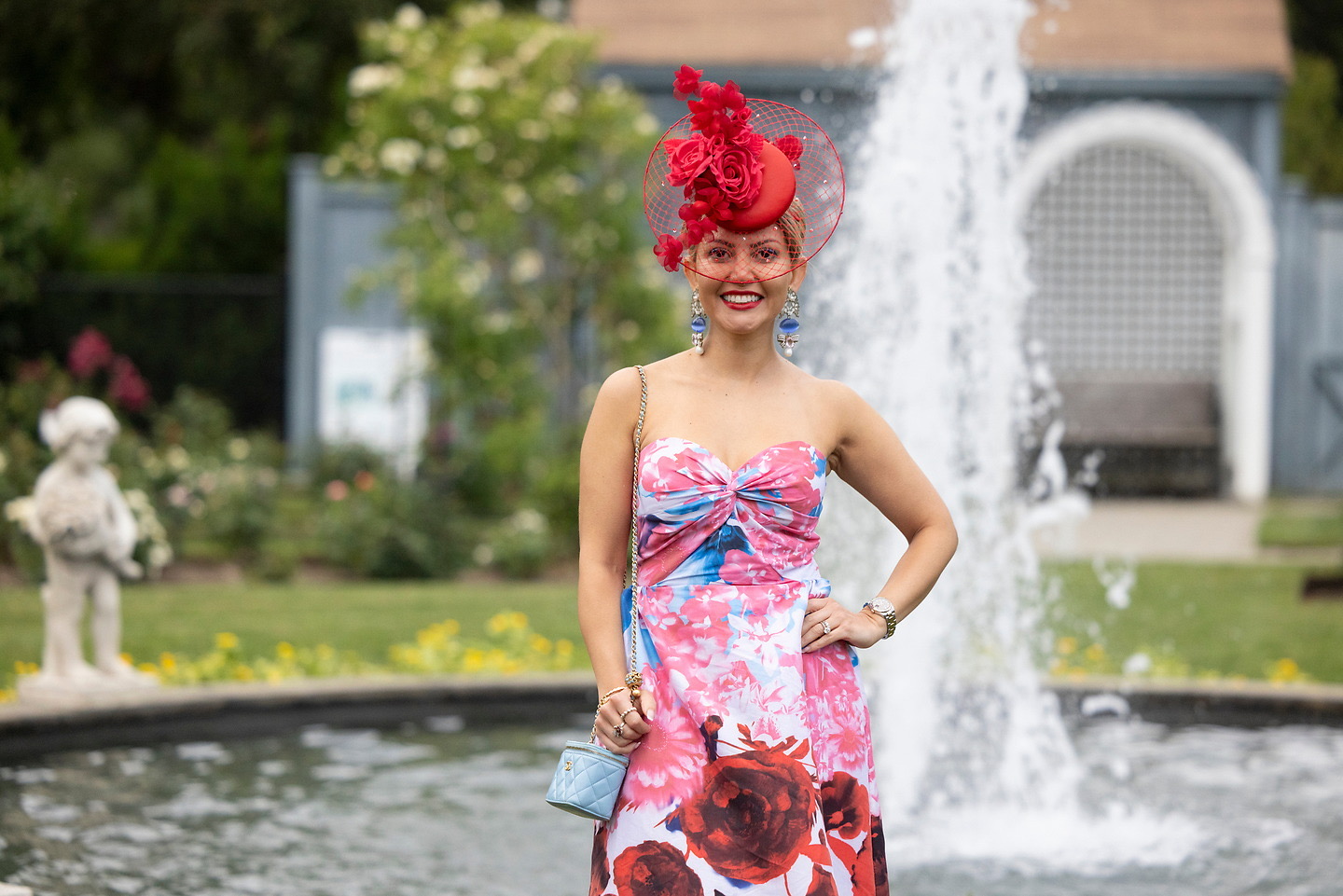
A fashion contest at the Belmont Stakes — one of the most visible stages for statement headwear — gave her something more valuable than recognition: clarity.
What followed wasn’t an overnight career switch, but a deliberate unraveling of one identity and the building of another.
“The transition unlocked a sense of freedom,” she says. “Architecture taught me discipline and structure, but millinery allowed me to express emotion more directly. It felt like moving from designing for permanence to designing for presence.”
That line — permanence to presence — is the axis her entire brand now sits on.

Designing the Statement
Spend five minutes looking at Jian’s work and one thing becomes clear: these are not supporting characters.
Her pieces don’t complement outfits. They define them.
“That’s actually my favorite approach,” she says. “I usually begin by designing the hat… and showcase those more expressive, bold pieces with carefully chosen outfits.”
In a fashion ecosystem that often prioritizes cohesion and restraint, Ellie leans into dominance — but not without intention.
She’s equally aware of when to pull back.
“If an outfit is already busy… I shift my approach and design the hat to complement rather than lead,” she says. “It’s always about understanding the overall harmony and the person wearing it.”
That balance — between statement and subtlety — is what makes her work wearable, even at its most sculptural.
Because for Jian, wearability isn’t a compromise. It’s part of the challenge.
“I don’t see wearability and expression as opposites,” she says. “The beauty is in merging the two.”
Small Sculptures, Big Ideas
If her hats feel closer to art than fashion, that’s by design.
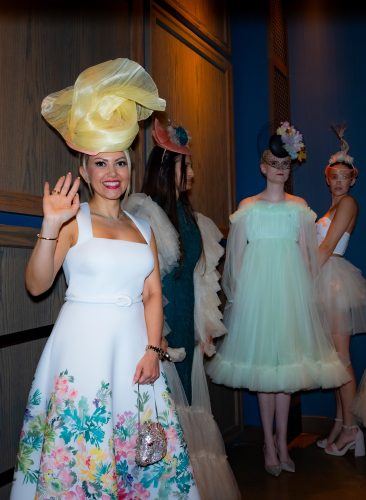
“I already see my hats as small sculptures,” Ellie says.
It’s not hard to imagine them existing beyond the body — scaled up into installations, interacting with light, space, and movement. In many ways, they already do.
There’s a performative quality to her work. The pieces aren’t static — they move with the wearer, changing shape and perception depending on angle, motion, and context.
“There’s a performative side to my work,” she says. “How the piece moves with the person… it has that sense of life.”
This is where her architectural background and artistic instinct collide. Buildings are meant to be experienced. So are her hats.
They’re not just seen. They’re inhabited.
The Boston Factor
Boston is not New York. It’s not Paris. It’s not a city that screams fashion in the same manner other cities do.
Which is exactly why Jian’s work stands out.
There’s something inherently disruptive about creating high-concept, sculptural headwear in a place better known for biotech and finance than runway shows.
But Ellie isn’t trying to replicate another city’s fashion scene. She’s building her own lane within it.
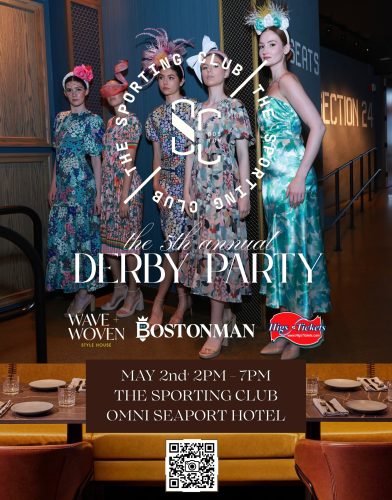
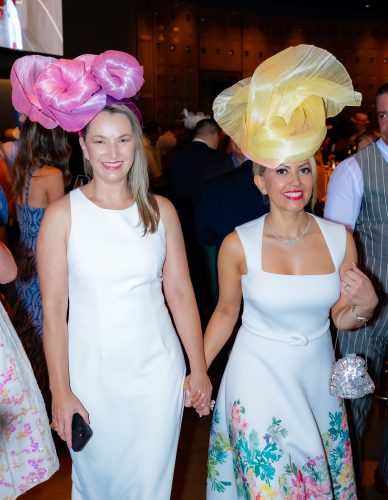
Her pieces show up at Derby parties, garden events, fashion activations — but just as often, they exist in quieter, more personal moments.
“They feel most alive when worn with intention,” she says. “Whether that’s on a runway or in a personal moment.”
That philosophy aligns with Boston in an unexpected way. This is a city that values substance over spectacle — and Ellie’s work, despite its visual impact, is deeply intentional.
It’s not about being seen. It’s about how you choose to show up.

Craft, Reinvented
Millinery is one of fashion’s oldest crafts — rooted in tradition, technique, and meticulous handwork.
Ellie respects that history. But she doesn’t feel bound by it.
“I see tradition as a foundation, not a limitation,” she says.
Her process blends classic techniques like hand-blocking with modern tools, materials, and experimentation. The result is a body of work that feels both timeless and forward-looking.
This tension — preservation versus innovation — is where her work thrives.
“Innovation feels most authentic when it grows out of respect for the craft,” she says.
It’s a mindset that mirrors her own career path: grounded in discipline, but constantly evolving.
Ellie’s work carries a level of detail that feels intentional down to the smallest element — layering, texture, finish.
That sensibility isn’t accidental.
“I’ve always been drawn to pieces that have a certain richness,” she says. “Where small elements… really matter.”
Her heritage plays a role here, shaping her understanding of craftsmanship and ornamentation in ways that aren’t always immediately visible, but are always present.
It also informs her approach to balance.
“Even when a piece is sculptural or statement, I still want it to feel graceful and intentional rather than overwhelming,” she says.
That word — intentional — comes up again and again.
Nothing about her work is accidental. Not the shape. Not the scale. Not the way it sits on the head.
And certainly not the way it makes someone feel.

Fantasy, Grounded
Long before architecture, before Boston, before Belmont, Jian was making clothes and headpieces for dolls.
It’s a detail that could easily be written off as childhood nostalgia — but it’s actually a throughline.
“As a child, fantasy was about imagination without limits,” she says. “Today, it’s more refined… something wearable and meaningful.”
That evolution — from pure imagination to structured expression — defines her work.
There’s still fantasy in what she creates. But it’s controlled. Edited. Grounded in reality.
The magic isn’t lost. It’s just been engineered.

Redefining Success
Winning a fashion contest at Belmont could have easily become the defining moment of Jian’s career.
Instead, it became a starting point.
“That moment was very meaningful,” she says. “But success became less about recognition and more about building something lasting… and continuing to evolve as a designer.”
In an industry driven by visibility, that’s a different kind of ambition.
Ellie isn’t chasing moments. She’s building a body of work.
One piece at a time. One client at a time. One transformation at a time.

The Future of the Hat
Millinery has always existed on the edges of fashion — visible at the extremes (royal weddings, race days, runway shows),but largely absent from everyday life.
Ellie Jian sees that as an opportunity, not a limitation.
Her work suggests a different future — one where headwear isn’t reserved for special occasions, but becomes part of how people express themselves daily.
Not louder. Not more extreme. Just more intentional. Because in the end, that’s what her work is really about. Not hats Not fashion.
But the quiet, powerful shift that happens when someone decides to show up as something more.