

What began with decorated cookies at a kitchen island has evolved into one of the region’s most distinctive emerging luxury event brands. For Merla founder JoAnna Letourneau, the journey from Blackbird Baking to vintage Italian trucks, gelato and bespoke experiences is really a story about knowing when it is time to dream bigger.
__________

__________
THERE IS A CERTAIN kind of confidence required to look at a successful business you spent seven years building and decide that it is no longer big enough for your imagination.
JoAnna Letourneau had reached that point.
Blackbird Baking Co., the Pembroke-based business she had built from scratch, was successful. Her meticulously decorated cookies had developed a devoted following and found their way into corporate events, weddings and celebrations for some very recognizable names. She increasingly found herself traveling from the South Shore into Boston, creating for clients and events that would have seemed impossibly far removed from where the whole thing started.
Yet somewhere along the way, success began to feel surprisingly restrictive.
For seven years, Letourneau had been known for decorated sugar cookies, and for seven years she had poured an almost obsessive amount of creativity into making them. Eventually, she found herself spending most of her time in the cookie room, saying yes to order after order, producing the thing everyone knew her for while quietly realizing she wanted to do something else.
“I was getting kind of a combination of burnt out and bored,” she remembers. “I never left the cookie room. I would say yes to everything.”
There was nothing wrong with Blackbird. In many ways, that was the problem. It worked. People knew it. Clients wanted it. The easy decision would have been to keep doing exactly what she had been doing.
Letourneau has never been particularly interested in the easy decision.
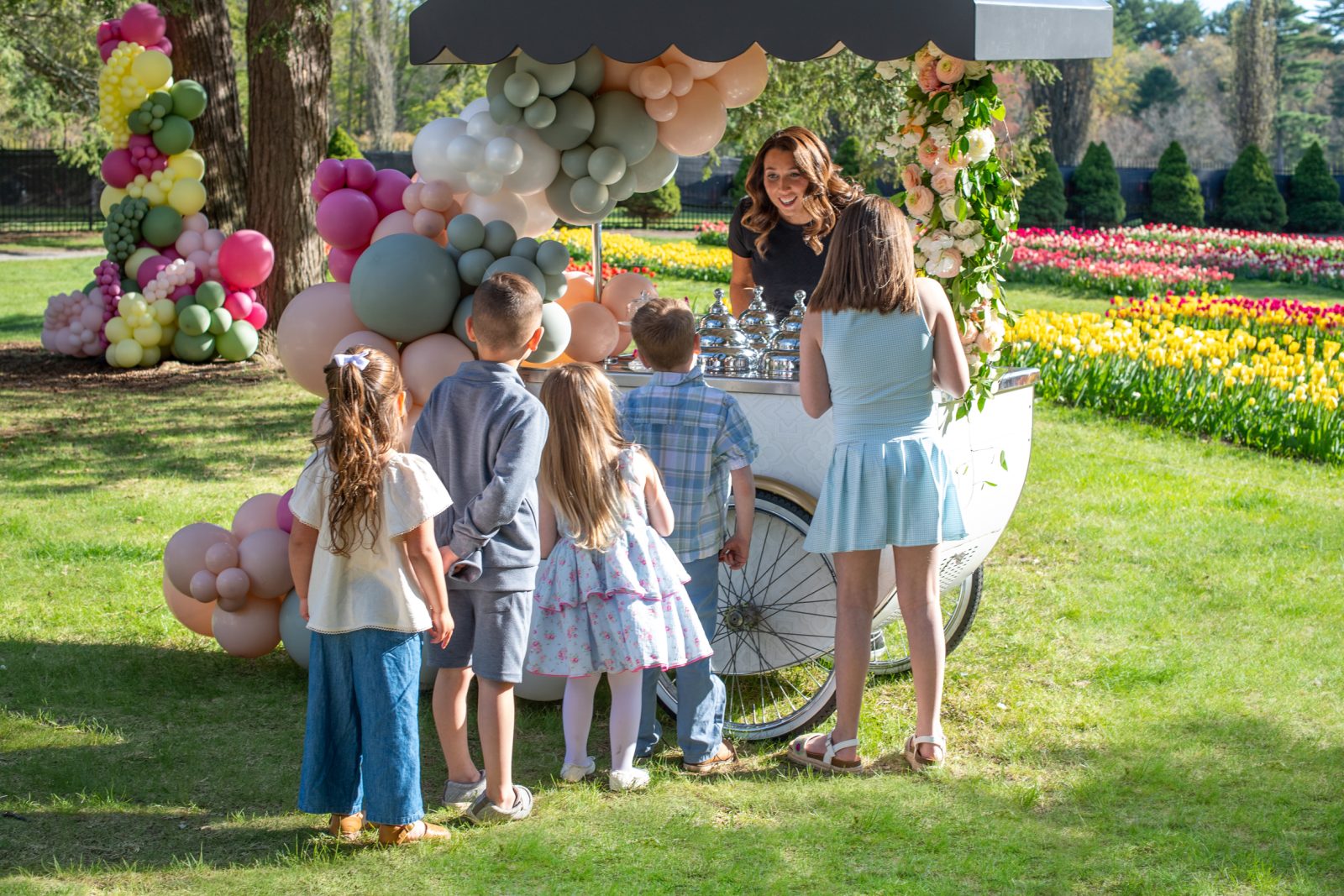
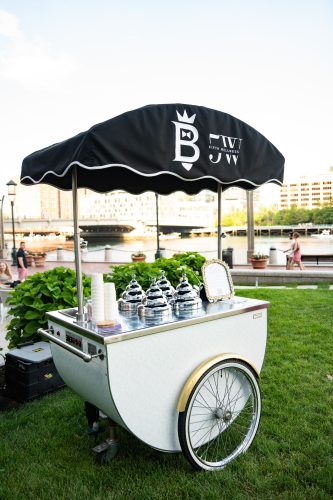
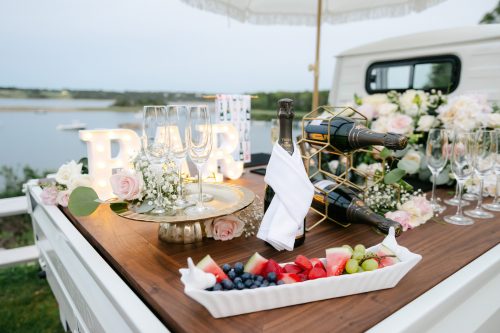
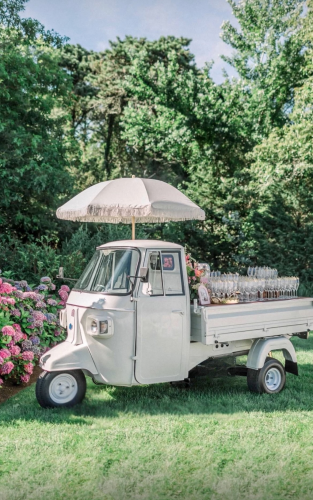
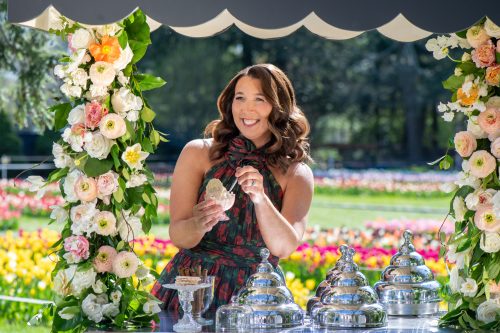
Today, Blackbird has become Merla, a luxury event and edible branding company with an unmistakably European sensibility and a growing presence across Boston, Cape Cod and New England. Its world now extends well beyond the cookies that started it all. There is Birdie, Letourneau’s beautifully restored vintage Italian Piaggio Apé, which can be transformed from an elegant dessert display into a champagne bar or floral installation. There is a custom Italian-style gelato cart, reimagined in Merla’s aesthetic. There are weddings, corporate brand activations, florals and highly styled experiences designed not simply to feed guests, but to become part of the visual language of an event.
And this fall, Merla is expanding again, with two new experiences that may be its most playful yet: a roaming fresh-baked cookies-and-milk service and an affogato experience pairing gelato with espresso.
It is an awfully long way from decorating cookies while two babies napped.
Then again, that is exactly where this story begins.
An Unexpected Creative Life
Before there was a Blackbird, much less a Merla, Letourneau imagined an entirely different future for herself. She worked part-time in public housing and as a deputy sheriff, had completed the police academy, and hoped eventually to become a mounted deputy.
Then she and her husband began their family, welcoming two children just 13 months apart. Letourneau stepped away from the sheriff’s department during pregnancy and maternity leave, and amid the enormous adjustment of suddenly having two very young children at home, she stumbled into something she had never considered a career.
For her daughter’s first birthday, she decided to make decorated sugar cookies. It was creative, exacting work, which suited her almost immediately. Letourneau describes herself as both a perfectionist and someone who has always needed a creative outlet, and cookie decorating offered both. She could sit at the island of the new home she and her husband had built in Pembroke and disappear into the tiny details of whatever she happened to be making while the children slept.
At first, there was no business plan attached to it. The cookies were something creative in a season of life otherwise dominated by babies, schedules and the question of what her professional future would look like. Then somebody asked if she could make firefighter cookies. Someone else wanted something different.
The requests accumulated. Ten or twelve orders later, what had started as a hobby was producing enough momentum that Letourneau had a genuine choice to make. She could return to the career she had previously envisioned, or she could give this strange, unexpected side hustle a chance.
“I was like, I don’t know,” she recalls. “I can sit at my island in our brand-new house that we had just built and decorate cookies and make a little bit of side-hustle money.” So she kept going. The family lived on Blackbird Drive, and the name for the fledgling business presented itself naturally: Blackbird Baking Co.
For the next seven years, Letourneau built her reputation cookie by cookie. What started at her kitchen island grew into increasingly sophisticated custom work, including corporate branding and orders for major clients. Her designs became more elaborate, the orders became larger and her reach stretched beyond the South Shore.
The work also revealed something about Letourneau that would eventually become more important than the cookies themselves. She had an instinct for presentation. She did not merely want something to taste good. She wanted the entire thing to look right.
That instinct would ultimately change everything.
When Blackbird Outgrew Its Nest
By the latter years of Blackbird, Letourneau had proven she could build a successful cookie business. What she had not yet figured out was whether she wanted to spend the rest of her career running one. The burnout was real, but so was the boredom. Her creative instincts were pushing against the boundaries of a company whose very name told customers exactly what to expect: baking. Letourneau wanted room to surprise them.
She had also long loved the Piaggio Apé, the wonderfully charming three-wheeled Italian vehicle whose proportions make it feel equal parts automobile and objet d’art. In 2025, an idea began taking hold. What if she found one and transformed it into a mobile dessert experience?
She acquired the vehicle that May and began imagining a future that looked considerably larger than decorated sugar cookies. Her goal was to move deeper into the Boston and Cape Cod event scenes, particularly at the luxury end of the market, where aesthetics were not an afterthought but part of the product itself.
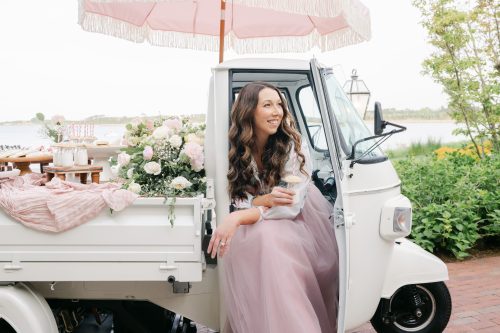
The Piaggio, affectionately named Birdie, gave her a canvas. It could hold desserts, certainly, but it could also become a champagne bar. It could be surrounded by florals. It could be styled differently for every wedding, corporate activation or private celebration. It could become the thing guests noticed when they walked into the room and the thing they photographed before they left. More importantly, Birdie allowed Letourneau to see her company differently.
As Blackbird began working with larger clients and Letourneau spent more time in Boston, the old identity started feeling increasingly disconnected from the work she was doing. She was no longer simply baking. The company was entering events as a creative partner, building installations and experiences around food, branding and design.
She hired a luxury business coach and began the process of rethinking the company from the ground up. Naming it proved difficult. Letourneau wanted something sophisticated enough to hold the business she was building without erasing the history of the one that had brought her there. After months of back and forth, the answer arrived in Italian.
Merla means blackbird.
It preserved the origin story while giving the brand an entirely new vocabulary. It also fit beautifully with Birdie’s Italian heritage and the European aesthetic that had begun informing Letourneau’s work. Blackbird had not disappeared. It had evolved.
A World Built Around Beauty
Spend even a few minutes talking with Letourneau about an event and it becomes clear that she sees things spatially. She notices colors and textures, what belongs next to what, whether the metal should be gold or silver, how an umbrella relates to a wedding palette and what a floral installation can do to transform something functional into something memorable.
“I just love to take a theme or a vision and run with it,” she says. For weddings, that often means restraint. A couple has already spent months developing a visual identity for one of the most photographed days of their lives, and Merla’s job is to enter that world rather than compete with it. Letourneau asks about color tones, metals, flowers and the larger design plan, then styles her pieces accordingly.
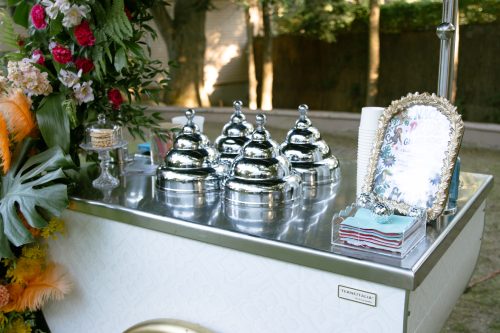
The result might be gelato served from an impossibly polished cart that looks as though it has always belonged in the room, or Birdie transformed with florals so seamlessly integrated into the wedding that the little Italian truck becomes part of the décor.
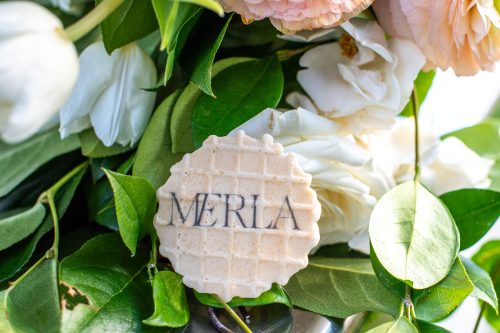
Corporate events offer a different creative playground. There, Letourneau can take a company’s brand package and translate it into something tangible. Colors migrate into flowers and balloons. Logos appear on edible pieces. Fabrics, signage and displays can be coordinated around the company’s visual identity. When a project calls for outside collaborators, Letourneau can manage those relationships behind the scenes, allowing the client to work through a single creative point person.
“I absolutely love corporate because we can show all of our strengths in one event,” she says.
Her role increasingly resembles that of a creative director as much as a baker or caterer. A client explains what matters. Letourneau absorbs it, visualizes the finished environment and begins making decisions.
“A lot of times I’m saying, ‘This is what we’re doing,’ and people are like, ‘Great, make it happen,’” she says. That trust is perhaps the clearest indication of how far the business has traveled. Clients are no longer simply ordering something from JoAnna Letourneau. They are hiring her eye.
A Little Taste of Italy
The arrival of Birdie gave Merla its most recognizable visual signature, but it also set the tone for what would follow. Letourneau became increasingly interested in offerings that felt transportive, beautiful and interactive, particularly those that could live naturally within Merla’s Italian-inspired world. Gelato was almost inevitable. The right cart, however, was not.
Letourneau began searching online, tracking down versions she liked and reaching out to owners in search of advice. Eventually, she found an Italian bakery in New York selling their imported Italian cart. By coincidence, she already had an event scheduled in Connecticut, which gave her an opportunity to turn the work trip into a family excursion with one small addition to the itinerary. After the event, they were going to New York to look at a gelato cart. Her husband, Doug, learned of this development somewhat later than one might imagine. The family made the trip. Letourneau saw the cart, negotiated a deal and bought it. That, of course, did not mean it was ready.
She refurbished it, replacing the vinyl, wheels and other details before sourcing a canopy and awning frame system from the manufacturer in Italy. What emerged was not simply a cart Merla could use to serve gelato. It was a piece of the brand, designed with the same attention Letourneau gives everything else.
It also represented the formula she had been moving toward since Birdie: find something guests already love, then turn the act of receiving it into an experience.
Coming This Fall
If there is one idea Letourneau has absorbed from the women she admires in Boston’s luxury event industry, it is that relevance requires movement. One mentor offered advice that stuck with her: introduce something new and exciting each year. Letourneau took that almost as a challenge.
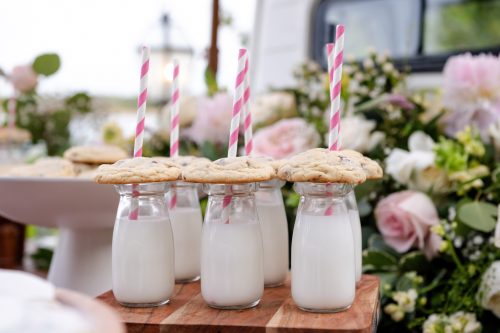
This fall, Merla is preparing to debut two new offerings, each reflecting a different side of the company. The first is wonderfully nostalgic: fresh-baked cookies and ice cold milk will become a roaming experience, with servers able to move through an event using an insulated dispensing system paired with coordinated trays. Instead of guests finding cookies waiting on a dessert table, the dessert comes to them. The concept takes the food that started Letourneau’s entire career and brings it into the new Merla world. The cookie has gone from kitchen island to luxury event, but its essential appeal remains untouched.
The second addition pushes Merla deeper into Italy. Letourneau is developing an affogato experience, pairing gelato with espresso in the classic Italian dessert. Plans call for a custom modification to the existing gelato cart and collaboration with an espresso specialist, allowing the same piece to offer traditional gelato at one event and affogato at another. It is exactly the kind of addition that makes sense once you understand how Letourneau thinks. She is not looking for more items to place on a menu. She is looking for things people will gather around.
That difference is small on paper and enormous in practice.
The Business of Being Remembered
Luxury is an overused word, particularly in the event industry, where almost anything can become “luxury” with the right adjective attached to it. What Letourneau is pursuing feels more specific. For Merla, luxury is personalization. It is the feeling that an object or experience exists specifically for this room, this couple, this company, this evening. It is the absence of something generic.
That is why details occupy so much of Letourneau’s attention. A cart can serve gelato without matching the flowers. A cookie can taste wonderful without carrying a company logo. Champagne can be poured from a conventional bar. All of those things would function perfectly well. Merla is interested in what happens after function. It wants the cart to belong to the room. It wants the dessert to become part of the entertainment. It wants a corporate client to recognize itself in an installation before anyone sees the logo. It wants the moment to photograph beautifully because, increasingly, the photograph is part of the life of the event.
That sensibility has taken Letourneau into the very Boston event world she hoped to enter when she first bought Birdie. Along the way, she has found herself surrounded by creative women whose businesses and careers she admires. Rather than pretending she has figured everything out, she listens. “When I’m in a room with them and they offer wisdom, I’m a sponge,” she says. “I just absorb it all.”
It is a revealing admission from someone whose own brand now looks so fully formed. Merla is polished. Its founder is still hungry.
Dreaming Bigger
There are still rooms Letourneau wants to enter. She has already created for the Boston Bruins, an achievement that would have sounded fairly remarkable to the woman sitting at her kitchen island making those first birthday cookies. Now she has another local institution on her list: the New England Patriots. A Patriots organization or player event is at the top of her current bucket list, and she is not shy about putting that ambition into the universe. There will almost certainly be other targets after that. Letourneau does not seem temperamentally suited to arriving anywhere and deciding she has arrived. That might be the most compelling part of her story.
Entrepreneurship is often presented as a search for the winning idea, followed by the long work of protecting it. Letourneau’s path suggests something different. Sometimes building the thing successfully is only the first act. Sometimes the greater challenge is recognizing when the identity that made you successful has become the identity preventing you from becoming something more. Blackbird was not a failure that needed rescuing. It was a success Letourneau was brave enough to outgrow. The woman who once planned on becoming a mounted deputy built a cookie company almost by accident, spent seven years mastering it, reached burnout, bought a vintage Italian truck and used it as the vehicle, literally and figuratively, for an entirely new chapter.
Now there is Birdie. There is gelato. There are champagne bars, florals, weddings and corporate takeovers. Soon there will be roaming cookies and milk and espresso cascading over gelato. And there will inevitably be something after that. Because beneath all of Merla’s beautiful styling and Italian charm is a founder who appears to become restless the moment something feels too comfortable.
For Letourneau, that restlessness has become an unlikely creative advantage. She built Blackbird by discovering something she loved. She is building Merla by refusing to believe that the first thing she loved has to be the last. Nearly a decade after those first cookies, she is still doing what she did at the kitchen island in Pembroke: taking an idea, turning it over in her mind and imagining how much more beautiful it could become.
Only now, the canvas is considerably larger.
__________
All images provided by JoAnna Letourneau
