

Ringo Starr’s Ageless Psychedelic Circus: Inside the All-Starr Revue’s Triumphant Fall Run Stop in Boston
________________
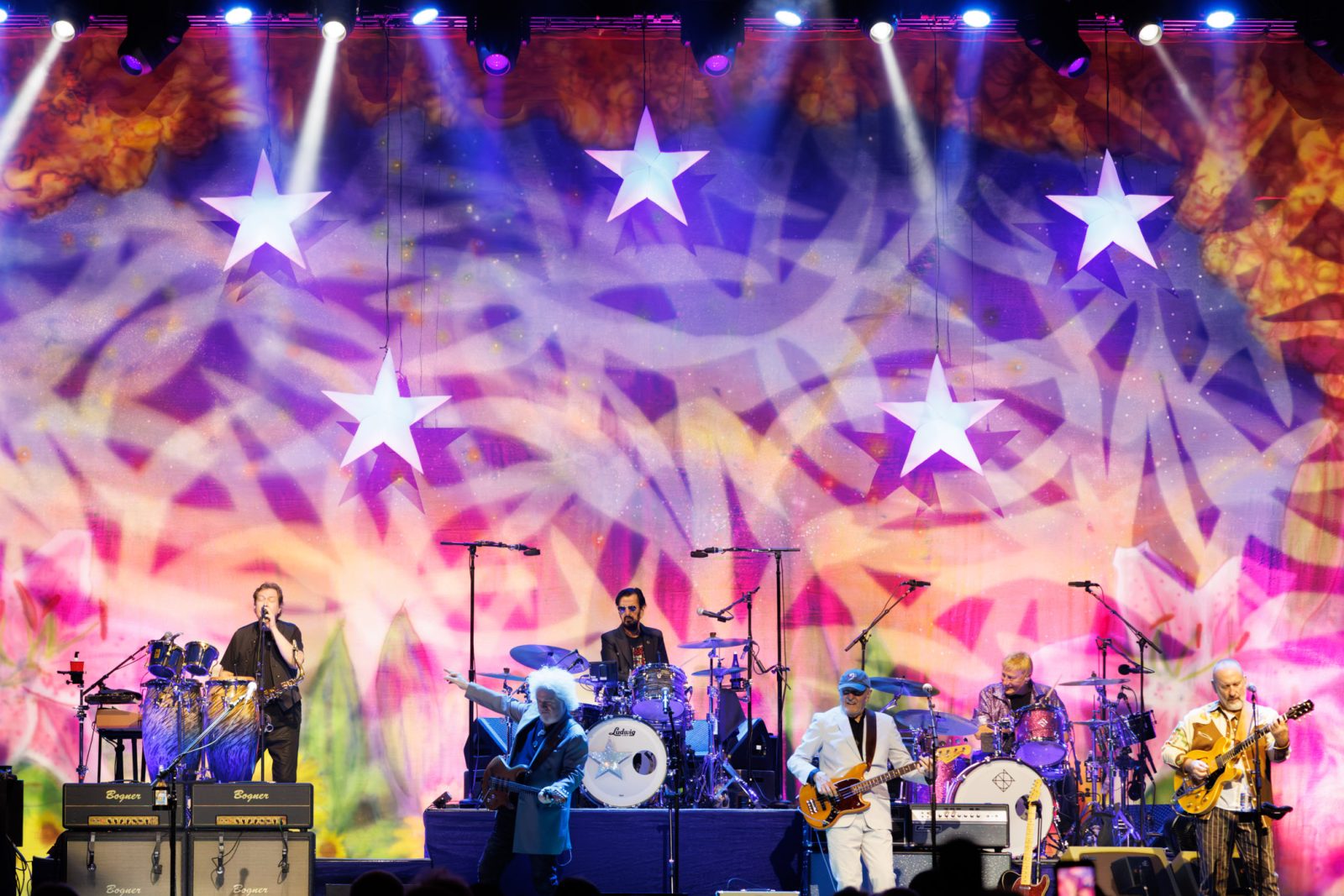
THE VIEW FROM THE SOUNDBOARD at Boston’s MGM Music Hall is a beautiful, infuriating paradox. For a photographer, the decree from Ringo Starr’s camp is a heavy tax: you don’t shoot from the sweat-slicked edge of the orchestra pit; you shoot from the back of the house, pinned behind the audio consoles.
Through a long zoom lens, the perspective flattens, robbing you of that raw, close-up grit. But as the lights dim, it becomes immediately clear that the distance is a necessary lens for a grander illusion.
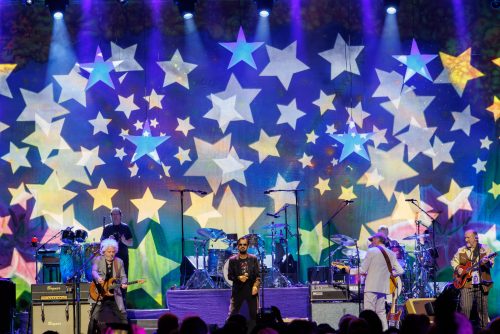
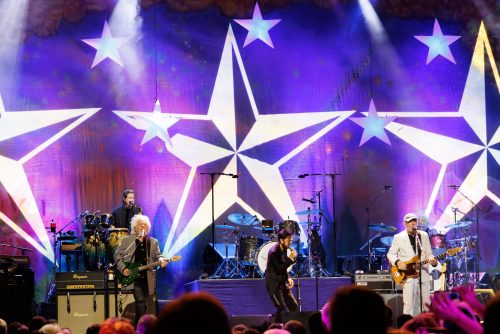
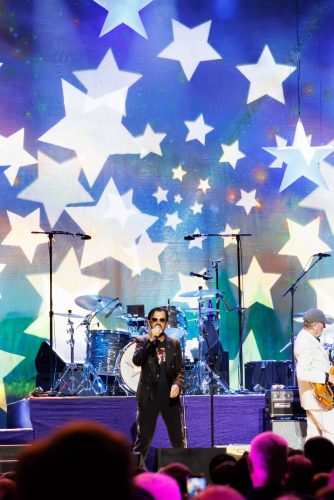
Washing over the stage is a dazzling, hyper-saturated ocean of swirling sixties psychedelia and towering, neon stars. It is a visual landscape that fits Ringo’s enduring, cosmic peace-and-love persona better than almost anyone else left on the planet.
From the back of the room, you aren’t just looking at a drummer; you are looking at a living canvas of pop culture history.
Entering the venue, the initial vibe is jarringly polite—the entire crowd is meticulously seated, an anomaly for the usually restless MGM Music Hall. But the tranquility is short-lived.
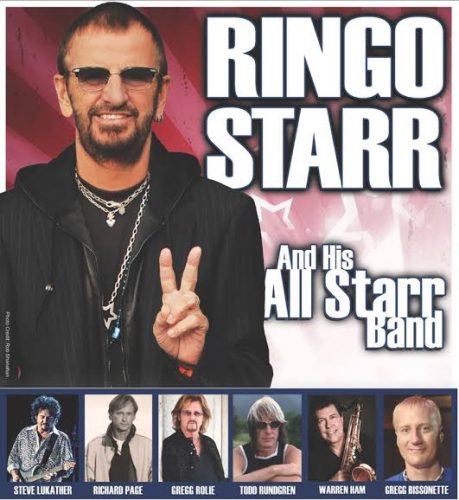
The moment the All-Starr Band takes the stage—a murderer’s row of classic rock royalty that includes Toto’s Steve Lukather and Men at Work’s Colin Hay—the room stands up as a single, electric entity. Nobody sits down for the rest of the night.
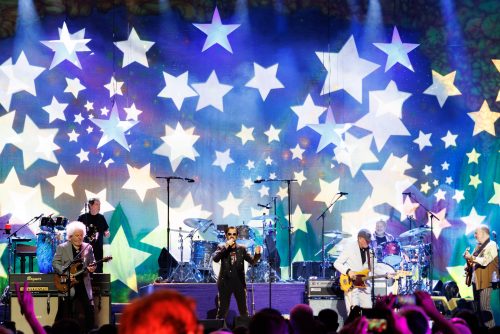
Then comes the man of the hour, arriving not with the frail wave of a legacy act, but at a brisk, defies-gravity jog. Ringo Starr is 85 years old, turning 86 this coming July, yet he moves with the fluid lightness of a musician decades his junior.
With his signature peace signs hoisted high into the rafters, he soaks in an absolute deluge of adoration. It is surreal in the truest, most unfiltered sense of the word. You are standing in a room with a certified music legend, a literal Beatle, and he is bantering with the crowd like he’s hosting a backyard barbecue.
The Working Class Beatle
To understand the weight of tonight’s performance, it is essential to dismantle the myth that Ringo Starr is merely coasting on a multi-decade victory lap. The man is, by any logical metric, working harder than artists a third of his age.
This year, Starr dove back into the rootsy Americana landscape with Long Long Road, marking his third consecutive country-leaning collaboration with producer T Bone Burnett, hot on the heels of last year’s Look Up. He kicked off 2026 with a pair of explosive, sold-out nights at the historic Ryman Auditorium in Nashville—which CBS swiftly cut into a two-hour prime-time special—before making his official, long-awaited debut on the Grand Ole Opry stage in February.
Add to that a highly publicized, touring gallery exhibit of his original paintings, and it becomes clear that Ringo isn’t archiving his life; he’s actively living it. This Boston stop sits smack in the center of a blistering autumn sprint through the Northeast, squeezing out sparks between a kickoff in Pennsylvania and a grand finale in Albany.
The Jukebox in the Machine
The set cracks open with “Matchbox,” the Carl Perkins rockabilly standard that has served as Ringo’s trusty launchpad since he first laid down the lead vocal for the Fab Four in 1964. His voice carries a weathered, rough-around-the-edges patina—entirely forgivable given the mileage—and while you can catch him pacing his breathing, his commitment to the groove is absolute.
What follows is the beautifully bizarre, high-caliber jukebox revue that has defined the All-Starr experiment for decades. Ringo shifts effortlessly into “It Don’t Come Easy,” his massive 1971 solo statement, before relinquishing the spotlight to Lukather for a scorching rendition of Toto’s “Rosanna.”
As Ringo slides behind the secondary drum kit, delivering that legendary, heavily replicated half-time shuffle, the nostalgia in the room becomes tactile.
From there, the night functions as a masterclass in classic pop construction:
The Funk Interlude: Former Average White Band bassist Hamish Stuart commands the room through the timeless, syncopated architecture of “Pick Up the Pieces” and “Cut the Cake.”
The New Wave Renaissance: Colin Hay delivers a flawless, pristine vocal performance on Men at Work’s worldwide chart-toppers “Down Under” and the hauntingly anxious “Overkill.”
The Fab Beginnings: Ringo steps out from the drum riser to revisit “Boys,” the Shirelles cover he famously hijacked on Please Please Me.
The emotional centerpiece of the evening arrives not from a song, but from a memory. Ringo stops to recount a moment where a humming, distracted John Lennon casually handed him a melody, telling him the track belonged to him now.
The result of that exchange was “I’m the Greatest,” the Lennon-penned opener from 1973’s Ringo LP. Hearing those anecdotes delivered live, without the polished curation of a streaming documentary, feels like catching a glimpse of rock’s holy grail.
Overcoming the Critics
Over the decades, Rolling Stone has occasionally met the All-Starr format with a degree of critical skepticism. Reviewers have pointed out that when Ringo takes to the kit these days, he understandably favors simpler, foundational rhythms, leaving the complex rhythmic heavy-lifting to the brilliant Gregg Bissonette.
Critics have frequently joked about the sheer structural oddity of the show—a revolving door of disparate classic rock titans trading top-40 hits like a hyper-rehearsed, high-end wedding band rather than a traditional, cohesive rock unit.
ALL-STARR REVUE SETLIST HIGHLIGHTS
- “Matchbox” (Carl Perkins / Beatles Cover)
- “It Don’t Come Easy” (Solo Hit)
- “Rosanna” (Performed by Steve Lukather)
- “Pick Up the Pieces” (Performed by Hamish Stuart)
- “Down Under” (Performed by Colin Hay)
- “I’m the Greatest” (John Lennon Written Solo Cut)
- “Yellow Submarine” / “Octopus’s Garden” (Beatles Classics)
- “Africa” (Toto Classic)
- “Photograph” (Solo Hit w/ George Harrison)
- “With a Little Help From My Friends” (Sgt. Pepper Finale)
From a purely analytical standpoint, those critiques hold water. But sitting in the MGM Music Hall, watching the crowd erupt as Lukather tears into the opening chords of “Africa,” or as Ringo leads a massive, thousands-strong sing-along of “Yellow Submarine” and “Octopus’s Garden,” the cynicism evaporates.
By the time the band closes the night with a triumphant, communal performance of “With a Little Help From My Friends,” the title feels less like a song choice and more like a thesis statement. This isn’t a museum piece, nor is it a tragic exercise in nostalgia. It is an essential celebration of survival, rhythm, and enduring joy.
Ringo Starr is still here, still running, and still reminding us exactly how he helped change the world.
___
***
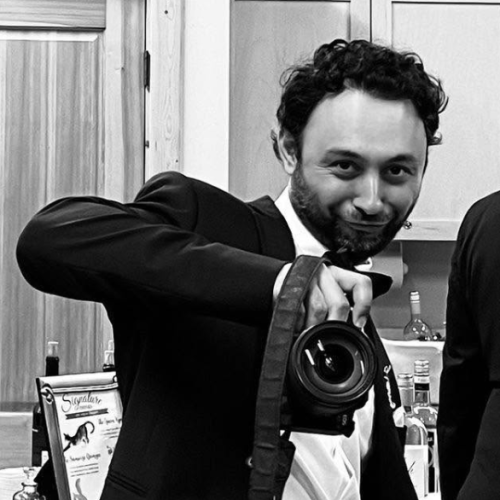
Jaffer Hasan is a freelance music and fashion contributor with BostonMan Magazine. You can follow him and see more of his work on Instagram HERE.
