
I’VE been a bartender/Bar manager/Beverage Director in the Boston area, both inside the city and throughout the suburbs, for nearly a decade. During that time, I’vehad the opportunity to work at some of Boston’s most respected bars, including Drink and No. 9 Park.
Over the years, I’ve had the chance to make and taste Old Fashioneds’ just about everywhere—different whiskeys, different recipes, different techniques, and plenty of experimentation.
But it wasn’t until recently -after ten years behind the bar- I think I’ve finally figured out what makes the perfect Old Fashioned.
THE OLD FASHIONED
The Old Fashioned is arguably one of the most popular cocktails in modern times, but its history reaches much further back. It is one of the earliest documented cocktails, although the exact original recipe remains one of the great debates among whiskey lore.
The basic idea was simple: a sugar cube, muddled with a little water to help dissolve, followed by whiskey. As the cocktail evolved, bitters became part of the recipe, and eventually simple syrup and richer syrups such as demerara became common as bartenders looked for consistency and efficiency behind the bar.
For a cocktail that is so simple on paper, the Old Fashioned certainly doesn’t come without its share of controversy.
Depending on where you have ordered, there may be oranges and cherries muddled directly into the drink, topped with soda water. This is most common throughout parts of the Midwest.
To me, that’s not a proper Old Fashioned. If I order an Old Fashioned and get a glass full of muddled fruit I will send it back every time.
WHAT SHOULD IT BE?
The Old Fashioned should showcase the base spirit.
My traditional Old Fashioned is 2.5 ounces of bourbon or rye, .50 ounce of 1:1 demerara syrup, two dashes of Angostura bitters, and two dashes of orange bitters, stirred over a large king cube. There shouldn’t be much to hide behind.
That’s the point. The whiskey should be the star, while the sugar and bitters work together to enhance it rather than overwhelm it.
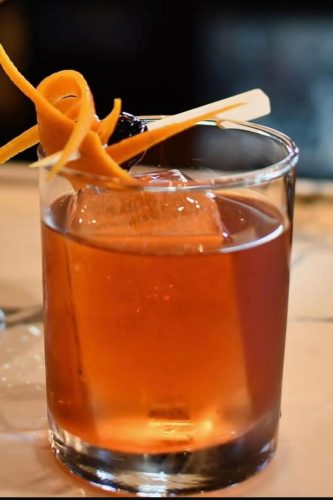
POST 1917’s PRIME OLD FASHIONED
At Post 1917 Steakhouse, we wanted to take that same philosophy and apply it to what we do best.
Our USDA Prime Old Fashioned has been recognized as #1 in Boston and all of Massachusetts, and the idea behind it came from looking at our ingredients differently. Since our steaks are butchered in-house, we have access to an ingredient that most cocktail programs simply don’t: the rendered fat from our beef.
Rather than treating this fat as a byproduct, I saw an opportunity to turn it into another ingredient.
We render the fat and use it to wash our bourbon. The process gives the spirit a subtle savory character, added depth, and a richer mouthfeel without making the bourbon taste like you’re drinking a steak.
It changes the spirit just enough to create something new while still allowing the whiskey to remain at the center of the cocktail.
That change, however, also meant I had to rethink the rest of the recipe.
In my traditional Old Fashioned, I use both Angostura and orange bitters, finished with a fresh expression of orange peel.
With the Prime Old Fashioned, I intentionally leave the orange bitters out and use only Angostura. The reason is simple: I want the savory character of the fat wash to shine.
A fresh orange peel brings a powerful citrus aroma, and combined with orange bitters, it can overpower the more subtle savory qualities we’re trying to highlight.
By leaving the orange out, the bourbon, fat wash, demerara, and Angostura can work together without competing for attention.
The result is a balance between savory and sweet that I think is incredibly natural. Sweet unlocks savory.
That’s what makes this drink special to me.
It isn’t about reinventing the Old Fashioned for the sake of being different. It’s about understanding what makes the classic work and then finding a way to push it forward without losing its identity.
A PERFECT TANDEM
We’re a steakhouse, but the bar and kitchen don’t have to exist in separate worlds. The ingredients we work with every day can inspire what happens behind the bar, and sometimes the most interesting cocktail ideas come from looking at something familiar in a completely different way.
This method is not new by any means; fat washing has been around for years. The difference? The quality of that ingredient and the correct measurement.
I pride myself on balance throughout all my cocktails, this one being no different. After ten years of making, tasting, and studying Old Fashioneds throughout Boston, I’ve come to appreciate that the drink doesn’t need much. In fact, the fewer ingredients you use, the more important every decision becomes.
The whiskey should always come first. The sweetness should support it. The bitters should add complexity. And everything else needs a reason to be there.
For the USDA Prime Old Fashioned, that reason is the savory depth created by the fat wash.
It’s a classic cocktail built on a simple idea, pushed one step further by an ingredient that could only come from Post 1917.
And THAT’S the perfect pairing: a touch of sweet, savory, spirit-forward, and -most importantly- unmistakably Post 1917. Cheers!
***
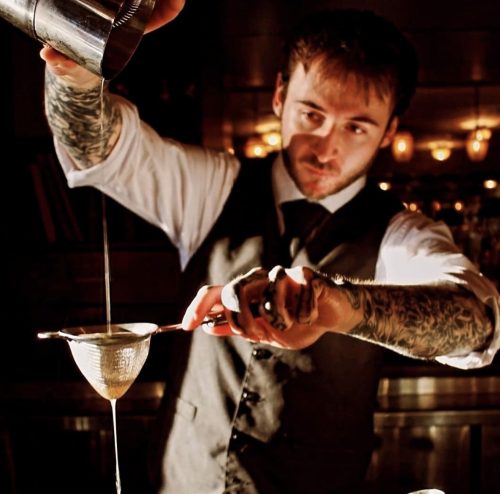
Christian Tanso is a Whisky expert and the Beverage Director at Post 1917 Steakhouse in Reading and Lexington.