
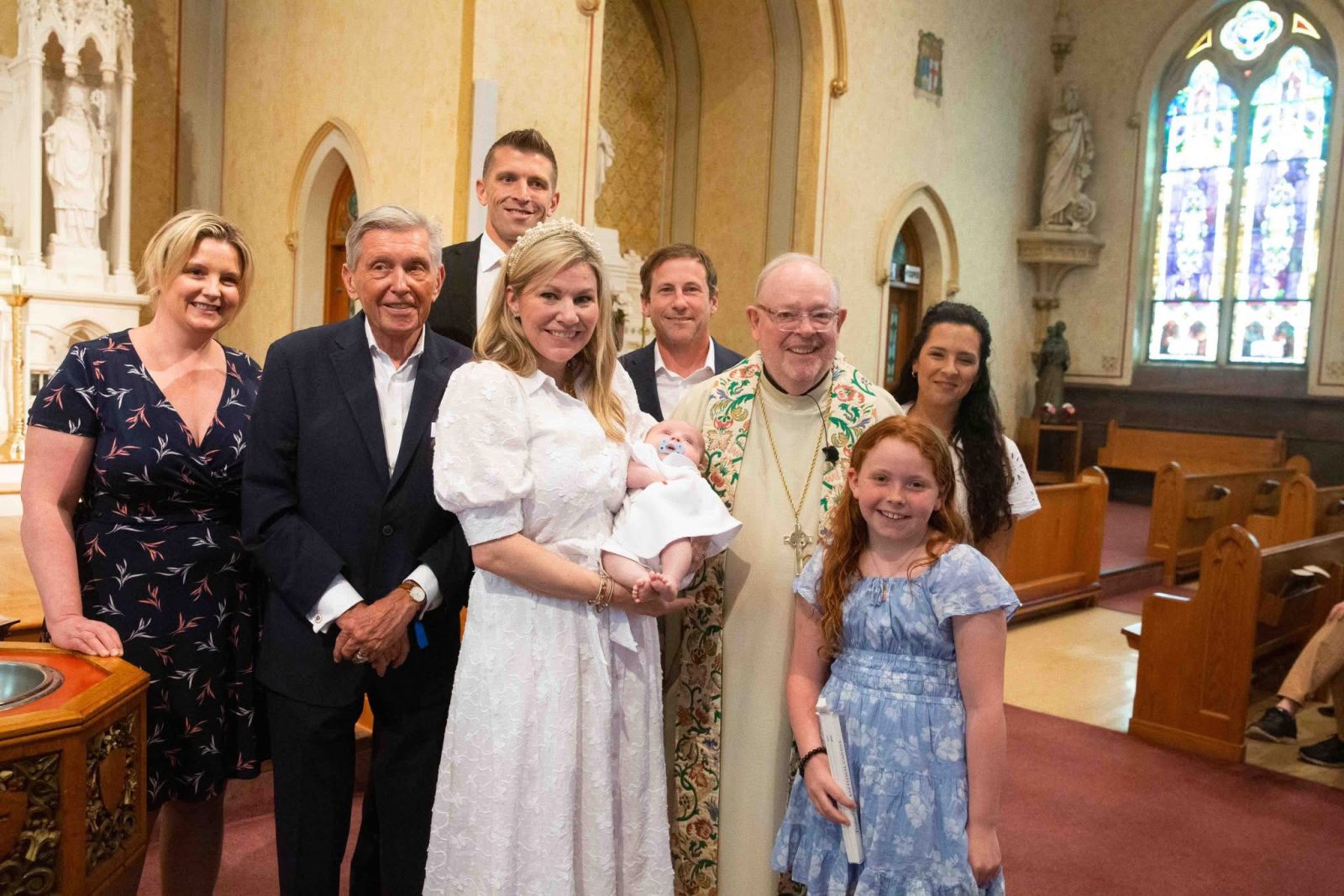

THE SOUL OF BOSTON: George K. Regan Jr’s Expanding Arena of Family, Faith & Power
___________________________________________________________
Forty-Two Years of Power, the Architecture of Perception, and a Lifetime Bonded to Family, Faith, and the Soul of Boston
M&R Media Publishing 2026 – Boston, MA
________________________________________________________________
____________________
- Introduction: The Man in the Arena
- The waterfront nerve center at 106 Union Wharf, the doctrine of the voice, and the 2026 evolution of a seventy-six-year-old Global Chairman whose life is made complete by family.
- Chapter 1: The Architecture of Ambition
- The convergence of Irish and Polish migrations in post-war Quincy, the lessons of the Wollaston shore, and a baby-faced teenager becoming the youngest writer to earn a byline at the Boston Globe.
- Chapter 2: The Crucible of the Brutalist Fortress
- Entering the inner sanctum of Mayor Kevin White, the exploratory presidential run of 1976, and the volatile, historical crossroads of the Boston busing crisis.
- Chapter 3: The Sovereigns of the Common
- The financial hustle behind the resurrection of Faneuil Hall, weaponizing the metropolitan press to bring Pope John Paul II to Boston, and the fateful phone call that ended a political dynasty.
- Chapter 4: The Birth of the Empire
- A fifteen-minute showdown with Jack Connors, the elevator epiphany, and the lean early days where Aunt Mary’s retirement accounts kept the infant agency alive.
- Chapter 5: The Great Corporate Shield
- Navigating the bipartisan terrain of the State House, managing the high-stakes corporate mutiny of the “Boston Fee Party,” and expanding the firm’s commercial reach.
- Chapter 6: The Golden Age of the Factions
- The rise of the New England sports dynasties with Robert Kraft, the Celtics, and the Red Sox, and the historic crisis management following the Boston Marathon bombing.
- Chapter 7: The Geography of the Heart
- The silent toll of a forty-year bachelorhood, the profound weights of familial loss, a chance romantic encounter at 35,000 feet during a global pandemic, and a cinematic wedding at Nauticus Marina.
- Chapter 8: A Family Arena
- The birth of George IV, a definitive health pause with Father Jack, and a strategic masterstroke handing operational command to Christian Nakkashian to free the Chairman for international expansion.
- Chapter 9: The World Stage
- The liberation of force in the summer of 2026. Bringing the multi-billion-dollar global carnival of the FIFA World Cup to Boston and orchestrating its massive regional narrative.
- Epilogue: The Voice in the Arena
- The modern calculation of neutrality versus the rare commodity of moral courage. A retrospective from twenty-five hundred feet in the air on a life spent in the eye of the storm.
_____________________________________________________________________
_________________
Introduction: The Man in the Arena
THE MORNING AIR off Boston Harbor in late August carries a deceptive, soft stillness, the kind of New England heat that invites a city to pause, to flee toward the cooler sands of the Cape, and to forget, if only for a day, the relentless machinery of commerce and politics. But inside 106 Union Wharf, in the nerve center of Regan Communications Group, the concept of leisure does not exist. Here, the currency is not time, but attention, influence, and the raw, unceasing manipulation of the public narrative.
At seventy-six years old, George K. Regan Jr. remains a man wholly defined by the arena he has spent a lifetime constructing. He sits in his office on the waterfront, a setting that speaks less of contemporary corporate sterility and more of the old, muscular Boston—a city built on tribal loyalties, backroom compacts, and the fierce, unyielding defense of territory.
As the celebrated photojournalist Eric Snyder moves quietly through the room, the camera shutter clicking to capture the definitive portrait of a shifting era, Regan delivers what is less an observation and more a foundational doctrine of his life: “If God gave you the gift of good, healthy lungs, you have a voice. Don’t be afraid to use it.”
It is a lesson forged in the hyper-charged, tribal crucible of Boston City Hall during the 1970s, passed down by Kevin White, the city’s legendary fiftieth mayor. For four tumultuous terms, Regan stood side-by-side with White, learning a brutal and sophisticated calculus: in a city fractured by old blood, changing demographics, and political warfare, silence is a form of surrender. To survive, one has to command the airwaves.
In 2026, marking the forty-second anniversary of his firm, that doctrine has transformed a young political operative into one of New England’s most formidable power brokers. Regan Communications has grown into the largest privately owned public relations agency in the region, and the sixth largest in the nation. To walk through Boston is to encounter his footprints at every turn—not merely in the boardrooms of the corporate elite, but in the institutional fabric of the city itself.
His influence is civic, paternal, and pervasive, stretching across decades of philanthropic devotion to the Friends of the Boston Police, the Anti-Defamation League, the Carroll Center for the Blind, and the Eagle Scouts of his youth. His appointments by Governor Charlie Baker to the Commonwealth Zoological Corporation and The Children’s Trust are not merely titles; they are acknowledgments of an enduring, institutional permanence.
Yet, for all the decades spent climbing to the absolute zenith of the corporate landscape, the ultimate truth of George Regan is that his vast professional kingdom is entirely secondary to a deeper, more sacred architecture.
To understand the man, one must understand that nothing—no political favor, no million-dollar retainer, no national accolade—means more to him than FAMILY. For over forty years, the media styled him as a bachelor permanently wedded to his career, but he was simply a man guarding his heart until he found a love that matched the fierce, unconditional devotion of his mother, Ann, and the protective warmth of his childhood home.
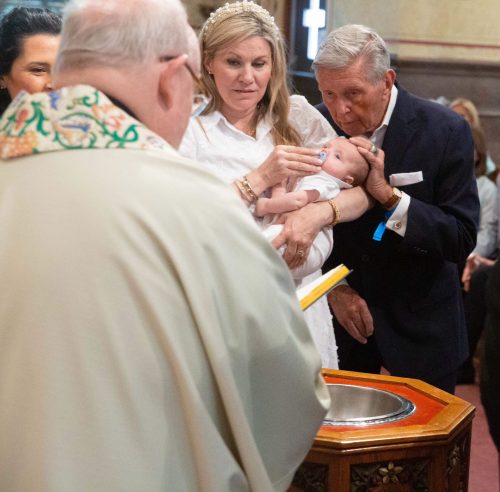
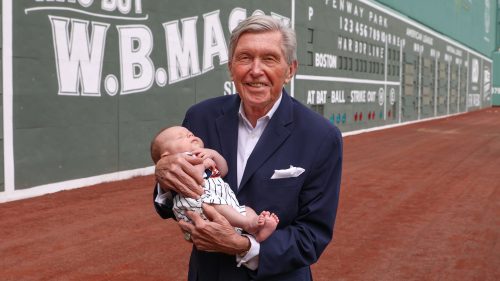
That love arrived in Elizabeth, a union celebrated in the pages of The New York Times, bringing a rare, serene grace to a life otherwise spent in the eye of the storm. And then, at seventy-five years old, came the ultimate personal blessing that has completely rewritten his destiny: the birth of his newborn son, George K. Regan IV, in the spring of 2026.
It is this beautiful, fragile arrival that has finally made George’s life complete, bridging the deep heritage of his past with a radiant, living future.
There are those who wonder when a man who has seen it all will finally choose the quiet of his Cape Cod home. But every morning, Regan still makes the ninety-minute drive toward the North End waterfront, propelled by a restless new energy.
Now seventy-six, inspired by his newborn son, he is embarking on perhaps the single largest undertaking of his legendary career. Stepping up into the role of Global Chairman, he has untethered himself from the daily operational minutiae to conquer an entirely new frontier, aiming to expand the empire across international borders.
The adversaries have changed, the technology has evolved, and the pushback remains as fierce as ever, but the man remains unchanged. He is, in the truest spirit of Theodore Roosevelt’s grand American ideal, the man in the arena—marred by dust and sweat, knowing the great enthusiasms and the great devotions, spending himself in a worthy cause. This is the architecture of his city, the legacy for his son, and this is his story.
_______________________________
Chapter 1: The Architecture of Ambition
HE WAS BORN into the vast, burgeoning matrix of the post-war American republic on August 25, 1950, in Quincy, Massachusetts—a town tethered by geography and tribal economics to the hard, unyielding politics of Greater Boston.
The child, George K. Regan Jr., was the kinetic convergence of two distinct European migrations that had arrived at the turn of the century to fuel the engine of the New England working class. His father’s people had fled the structural poverty of County Cork, Ireland, finding a fierce, clannish home in the triple-deckers of South Boston.
His mother’s family, the Kowalskis, had come from Poland, navigating the dense, industrial tenements of Boston’s South End. These were people who understood that in the New World, survival required a certain quiet stamina, and that identity was defined by the parish, the neighborhood, and the union card.
The meeting of his parents, George K. Regan Sr. and Ann Theresa Kowalski, in the autumn of 1948, possessed the accidental charm of a city poised on the brink of an unprecedented era of growth.
They met on a morning bus—she traveling downtown to a day of typing and clerical routine, he riding toward the margins of professional sports, filled with tales of his days as a barnstorming baseball player.
The elder Regan had chased the American dream through the dirt infields of the minor leagues, eventually earning a tryout with the Boston Braves. In those days, the Braves—operating out of the grand concrete expanse of Braves Field on Commonwealth Avenue—were a civic religion every bit as potent as the Red Sox.
Led by the incomparable Warren Spahn, an elite southpaw who would amass 363 career victories on his way to Cooperstown, the 1948 Braves captured the National League pennant, teasing the city with the intoxicating prospect of an all-Boston World Series.
It was a dream that died on the final day of the regular season when Ted Williams and the Red Sox fell 8-3 to the Cleveland Indians in a sudden-death playoff, followed by the Braves’ own six-game collapse to Cleveland in October.
Yet, on the bus that autumn morning, the romance of the game remained intact. “I didn’t know how much of what he was telling me was totally true,” Ann would later recall with an affectionate, backward glance at the optimism of the time. “But there was something so innocent and delightful about the way we spoke to each other.”
They were married in a nation undergoing a massive, demographic convulsion. In the immediate wake of the global conflagration, two million couples wed, participating in a social phenomenon that by 1952 would yield twenty-five million new births. This was the dawn of Pax Americana, a brief, shining window where middle-class security seemed an absolute birthright. The G.I.s had returned with an insatiable appetite for stability, trading the foxholes of Europe and the Pacific for the predictable geometry of suburban tracts.
It was William Levitt who engineered the physical blueprint of this new reality. Utilizing the mass-production techniques he had mastered while building airfields for the Navy, Levitt transformed home construction into a hyper-efficient assembly line, pioneering modern suburbia. Suddenly, a young family could purchase a home with a small patch of grass, a white picket fence, and an American flag flying from the porch for a fraction of what pre-war real estate demanded.
The Regans joined this great migration, purchasing a modest house in Wollaston, a coastal neighborhood of Quincy. Here, they built their enclave: George Jr., followed by his sisters, Marianne and Patricia Ann. The household was augmented by Ann’s older sister, Mary, who moved from the South End to help raise the children, extending a matriarchal protection that had begun when she raised her own orphaned sister during the brutal lean years of the Great Depression. “My Aunt Mary was like a second mother to me,” Regan would later reflect. “I never got to meet my grandparents… they all died young. My mother’s parents passed away during the Depression, and it was Aunt Mary who nourished and cared for her, taking on the responsibilities of a parent.”
The young George Regan Jr. grew up within the structured, comforting rhythms of post-war Catholic New England—parochial discipline on Sundays, neighborhood sports, and a deep affection for animals. But it was the sea that offered the first glimpse into the bizarre, unpredictable machinery of public perception.
During a summer fishing trip off the Wollaston shore, Ann Regan landed a massive, newsworthy catch that caught the attention of the local Sears, Roebuck annual fishing derby. Shunning the spotlight, she deferred the prize to her son. When the flashbulbs popped and a local reporter pressed the young boy to describe the epic struggle of reeling in the magnificent fish, George looked at the cameras, shook his head, and confessed: “I didn’t catch it. My mother did.”
The incident left an indelible mark. His mother was mortified by the sudden breakdown in narrative control. Looking back across five decades of managing crises, Regan noted the profound irony of that early confession: “My mother was not proud of the way I handled the situation, and I think that is one of the major reasons why I got into public relations.”
By 1968, the year George graduated from North Quincy High School, the placid surface of post-war life had fractured completely. He enrolled at Suffolk University, abandoning an early ambition to become a veterinarian, largely because he was incapable of wandering too far from the fierce, protective orbit of his mother. “He was too much of a ‘mama’s boy,'” his wife Elizabeth would later tease. Regan readily agreed: “Every big moment in my life, my mother was there to send me off… She had a superstition that if she dressed me in a brand-new set of ‘good luck’ underwear, I would succeed.”
The world outside of Wollaston was in a state of violent, historic transition. In 1968, American astronauts rode massive rockets toward the moon while the nation tore itself apart over the jungles of Vietnam. Martin Luther King Jr. and Robert F. Kennedy were assassinated within sixty days of each other. Muhammad Ali glared from the cover of Esquire transfixed by arrows, Richard Nixon seized the White House by appealing to a silent majority, and Bill Russell’s Boston Celtics ground out a historic tenth NBA title against the Los Angeles Lakers.
It was into this hyper-charged atmosphere, in the summer of 1968, that seventeen-year-old George Regan entered the professional media, reporting for duty at the Boston Globe.
His entry was humble: a messenger in the advertising department. In an era before digital transmission, the daily production of a great metropolitan newspaper depended on a fleet of young couriers who physically ran through the city streets to gather final ad copy from major retail hubs like Macy’s. On his first day, handed a three-dollar allowance by his mother, Regan set out on his route under a brutal July sun. Exhausted, dehydrated, and out of money, he ignored the standing instruction to call the office for a vehicle and instead walked the long miles back to the Globe building. He arrived hours late, causing the paper to miss its strict print deadline.
The next morning, management moved him to the copy room—a demotion that proved to be a stroke of immense historical fortune. In that chaotic, ink-stained room, Regan’s relentless curiosity and baby-faced innocence caught the attention of the editors. At seventeen, he became the youngest writer in the history of the Boston Globe to earn a byline. He became the paper’s utility player, taking on whatever assignment the desk flung his way, including the dark arts of undercover investigative journalism.
In the late 1960s, a whispers-only narcotics scandal began brewing along Quincy Shore Drive and Wollaston Beach. The authorities were maintaining a suffocating wall of silence, immediately flushing out any recognizable reporter who approached the scene. But the Globe editors realized they possessed a unique weapon: George Regan was a local kid, he knew every cove of the Quincy shoreline, and he possessed a disarming, youthful countenance that defied suspicion.
“They basically assigned me to go down there and just hang out and observe for a month,” Regan later recounted. “I was paid to be a spy.”
For weeks, the teenage operative melted into the background of coastal blue-collar life, becoming a fixture where he was least expected. He sat on the stools of The Clam Box and Tony’s Clam Shop, hung around the slips at the Squantum and Wollaston Yacht Clubs, and loitered near the Wollaston Beach Playground. He was looking for the subtle, discordant notes in a familiar symphony—the cars that stayed too long, the cash that changed hands too quickly, the faces that did not belong to the neighborhood. Every evening, he returned to the Globe’s smoke-filled newsroom to unload his notebook, transforming raw, coastal gossip into hard intelligence.
When the Globe finally broke the story, it exploded across the city, blindsiding both rival editors and local law enforcement. “Other media outlets were like, ‘How did you get that information? Who is your source?’” Regan recalled with a grin that still carried the triumph of that youthful heist. “Nobody knew it was just me snooping.” It was his first real taste of the ultimate truth of Boston: that the most valuable commodity in the city was not money, but the secret knowledge of who was doing what to whom, and when.
With the momentum of the Globe behind him, Regan completed his undergraduate work at Suffolk University and moved across town to the prestigious Boston University School of Public Communication. He arrived on a full scholarship, sharpening his prose and earning his master’s degree in writing. By the early 1970s, he was an enviable American archetype: young, aggressively ambitious, credentialed by the academy, and blooded by the metropolitan press. He was a creature of the media, but he was restless, waiting for a larger arena that could match his kinetic internal engine.
The catalyst arrived via the informal, backchannel network that governed the city’s media elite. A colleague over at the Boston Herald—a rival paper that fiercely contested the Globe for the soul of the working class—called Regan with a tip. The reporter had just finished a temporary stint inside the press apparatus of Mayor Kevin White, and he dropped a crucial piece of intelligence: White’s inner circle was burning through staff, suffering from the chronic exhaustion that defined the administration, and they were looking for fresh, unspent energy to replenish the ranks.
To a young man who understood the architecture of New England power, the invitation was irresistible. Boston City Hall, a brutalist concrete fortress rising out of the historic rubble of Scollay Square, was no longer just a seat of municipal government; under Kevin White, it had become the epicenter of a political empire. “That caught my attention,” Regan said, reflecting on the moment the trajectory of his life fundamentally shifted. “So I went into City Hall the next day and applied.”
__________________________________
Chapter 2: The Crucible of the Brutalist Fortress
GEORGE REGAN SAT in the inner sanctum of the mayor’s office at 1 City Hall Square, carrying with him the invisible but potent armor of his mother’s superstition—a brand-new set of clothes meant to invoke fortune. Across the majestic, heavy desk sat Kevin White, the man who had occupied the center of Boston’s political universe since 1968. White did not merely look at Regan; he sized him up with the cold, diagnostic precision of a veteran ward boss.
If ever an American politician seemed genetically engineered to rule a specific piece of geography, it was Kevin White. Born in the fierce, tribal enclave of Jamaica Plain on September 25, 1929, he was the legatee of a formidable municipal dynasty. His father, Joseph C. White, had been a powerhouse in the state legislature and a president of the Boston City Council. His wife, Kathryn, was the daughter of William J. Galvin, yet another titan who had presided over that same city council. In Boston, politics was not a career choice; it was an inheritance, an entry into a closed guild where power was passed down through blood and marriage.
White was a man who understood the theatricality of leadership, a lesson forged in the fires of crisis. On April 5, 1968—just twenty-four hours after the assassination of Martin Luther King Jr. had ignited a wave of destructive rioting across the urban landscape of the United States—White had stood on the stage of the Boston Garden alongside the Godfather of Soul, James Brown. Together, before a packed, hyper-charged arena and a live television audience, they appealed to the soul of a grieving city, channeling raw grief into a shared, peaceful vigil. While other great American metropolises burned, Boston remained remarkably intact, saved by a brilliant calculus of mass communication and raw political courage.
Now, freshly re-elected to his second of what would become four consecutive terms, White was a national figure, and George Regan was merely an ambitious local kid hoping for a foothold in his empire. “The interview barely lasted five minutes,” Regan later recalled. White was looking for a grander, national pedigree to populate his staff; he did not think the young kid from Quincy was ready.
But the machinery of City Hall was fueled by a constant, insatiable need for labor. The following week, an administrator from White’s office called Regan with an extraordinary, backchannel proposition. The administration was short-handed and desperate for bodies. They would hire him, but with a bizarre caveat: they would hide him from the mayor until he had proven his worth. Regan, possessing the sharp instincts of a natural street fighter, recognized the opening. He agreed to the terms on the spot.
The early 1970s was a turbulent, transcendent epoch in the life of the city, offering a rare fortuity for a young operative to carve out a permanent lane. “There was so much to do,” Regan reflected. “The opportunity to make positive contributions… were there for us daily under Mayor White.”
Beyond the provincial borders of Massachusetts, the national landscape was fracturing. The year was 1973, and the grand architecture of the post-war consensus was collapsing in real time. Daniel Ellsberg, operating out of the intellectual redoubt of Cambridge, had leaked the Pentagon Papers, exposing the systemic deception behind the Vietnam War. Vice President Spiro Agnew had been driven from office by the Justice Department after it was revealed he had accepted a crude, ten-thousand-dollar bribe inside the White House complex. Months later, Richard Nixon would follow him into disgrace, undone by the slow, suffocating leak of the Watergate scandal.
Even Nixon’s successor, Gerald Ford, was being systematically dismantled in the popular imagination, cast by Chevy Chase on a new television phenomenon called Saturday Night Live as a clumsy, bumbling accidental executive. For the Democratic Party, the election of 1976 represented a historic, almost inevitable opportunity to reclaim the executive branch.
Kevin White knew it, and so did the ambitious governor of Georgia, Jimmy Carter, with whom White co-chaired the Democratic Election Committee.
Regan was handed a daunting assignment: travel the length and breadth of the American continent, serving as the advance guard to test whether the national press corps had an appetite for a sophisticated, big-city mayor in the White House. Arriving in metropolitan centers days ahead of White’s entourage, Regan worked the phones, charmed local editors, and constructed the physical scaffolding of an exploratory presidential campaign.
In Detroit, Regan engineered a stroke of pure, unadulterated media theater. He organized a massive public blood drive where Mayor White personally donated his own blood to support local hospitals, a spectacle broadcast live on WXYZ’s morning program. By the mayor’s own estimation, the event was “a bloody success,” and he demanded to see the staffer responsible.
When directed to one of the vehicles in the mayoral caravan, White bypassed his own limousine and slid into the seat directly next to the event organizer. He looked over, his eyes narrowing as he recognized the kid he had dismissed months earlier.
“What the hell are you doing here?” White exasperated. Then, a broad, knowing smile broke across the mayor’s face. “Welcome to the team, kid. You did an incredible job with this first exploratory presidential trip.”
Looking back across the decades, Regan acknowledged the fundamental accuracy of the mayor’s initial judgment. “Mayor White was absolutely correct in his reasoning for not wanting to initially hire me. I was too young, too immature, and too inexperienced.” But the subterranean architecture of City Hall had allowed him to develop his muscles in the shadows. From that moment forward, Regan ascended rapidly into the inner circle, becoming White’s press secretary and, alongside Micho Spring, one of his two indispensable advisors. The relationship evolved from professional utility into a profound, lifelong bond; White would publicly refer to Regan as his “third son,” a man he knew could get things done for the city and the country.
The schedule they kept was a dizzying, frantic carousel. Alongside Ira Jackson—another brilliant young aide who would later direct the Kennedy School of Government—they crisscrossed the nation, looking to secure the destiny of the Democratic Party, whether through White, Carter, Ted Kennedy, Jerry Brown, or Henry “Scoop” Jackson.
“We were very well received everywhere we went,” Regan recalled. “Kevin, Ira, and myself were be-bopping back and forth from Boston to whichever city was next… Carter was relatively unknown on the national stage at the time, and the more we campaigned, the more it was looking like Kevin could emerge as the candidate.”
But history had a different, darker script in mind. While White chased the presidency in the suites of national hotels, his own city was drifting toward a catastrophic domestic crisis that would demand his absolute, undivided presence. The dream of the White House would have to be abandoned to save Boston from itself.
On June 21, 1974, Federal District Court Judge W. Arthur Garrity Jr. handed down a sweeping, historic ruling. He determined that the Boston School Committee had systematically and intentionally maintained a segregated public school system that disadvantaged Black children. The only permissible remedy, Garrity concluded, was the immediate, forced busing of students between the city’s most racially polarized neighborhoods.
The geometry of the decree was volatile. Roxbury High School, the epicenter of the city’s African-American community, was paired with South Boston High School, the proud, fiercely insular citadel of the city’s white working class. A massive portion of their respective student bodies would be forced to trade places.
The order was set to take effect on September 12, 1974. White, Regan, and the top tiers of municipal government were given less than ninety days to prepare a highly fractured populace for a social revolution. Tensions and anxieties reached a violent, suffocating boiling point.
“I wish I knew a way to have taught Garrity, or convinced him to be more generous; softer in his implementation of that order,” White would later reflect, his voice carrying the heavy exhaustion of a leader caught between the law and the streets. Neither White nor Regan were ever entirely comfortable with the mechanics of the decree, viewing forced busing as an excessively severe instrument for social engineering. But as the clock ticked down toward September, the political aspirations of the administration evaporated, replaced by a singular, desperate priority: protect the children of Boston from the gathering storm of racial violence.
__________________________________
Chapter 3: The Sovereigns of the Common
THE BUSES ROLLED through the autumn streets of 1974, fracturing the city’s geography and leaving an administration to govern by crisis. Yet, by the following year, the machinery of Boston City Hall had to pivot from the raw sociology of racial division to the unforgiving algebra of survival. In 1975, Kevin White and George Regan narrowly engineered a tumultuous re-election bid, securing a historic third consecutive term in a city still hyper-charged by the busing decree.
To govern under White was to understand that civic healing required both moral force and grand theater. To counter the gathering darkness of the era, Regan helped orchestrate a massive, 30,000-strong marchthrough the heart of the city—a deliberate, visual manifestation designed to protest racial violence not merely in Massachusetts, but across the American republic. “We were doing everything we could to keep the city safe and move it forward at the same time,” Regan observed.
Moving forward meant shifting the city’s energy toward “Boston 200,” a massive, meticulously planned Bicentennial Celebration that spanned from April 1975 through December 1976. It was a spectacular exercise in civic resurrection. On the banks of the Charles River, White and Regan helped organize a Boston Popsconcert on the Esplanade that drew an astonishing 400,000 people—a milestone authenticated by the Guinness Book of World Records as the largest crowd ever assembled for a classical music performance.
Then, just a week later, the stakes shifted from the populist to the geopolitical. City Hall welcomed Queen Elizabeth II and Prince Philip, marking the first historic visit of a reigning British monarch to the Commonwealth of Massachusetts. The arrival was governed by a dense, suffocating protocol drafted by the United States Department of State. “We were given very specific instructions… not to touch the Queen under any circumstance,” Regan recalled. But the rigid diplomacy of Washington was no match for the localized charm of Boston’s chief executive. “Once she was off the royal yacht and greeted us, it wasn’t five minutes before the mayor and her had their arms around each other like two old friends.” Regan smiled at the memory: “That was Kevin for you.”
The centerpiece of the royal itinerary was an ultra-exclusive private luncheon for 192 dignitaries inside the mayor’s executive suite. For weeks, Regan’s team had overseen a lavish, thousands-of-dollars makeover of the office, installing dramatic, state-of-the-art floor-to-ceiling windows overlooking the plaza, and raiding the city’s finest cellars for the most expensive vintage wines.
Yet, once the heavy doors closed, the monarch bypassed the vintage grapes, leaning toward her new friend, the mayor, with a distinctly human request: “Would you be able to find me a gin and tonic anywhere?” Nearby, Prince Philip caught the eye of the staff, adding his own brief petition: “All I want is a cold beer.”
It was a Sunday in 1976, an era governed by New England’s strict, archaic Blue Laws that kept every package store in the Commonwealth hermetically sealed. Regan, operating with the frantic agility of a natural fixer, broke through the perimeter. He sprinted to the police motorcycle blockade at City Hall Plaza, explained the sudden royal emergency, and within minutes, uniformed Boston police officers were rushing serving trays of liquor and chilled beer out of the kitchens of Faneuil Hall and into the hands of British royalty. The crisis vanished in a flash of brass and institutional hustle. “Everyone was able to enjoy their beverage of choice,” Regan recalled with a grin.
But while Boston celebrated its history, the national Democratic landscape was descending into chaos. By May 1976, Jimmy Carter, who had seized an early advantage in the primaries after White withdrew his own name from the national ballots, was careening backward in the public polls. The anti-Washington outsider was systematically dismantled by California Governor Jerry Brown in Maryland and barely survived a challenge from Morris Udall in Michigan. The Carter campaign was hemorrhaging momentum, desperately seeking an injection of professional discipline.
Jody Powell, Carter’s fiercely loyal press secretary, had spent months observing Regan’s tactical precision on the Democratic Election Committee. He recognized that the young Bostonian possessed the exact media calculus the Georgia outsider lacked. Powell extended an aggressive, competitive offer: a senior position on the national campaign with a direct hand in strategic planning.
There was, however, a profound subterranean obstacle. To the public, Kevin White and Jimmy Carter were co-chairs of a unified party apparatus. In reality, the chemistry between the southern governor and the northern urban boss was toxic. “They hated each other,” Regan revealed.
When Regan entered the inner office to request a formal leave of absence, he was met by White’s icy, unblinking glare.
“Is this something you really want to do?” White asked.
“Yes, I do,” Regan replied, standing his ground before his mentor.
White paused, the tribal loyalties of a lifetime warring with his affection for the young operative. “Well then, good luck and godspeed.”
Regan hit the national campaign trail at a dead sprint, engineering the media strategies that allowed Carter to outlast his rivals and formally claim the nomination at a raucous Madison Square Garden in New York City. But the transition from municipal warfare to national politics meant entering a theater of bizarre, unpredictable public relations landmines.
In the spring of 1976, prior to Regan’s arrival, Carter had granted an extensive interview to Playboy magazine, scheduled for publication in the volatile final weeks of the autumn campaign. While the interview allowed Carter to align himself with the progressive, civil rights platform championed by Hugh Hefner, it contained a single, catastrophic rhetorical excursion. Carter, a devout Southern Baptist married since 1946, confessed to the interviewer that he had “looked upon a lot of women with lust,” admitting he had “committed adultery in my heart many times.”
The commentary ignited a furious, nationwide firestorm. Powell and the inner circle retreated into immediate damage control, pausing the campaign before attempting a critical restart with a massive, one-thousand-person fundraiser for elderly donors in Miami Beach.
The campaign apparatus descended upon the Konover Hotel, a posh beachfront resort that had opened just months earlier on Christmas Day 1975. As Regan sat in the hotel lounge on the eve of the media’s arrival, his eyes cataloged a terrifying detail: the waitstaff were serving drinks in glassware emblazoned with the unmistakable silhouette of the Playboy bunny.
The Konover, it turned out, was the newly rebranded incarnation of the former Miami Beach Playboy Hotel, and the corporate transition had left thousands of branded artifacts scattered across all four floors of the property. Within hours, the international press corps, national donors, and conservative sponsors would flood the lobby. If the media captured the “adultery in my heart” candidate surrounded by Playboy iconography, the campaign would die on the evening news.
Regan went into overdrive. He tracked down the general manager, who was trapped in a corporate meeting in New York City, and secured total authority over the physical plant. Throughout the night, a frantic, subterranean purge took place. Regan’s team stripped sheets, replaced stationery, and hunted down glassware across the entire complex. “It was quite the scene,” Regan laughed. “In some instances, we were pouring a customer’s drink out of a Playboy glass and into a new glass while they were in between sips!” By sunrise, the evidence had been eradicated.
On November 2, 1976, Jimmy Carter held off Gerald Ford by just over one million popular votes to become the 39th President of the United States.
That night, amidst the euphoria of victory, a grateful Jody Powell invited Regan to Washington, D.C., offering him a chance to relax and select his piece of the new federal empire. Regan returned briefly to Boston to gather his belongings before heading to the nation’s capital. On Sunday morning, his phone rang; Mayor White’s office requested his presence at Logan Airport for an immediate press conference.
The request was unusual, but Regan complied, navigating the familiar tarmac until he was pulled aside by his old mentor. The mayor looked at him, the ice of the past year completely melted, replaced by the familiar, demanding rhythm of Boston politics.
“Are you ready to get back to work?” White asked.
Regan looked at the man who had raised him in the arena, weighing the allure of the White House against the fierce, gravitational pull of his city. “Does this mean I still have a job?”
“Listen,” Mayor White said, leaning across the tarmac, his eyes locking onto his young advisor with a fierce, absolute clarity. “Would you rather be a small fish in the ocean or a large fish in a small pond? We have a lot of work to do here. This will be the best thing for you and me.”
Regan nodded, the allure of the national capital dissolving instantly back into the familiar, saltwater gravity of Massachusetts.
“Just one more thing,” White added, his voice dropping into that low, gutter growl reserved for his deepest political resentments. “I don’t ever want to hear that son of a bitch’s name again!”
And just like that, the contract was renewed. Kevin White and George Regan were back in the saddle, steering a city that was about to undergo a radical, architectural transformation.
At the top of their municipal ledger was the salvation of Faneuil Hall Marketplace. To the uninitiated, the area was a collection of crumbling, rat-infested brick shells, a dying commercial zone occupied by a few stubborn cheese and meat wholesalers who clung to the edges of the waterfront. But where others saw a decaying relic of nineteenth-century commerce, White saw the epicenter of an urban renaissance. In an era when urban theorists argued that Boston was permanently defined by its insular, blue-collar ethnic neighborhoods, White envisioned an international mecca—a sparkling destination oasis that could draw tourism from across the globe.
To realize the dream, the administration first secured an initial injection of federal urban renewal funds. But the true catalyst was James W. Rouse, a charismatic Maryland developer who possessed a unique genius for marketplace theater. With Rouse on board, the financial scaffolding began to assemble: Chase Manhattan Bank of New York committed a crucial 10 million dollars.
Then came the hard, localized hustle. Through a relentless marathon of dinner receptions, private luncheons, and calculated political pressure, White and Regan systematically twisted the arms of the New England financial establishment, forcing an agglomeration of eleven local banks to match Chase with another 10 million dollars. “Lots of meetings, lots of schmoozing,” Regan recalled. “Even once Rouse and Chase Manhattan were on board, there was still a lot of resistance throughout the city on whether or not we could actually make this work.”
The gamble paid off spectacularly. By its second anniversary in the summer of 1978, the Boston Globe was celebrating Faneuil Hall as “a sparkling symbol of urban renaissance.” It was a watershed achievement, establishing the structural foundation that would eventually make the Big Dig possible, spark the waterfront revitalization, and ultimately pave the way for the multi-billion-dollar Seaport District of the twenty-first century. As Regan later observed: “Kevin White built the foundation which made Boston a world-class city.”
With the new-look Boston beginning to boom, the administration turned its attention to a grander form of civic showmanship. Regan, a devout Catholic, watched the national news wires and noticed that Pope John Paul II was planning a historic tour of the United States. He cornered the mayor, suggesting they bring the Pontiff to Boston.
White was instantly energized but quickly ran into the rigid, bureaucratic walls of the ecclesiastical hierarchy. When White contacted the local cardinal to extend a formal invitation, he was told that protocol dictated the request must originate from an independent, “third party”—and that a direct appeal to the Vatican would yield nothing.
Befuddled by the canon law of diplomacy, White turned the problem over to his fixer. “Let me handle it,” Regan said.
Recognizing that searching for the perfect private intermediary would take months they did not have, Regan chose to weaponize the metropolitan press. He engineered a brilliant public relations heist, designing a formal, front-page invitation to the Vatican and placing it directly into the hands of an old friend, Dan Forst, at the Boston Herald-American. The layout featured the cardinal invoking the deep, historic roots of Boston’s Catholic community, practically daring the Holy See to bypass the city.
“We made sure that edition of the Herald circulated throughout the Vatican with the same velocity it was here in Boston,” Regan recalled with a laugh. The media gambit was flawless. Within seven days, the United States Department of State contacted City Hall with the news: Pope John Paul II would make Boston the absolute first stop on his American itinerary.
On October 1, 1979, the Pontiff touched down at Logan Airport, becoming only the second pope in human history to set foot on American soil. The logistical burden was staggering, requiring an unprecedented coordination of municipal security and secret service detail. Regan’s team orchestrated a massive papal motorcade that snaked through the city’s neighborhoods—including a deliberate loop past the newly minted Faneuil Hall Marketplace—culminating in a historic, open-air mass on the Boston Common before an ocean of 400,000 faithful.
For Regan, the papal visit was more than a professional triumph; it was a deeply personal milestone. “You may not notice just by looking or talking to me, but I am a man of faith,” he later acknowledged. “I grew up with the Catholic Church and remain a practicing Catholic today.”
That internal architecture of faith would be tested to its absolute limits in 1981. Following an extremely serious, near-fatal accident, Regan found himself confined to the intensive care wards of Massachusetts General Hospital. The road back was brutal. He was forced to undergo a grueling rehabilitation process, painfully relearning the use of his extremities, including the complex musculature of his mouth and jaw. “It was very difficult,” he said simply. “I basically had to re-teach myself how to speak.”
During the long, isolating months of convalescence, Regan found a new intellectual and moral outlet through the Anti-Defamation League of New England. His commitment to civil rights and human dignity deepened in the quiet of the hospital room. The old mandate from Kevin White—if you have strong lungs and a voice, use it—took on a profound, existential weight. “After my accident… that really resonated with me in a more powerful manner,” Regan reflected. “I became more determined than ever to stand up for worthy causes and use my voice with even more impact.”
After four months away from the levers of power, a healed and re-energized Regan returned to City Hall just as the tribal drums of the 1983 mayoral election began to beat.
Having occupied the executive suite since 1968, Kevin White was already the longest-tenured mayor in the three-hundred-year history of the city. But the decades in the trenches had exacted a heavy physical and emotional toll. “Neither one of us had to say it to each other, but we were both exhausted,” Regan admitted. “We both knew deep down we weren’t going to be coming back for a fifth term.”
Yet, White, Regan, and top aide Micho Spring chose to keep their cards close to their chests, carefully evaluating the political landscape to ensure an orderly succession that protected the city’s interests. With formidable figures like City Councilor Raymond Flynn and former State Representative Mel King preparing to enter the vacuum, White knew the city would remain in capable hands.
But the vacuum created an insatiable appetite for rumor, culminating in a media crisis in May 1983. The Boston Herald blasted a historic, bold front-page headline across the city: “WHITE WILL RUN.” Hours later, the administration held a press conference to announce the exact opposite—that Kevin White was abdicating the throne.
The origin of that monumental journalistic error became a piece of permanent political folklore in Boston, hotly debated in bars and newsrooms for forty years. “I’ll tell you exactly what happened,” Regan explained, stripping away decades of myth.
The Herald’s aggressive political columnist, Peter Lucas, had been relentlessly hounding the mayor for a definitive statement, to the point where White’s inner circle was actively evading his calls. A few days before the official announcement, Lucas’s daughter was severely injured in an accident. White, operating out of genuine personal empathy, called Lucas to extend his condolences and well wishes.
Instantly, the journalistic instinct overrode the personal moment. Lucas began pressing the mayor on the upcoming election. “Don’t do this, Peter,” White repeated, attempting to steer the conversation back to the family crisis. But Lucas persisted, throwing out a final, desperate bluff: “Will Bob Page [the Herald’s publisher] fire me if I say you’re running?”
White, attempting to reassure a stressed father about his job security, replied: “Peter, Bob Page loves you. He will never fire you.”
“That was it,” Regan said, shaking his head at the memory. “That’s what Peter ran with. He took that as Kevin’s confirmation he was running.”
It was a classic Boston misunderstanding, a flash of human empathy transformed instantly into a political lightning bolt by the ruthless machinery of the metropolitan press. But the headline could not alter the underlying reality. The energy had spent itself.
And so, on that note, after sixteen tumultuous years serving as the chief executive of the city of Boston—nearly twelve of which saw George K. Regan Jr. standing by his side through the busing riots, the royal visits, the papal crowds, and the backroom calculations—Kevin H. White officially bowed out. The era of the brutalist fortress had come to an end, leaving a transformed city in its wake and a young fixer poised to build an empire of his own.
___________________________
Chapter 4: The Birth of the Empire
ONCE AGAIN, George K. Regan Jr. found himself sitting in a meticulously appointed executive suite, carrying with him the silent talisman of his mother’s enduring superstition—a fresh set of clothes meant to compel good fortune. Across the heavy expanse of a mahogany desk sat Jack Connors, the legendary founder of Hill, Holliday, Connors, Cosmopulos, an advertising colossus that had rapidly grown into one of the largest and most aggressively successful agencies in the American republic.
The year was 1984. By his early thirties, Regan had constructed a professional pedigree that read like an atlas of national power, a catalog of political insiders, media barons, and urban chieftains. Yet, he was certain of one thing: the grueling, transactional world of public service had spent its utility. He was ready to pivot toward the private markets.
Connors, projecting the supreme nonchalance of an industry titan at the absolute peak of his influence, seemed occupied by the gentle thud of golf balls he was putting across his office carpet, paying more attention to his short game than to the young operative before him.
“Spending the last eleven and a half years with Kevin,” Regan began, briefly drawing the ad mogul’s gaze away from the putting green, “if there is anything I have become an expert on, it’s crisis management. I’ve brushed shoulders with the best of the best around the globe in this field, and I’m as good at this as any of them. I’m thinking of starting my own public relations agency.”
Connors stared at Regan in a prolonged, heavy silence. A flicker of profound irritation passed over his features.
“Kevin was telling me about this,” Connors sighed, his voice carrying the exhaustion of a man who did not suffer romantic delusions in business. “This is truly the stupidest thing I’ve ever heard.”
The interview, like so many fateful encounters in Regan’s life, barely survived fifteen minutes. But as Regan rose to take his leave, Connors threw out a casual, almost subterranean counteroffer—the kind of “oh, by the way” proposition that powerful men use to swallow potential rivals before they can form. Connors explained that Hill Holliday was opening an international office in Europe to service its crown-jewel client, Wang Laboratories, the tech titan then dominating the Massachusetts Miracle. He offered to send Regan to Europe for five years to direct the public relations apparatus, after which he could return to a permanent, high-ranking seat within the domestic empire of Hill Holliday.
The two men shook hands, agreeing to revisit the calculation later in the week. But as the elevator doors closed and Regan began his descent to the street, a sudden, blinding epiphany struck him. He understood the elite calculus of the advertising world: Jack Connors did not offer European directorships and corporate succession plans to men with stupid ideas. The offer to absorb Regan’s vision into the global architecture of Hill Holliday was all the validation he required. The concept was solid. By the time the elevator hit the lobby, the decision was absolute: he was going to build Regan Communications Group.
To breathe life into the infant enterprise, Regan assembled a lean, disciplined syndicate of early investors—including, in a testament to the complex, shifting loyalties of Boston business, Jack Connors himself. Each partner extended a 25,000-dollar loan to construct the initial capital reserve. The very first employee directory of the agency contained exactly five names, a deeply tribal roster that included his sister, Patricia, and his Aunt Mary.
“My Aunt Mary was always a second mother to me,” Regan would later reflect, his voice softening. “I tell people all the time, I had the blessing of growing up with two mothers who loved and cared for me.”
That fierce, maternal protection did not dissipate with the onset of corporate life; it became the financial bedrock of the young firm. Aunt Mary summarily resigned from her stable position as an accountant at the famous Red Coach Grill to anchor the agency’s ledger. In the lean, volatile early months, when the cash flow dried up and the company faced the terrifying prospect of missing payroll, it was Aunt Mary who quietly walked to the bank, making repeated withdrawals from her personal retirement and savings accounts to bridge the gap. She was the quiet, structural anchor that kept the machinery moving until the market caught up with Regan’s ambition.
And when the market did catch up, the acceleration was dizzying. Regan’s core diagnostic hypothesis—that the corporate class of late-twentieth-century America had an insatiable, unfulfilled need for sophisticated, politically blooded crisis management—proved flawless.
The stabilization arrived in the form of Keep-Moving-Forward client Steve Crosbie of Crosbie International Publishing, who signed on as the firm’s first major corporate client. The account injected a vital stream of predictable revenue into the ledger, solidifying the proof of concept and ensuring that Aunt Mary would never again have to deplete her savings to satisfy the payroll.
From that pivot point, the agency reached its historical tipping point. A great, sweeping migration of corporate capital began moving toward the waterfront, seeking out the services of the man the metropolitan press was already styling as the ultimate master of spin.
The portfolio grew into a directory of New England institutional power. The boardrooms of Suffolk Construction, Legal Sea Foods, New Balance, SBLI, The Boston Celtics, the New England Patriots, Boston Magazine, Simon Property Group, Friendly’s Ice Cream, Dunkin’ Donuts, Bank of America, and State Street Bank all came knocking at the doors of Regan’s waterfront offices.
But it was with American Express that Regan would execute one of the most stunning, high-stakes maneuvers of his career—a crisis intervention that would redefine the boundaries of modern corporate warfare.
_______________________________
Chapter 5: The Great Corporate Shield
THE POLITICAL TOPOGRAPHY of Massachusetts was undergoing a profound, systemic mutation as the twentieth century groaned toward its close. The old, muscular, New Deal Democratic machine that had birthed the kingdom of Kevin White was fracturing, giving way to a new breed of sleek, corporate technocrats. With the election of William F. Weld in 1990, followed by Paul Cellucci and eventually the patrician financier Mitt Romney, the State House became a laboratory for bipartisan, executive governance. These were leaders who spoke the language of balance sheets, capital efficiency, and public-private partnerships.
But while the vocabulary of power had changed, the raw, underlying sociology of Boston remained as fiercely tribal and unforgiving as ever. The corporate suits arriving from Wall Street and the high-tech corridors of Route 128 quickly discovered that their spreadsheets were useless weapons in the dirty, close-quarters combat of New England media and politics. They needed a translator. They needed an interlocutor who could bridge the gap between the pristine boardrooms of State Street and the clannish, ink-stained newsrooms of the Globe and the Herald.
That interlocutor was George K. Regan Jr.
Nowhere was this convergence of old-school grit and new-school capital more vividly illustrated than in Regan’s shared rise to power with Robert Kraft and the Kraft family. In the early 1990s, the New England Patriots were a distressed asset, a dysfunctional franchise marooned in the old aluminum stadium in Foxborough, seemingly destined for a forced migration to St. Louis. Kraft, a brilliant, self-made paper-box magnate from Brookline, possessed the vision to buy the team, but he faced a brutal, multi-front war to secure its permanent future.
It was a battle waged not on the gridiron, but in the hostile terrain of legislative committees, environmental opposition, and highly cynical sports columns. Regan became an indispensable asset to the Kraft family’s inner circle during this high-stakes evolution. He understood the unique calculus of sports in New England—that a franchise was not merely a business, but a public trust and a civic religion. Together, Kraft and Regan navigated the volatile public relations minefields of the late ’90s, systematically transforming a local sports team into a multi-billion-dollar global entertainment dynasty and laying the political groundwork for what would become Gillette Stadium. It was a masterclass in institutional myth-making, proving that image was the ultimate shield against corporate vulnerability.
Simultaneously, the center of gravity at Boston City Hall had shifted, yet Regan’s access remained entirely unbroken. When Kevin White abdicated the throne, he was eventually succeeded by Raymond L. Flynn, a populist, basketball-playing son of South Boston who governed with an unyielding focus on the city’s working-class neighborhoods. Though Flynn emerged from a different political faction than White, he recognized that Regan possessed an unparalleled, de facto understanding of the city’s media levers. Regan became a vital backchannel advisor to the Flynn administration, helping the populist mayor articulate his neighborhood-first agenda to a skeptical corporate elite.
This was not a temporary alliance, but the forging of a lifelong generational bond. Decades later, Regan would remain an intimate part of the Flynn family fabric, anchoring a deep, enduring relationship with both Ambassador Ray Flynn and his son, Boston City Councilor Ed Flynn. When the political establishment gathered years later to celebrate the patriarch’s birthdays or strategize over the preservation of working-class Boston, it was Regan who quietly hosted the gatherings, serving as the connective tissue between the city’s storied past and its turbulent present.
When Flynn departed for the Vatican as U.S. Ambassador to the Holy See in 1993, the brutalist fortress at 1 City Hall Square fell to Thomas M. Menino.
Menino was a different kind of urban chieftain—insular, fiercely protective of his territory, and deeply suspicious of traditional corporate public relations. Yet, the new mayor quickly discovered that in Boston, you did not bypass George Regan; you cooperated with him.
Regan cracked the code of the Menino era by understanding the mayor’s profound obsession with neighborhood mechanics and physical infrastructure. Whether managing the explosive media crosscurrents for John Fish and Suffolk Construction as they redrew the city’s concrete silhouette, or shielding consumer giants like Legal Sea Foods and auto titan Herb Chambers from sudden operational crises, Regan ensured that his clients’ interests always aligned with Menino’s vision for a modern, booming Boston. If a crisis threatened a major developer or a beloved local brand, Regan knew exactly how to de-escalate the story before it could trigger the mayor’s legendary temper or stall a critical zoning permit.
By the late 1980s, American Express was a corporate empire in the midst of a grand, aggressive transformation. Driven by a relentless series of acquisitions, the company was pushing past the boundaries of its traditional travel-and-entertainment niche to build a massive, diversified investment banking arm. The strategy was rooted in an absolute ethos of prestige; the green, gold, and platinum cards were marketed not merely as transactional tools, but as badges of elite social status.
To cement this supremacy, corporate headquarters looked to Boston as a laboratory for a daring experiment in market domination. The company offered select merchants a lower interchange fee—the crucial “discount rate” taken on every swipe—on one absolute condition: they must accept only American Express, completely locking out the competition. It was a strategy of deliberate, velvet-gloved strangulation that predictably enraged Visa and Mastercard, forcing a high-stakes standoff over the future of consumer choice.
But the corporate planners in New York had fundamentally miscalculated the tribal psychology of New England’s merchant class. In Boston, restaurant owners were not merely lines on a corporate spreadsheet; they were a tightly knit fraternity of street-smart entrepreneurs who resented being dictated to by Manhattan executives. The friction point was the math: American Express demanded a punishing four percent fee on transactions, while Visa and Mastercard operated at a far more digestible 1.2 percent.
The simmering resentment soon boiled over into open insurrection. A coalition of Boston’s premier restaurateurs banded together, staging an outright mutiny by tossing American Express decals into the trash and actively steering their affluent clienteles toward alternative plastic. “It was ‘Boston’s Great Restaurant Revolt,’” George Regan later reflected. “We kind of chuckle a little about it now, but things got really sticky for American Express for a bit.”
The local defiance caught fire, rapidly morphing into a nationwide corporate crisis christened by the media as the “Boston Fee Party.” Within months, the boycott spread to more than 250 high-profile establishments across New York, Chicago, and Los Angeles. Sensing a generational opportunity to break their rival’s premium stranglehold, Visa smelled blood in the water and made a brilliant backchannel maneuver, offering to pick up the entire legal tab for the rebellious restaurant coalition.
By the time talks broke down completely between the stubborn corporate hierarchy and the furious restaurateurs, American Express was facing a catastrophic public relations disaster. That was the exact moment the corporate leadership realized they needed a fixer who spoke the raw language of the streets. “That’s when we got involved,” Regan said.
Regan understood that corporate power, no matter how vast, can always be brought to its knees by an organized grassroots rebellion. Fortunately, he knew the insurgent restaurant owners intimately; they were the same men he had spent a decade schmoozing, drinking with, and doing favors for during his days at City Hall. He possessed the one currency the corporate suits lacked: total trust.
Recognizing that the hardline elitist posture was no longer sustainable, Regan bypassed the mid-level bureaucrats and brought a radical, pragmatic blueprint straight to the leadership, including executive Kenneth Chenault. Regan argued that to survive, the company had to drop its arrogant demands for absolute exclusivity and immediately slash its merchant fees to bring the mutinous restaurateurs back into the fold. He proposed a profound philosophical pivot: American Express had to soften its aristocratic image and embrace a broader, mainstream acceptance.
Chenault recognized the hard wisdom of the strategy and signed off on the plan. By 1991, the bleeding had stopped, and American Express’s portfolio and reputation were fully restored. The tactical retreat proved to be a magnificent long-term victory. By shedding its rigid exclusionary demands, the brand opened previously padlocked doors to massive, mainstream retail giants like Walmart, fundamentally altering the trajectory of global commerce.
For Regan, it was definitive proof that the lessons learned in the backrooms of City Hall could dominate the boardrooms of Wall Street. “American Express remains a trusted and loyal client to this day,” Regan pointed out. “Negotiating that deal was a big moment for us.”
______________________________
Chapter 6: The Golden Age of the Factions
THE DAWN OF THE 21ST CENTURY brought with it an unprecedented phenomenon in the sociology of New England: the transformation of sports from a local civic pastime into a massive, multi-billion-dollar global entertainment apparatus. For a century, Boston had been a city characterized by its athletic suffering—a town defined by the structural heartbreak of the Red Sox, the long-past nostalgia of the Bill Russell Celtics, and a football franchise in Foxborough that was historically viewed as a localized, cold-weather afterthought. But within a singular, hyper-charged decade, the city mutated into the undisputed capital of the sports universe. It was a golden age of dynasties, an era of continuous, intoxicating triumph that fundamentally reshaped the collective psychology of the region.
And standing directly at the crossroads of this historic athletic ascension was George K. Regan Jr.
To understand Regan’s presence in this golden era, one had to understand that in Boston, sports franchises were not merely businesses; they were powerful secular religions, modern expressions of the old neighborhood factions. Regan had mastered the complex, subterranean network of these organizations, moving effortlessly between ownership boxes and ink-stained press rooms as a trusted counselor, fixer, and friend to the executives who engineered the great awakening.
His journey alongside Robert Kraft and the New England Patriots had begun in the dark, vulnerable days of the early 1990s, long before the first banner was raised. Regan had been along for the entire ride, a front-row observer to the meticulously calculated rise of an American dynasty. When Kraft systematically injected corporate discipline, an unyielding work ethic, and a fierce, familial loyalty into a once-broken franchise, he constructed an empire that dominated the National Football League for two decades. Regan was not simply a witness to the championships; he was a strategic partner who understood the delicate public relations scaffolding required to protect a dynasty under constant, national scrutiny. Every victory parade, every high-stakes corporate alignment, and every transition of power within the Foxborough complex carried the quiet, diagnostic imprint of the Union Wharf war room.
Simultaneously, a parallel resurrection was taking place on the pristine parquet floor of the Boston Garden. The Boston Celtics, an organization burdened by the towering, almost mythical ghosts of Red Auerbach and Larry Bird, were desperately searching for a return to their historic destiny. As both an official communications agency and a deeply trusted personal friend to the leadership, Regan was entrenched in the inner circle when the franchise finally shattered its twenty-one-year drought.
He was there to celebrate the emotional release of Banner 17 in 2008, an achievement that restored the team’s basketball supremacy, and he remained a permanent fixture through the modern, hyper-efficient campaign that captured Banner 18, cementing the Celtics as the most decorated franchise in basketball history.
But if the Patriots and Celtics represented the calculated pursuit of corporate excellence, the Boston Red Sox represented something entirely deeper—a profound, near-mystical civic obsession. For eighty-six years, the franchise had been marooned under the suffocating weight of the “Curse of the Bambino,” an institutional trauma passed down through generations of New England families.
The Red Sox had been a cornerstone client of Regan Communications for years, and when the historic breakthrough finally materialized in the autumn of 2004, Regan stood in the center of the storm. He was there when the team executed the most spectacular comeback in sports history against the New York Yankees, and he rode the wave of the multiple world championships that followed, helping the front office navigate the delicate transition from tragic underdogs to a modern, aggressive global baseball powerhouse.
The footprint extended across the entire winter landscape as well.
Regan lent his strategic counsel to the Boston Bruins, navigating the raw, blue-collar public relations environment of professional hockey through their own modern resurgence and championship runs. In a city that demanded absolute authenticity from its heroes, Regan ensured that the hockey franchise maintained its fierce, historical connection to the working-class wards of the city.
Yet, the ultimate test of his crisis-management muscle—and his deep, paternal devotion to the city—arrived not during a celebration of victory, but in the immediate, terrifying aftermath of a national tragedy. For decades, Regan had supported and managed various public-facing aspects of the Boston Marathon, an event that was the absolute crown jewel of the New England spring. It was a secular holy day, a celebration of human endurance that belonged exclusively to the neighborhoods.
On April 15, 2013, that sacred space was violently shattered by the Boston Marathon bombing.
As the smoke cleared over Boylston Street, plunging the city into a state of unprecedented terror and logistical paralysis, the traditional boundaries between corporate public relations and civic duty evaporated. Regan immediately went into overdrive, transforming his waterfront headquarters into an unofficial, subterranean branch of the municipal defense command.
He made every single one of his vast resources, backchannel media connections, and political insider know-how instantly available to the authorities. Working around the clock in parallel with local law enforcement, federal agencies, and his close friends within the police leadership, Regan was instrumental in managing the chaotic information flow that allowed the public to assist in the swift, high-stakes pursuit and capture of the perpetrators.
But the true measure of the man emerged in the long, agonizing months that followed the violence. Regan understood that a city cannot heal through bloodless bureaucratic decrees; it requires emotional preservation and a collective reassertion of narrative control. He threw the entire weight of his agency into supporting the victims, the grieving families, and the traumatized first responders. He coordinated the messaging of the “Boston Strong” movement, turning a spontaneous grassroots cry into an unyielding, institutional shield that protected the city from slipping into permanent fear.
When the marathon runners returned to the pavement the following spring, louder and more resilient than ever, it was a triumph of the human spirit—but it was also a masterpiece of atmospheric engineering. Regan had helped the city find its voice in its darkest hour, proving to the international media what Boston City Hall had learned decades earlier: that the doer of deeds does not merely celebrate the victories of his city; he stands as its ultimate guardian when the arena itself is under siege.
Chapter 7: The Geography of the Heart
IN THE MIDSUMMER OF 1978, buried deep within the bloodless, analytical lines of the Sunday Globe’s “Focus on Politics” section, a reporter had casually summarized the trajectory of a rising twenty-seven-year-old municipal fixer. The profile described George K. Regan Jr. with a single, sharp phrase that was less an observation and more an institutional verdict: “a bachelor wedded to his job.” It was a sentence meant to capture the manic, twenty-four-hour nature of the Kevin White administration, a world where personal lives were systematically consumed by the unceasing demands of City Hall. But who could have predicted that this throwaway piece of journalistic shorthand would solidify into a permanent public identity, a title Regan would carry across the next four decades of his life?
To the superficial lens of the metropolitan press, his bachelorhood was a symptom of ambition, the classic portrait of a powerful man who simply had no room left for domesticity. But the truth was far more complex, rooted not in a disregard for love, but in a profound, almost sacred reverence for it. Regan had been raised in the intense, clannish warmth of a post-war family where devotion was absolute. He had witnessed the architecture of real commitment first in his parents, George Sr. and Ann, whose entire lifelong romance had sparked from a single, accidental bus ride in the autumn of 1948.
He had felt it in the fierce, maternal protection of his Aunt Mary, who had sacrificed her own path to raise an orphaned sister and later anchored the very financial foundations of his infant company. To Regan, love was not a casual transaction or a social requirement; it was an institutional fortress. “It’s not that I didn’t have girlfriends,” Regan later reflected. “I am just blessed to have a very good understanding of what family and love is, thanks to my own family… I just wasn’t going to give my heart to someone until I felt that feeling of family with the right person.”
But the supreme tragedy of a love that deep is the terrible, corresponding weight of its exit. The very strength of the family unit meant that when it fractured, the pain was existential. The first and most devastating blow landed with the loss of his sister, Patricia. She had stood side-by-side with him on the historic day he launched Regan Communications Group, giving the firm everything she possessed even as she fought a private, desperate war against her own internal demons. Her death from the brutal ravages of anorexia at the age of forty sent the family into a profound, suffocating depression. “She was only thirty-nine pounds when she passed away,” Regan stated, his voice carrying the raw, unhealed gravity of the moment. “Losing her was the worst feeling… I’m okay to talk about it now though. Talking about it is the way we hopefully one day overcome these horrible conditions.”
The architecture of his world continued to drop away in a slow, agonizing sequence of departures. A few years later, Aunt Mary passed into history. Then went his father and best friend, George Sr. Finally, the heaviest silence of all fell with the passing of his mother, Ann, the matriarch whose superstitions and fierce devotion had sent him off into every major arena of his life. It was because of these formidable spirits that Regan understood the true vocabulary of love. He was entirely at peace with the media’s bachelor label. He had known the genuine article; he had been shaped by it, and he was fatalistically prepared to live out his days on the Cape with the memories of the empire he had built.
And then, the universe rewrote itself.
In the first chaotic week of March 2020, as the global pandemic descended to freeze the machinery of civilization, Regan boarded a JetBlue flight leaving Logan Airport. His target was Jupiter, Florida, where a critical operational error at a satellite office required his immediate, high-stakes intervention. It was the historic day the government declared a state of emergency, a moment of profound public anxiety. Yet, thirty-five thousand feet above the Atlantic, the master of crisis management met a crisis he was entirely unequipped to handle. Her name was Elizabeth Akeley, a thoughtful, vivacious flight attendant who noticed the senior executive frantically pressing his cabin call buttons, unable to navigate his digital entertainment screen.
Banter ensued—the sharp, defensive volley of two natural wits. Smitten by her poise, Regan broke the operational protocol of modern travel and asked her out for dinner the following evening. Elizabeth, adhering to a strict personal doctrine, politely informed him that she did not date passengers. Regan, refusing to retreat from the arena, fired back with a classic, disarming piece of theater: “Don’t flatter yourself. I have no intention of ever dating or marrying you. You just looked hungry.”
The line broke the tension, invoking a laughter that would define the next two years of their lives. The pandemic, which isolated the rest of the republic, became the quiet laboratory of their romance. With the aviation industry paralyzed, Elizabeth took a voluntary leave of absence from JetBlue. Sheltered from the frantic velocity of their respective careers, they spent months in complete solitude, building a structural foundation that normal life would have denied them.
The courtship culminated in an engagement proposal that was vintage George Regan—a complex, multi-tiered logistical operation staged at the Great Point Lighthouse on Nantucket. Despite warnings from her father that Elizabeth loathed surprises, Regan engineered a masterful deception. He flew her to the island via helicopter under the guise of a high-profile magazine photo shoot involving his closest friends, former Police Commissioners William Gross and William Bratton. A grueling seven-mile Jeep ride followed, with the future bride relegated to the back seat, entirely unaware that 175 of the state’s elite were gathering at the Willowbend Country Club to celebrate her response. Ever the realist, Regan’s crisis-management instincts compelled him to prepare for every contingency; he had commissioned two distinct placards for the country club entrance: She said yes and She said no.
Thankfully, the second sign remained in the trunk.
On a spectacular July afternoon, the long decades of bachelorhood evaporated before a crowd of four hundred luminaries gathered at the Nauticus Marina in Osterville. The guest list read like a joint session of the New England establishment—a sweeping gathering of governors, senators, corporate barons, and neighborhood legends. The event unfolded with a cinematic elegance that belonged more to the grand political pageants of the mid-century than the corporate era. The bride arrived at the dock aboard a beautifully refurbished vintage tugboat provided by safe-harbor ally and Suffolk Construction CEO John Fish, her dress—aptly titled “The Georgie”—crafted from fine Irish lace adorned with shamrocks, a deliberate nod to the groom’s ancestral roots in County Cork.
Every element of the celebration served as a bridge to the past. The massive, four-tier wedding cake engineered by master baker George Montilio was crowned by a singular, historic artifact: the seventy-year-old cake topper from George Sr. and Ann’s 1948 wedding, discovered by Elizabeth in an old cardboard box in the family home. It was an act of profound emotional preservation that the groom admits he never would have conceived himself.
The ceremony was officiated by Governor Charlie Baker, a man who had traversed decades of political combat alongside the groom. Standing before the assembled power of the Commonwealth, Baker looked at the legendary fixer and captured the absolute historical inevitability of the moment. “For those who know George, we would never have thought this day would come,” Baker noted with a wry smile. “But after all, he did have to go as far as 35,000 feet in the air to find the one woman with whom he trusted his heart.” The bachelor was finally wedded to something greater than his job; at long last, the man in the arena had found his home.
_______________________
Chapter 8: A Family Arena
THE TRANSITION OF POWER within an empire is rarely an act of surrender; it is, in its truest sense, the liberation of force. For more than four decades, the interior universe of George K. Regan Jr. had been defined by the restless, hands-on choreography of New England public relations.
It was a life lived at a dead sprint, measured by the frantic rhythm of morning deadlines, late-night telephone calls from desperate corporate executives, and the sudden, explosive eruption of political crises.
But by the summer of 2026, a profound, tectonic evolution took place within the waterfront offices of Regan Communications Group.
It was not a retreat, nor was it the slow, melancholic twilight of retirement that so often claims the titans of his generation; rather, it was a massive, highly calculated strategic pivot designed to scale his multi-million-dollar powerhouse to unprecedented heights while securing an institutional legacy for a generation yet unborn.
The true catalyst for this new epoch was not found on a corporate balance sheet, but in the ultimate, transformative blessing of his personal life. In the spring of 2026, George and his wife, Elizabeth, welcomed the birth of their son, George K. Regan IV.
For a man whose entire narrative arc had been anchored by the enduring power of family, the clannish loyalty of ancestry, and the fierce, unconditional devotion of his mother, Ann, the arrival of this child brought the long journey completely full circle.
Yet, behind the public joy of the cradle lay a quiet, deeply private valley of human endurance. The path to conceiving George IV had demanded a profound physical and emotional investment from both George and Elizabeth—a journey of silent hope, medical persistence, and deep faith that remained hidden from the fierce scrutiny of the city.
At the time, the sheer velocity of Regan’s life was staggering.
He was carrying the crushing, daily weight of his duties as Chief Executive Officer, navigating the delicate adjustments of life as a newly married husband, and preparing to become a first-time father at seventy-five years old.
His grueling travel schedule had not abated; he was flying in all directions, moving through the regional corridors of power faster than ever before.
The breaking point arrived in February 2026, under the hyper-charged, synthetic lights of the Super Bowl. Marooned in the middle of a frantic marketing sprint for his corporate clients, Regan felt a deep, unfamiliar gravity pull at him—he was entirely worn out, feeling a profound exhaustion that the mere adrenaline of the arena could no longer overcome.
Recognizing the quiet danger of the moment, Elizabeth stepped in with a fierce, protective urgency. She refused to let him ignore the toll of the trenches, insisting that he halt the machinery and seek immediate medical attention.
Regan checked into the hospital, a concession that triggered an immediate, unanimous consensus among those who held his life and trust in their hands.
His medical team, his family, his closest friends, and his trusted spiritual advisor, Father Jack, all delivered the same unblinking verdict: the patriarch had to slow down. He needed to pause, to prioritize the fragile temple of his health, and to find a more sustainable equilibrium for a grueling schedule that was beginning to threaten the very future he was trying to construct.
It was during those enforced days of rest—hitting what was less a tactical pause and more a total spiritual and philosophical reset—that the ultimate architecture of his future clarified. Sitting in the quiet of that hospital room, praying deeply alongside Father Jack, the noise of the corporate spreadsheets and local political skirmishes fell away, replaced by an absolute, macro-level perspective.
Regan realized that he did not have to abandon his empire to save his family; he simply had to change his vantage point. The answers surfaced in the stillness of those prayers: he would transition out of the daily domestic minutiae of the CEO chair and ascend into the role of Global Chairman, a position that would allow him to protect his health, devote his soul to his wife and newborn son, and simultaneously unlock the long-range vision required for international conquest.
To execute this transition across every single domestic footprint, Regan turned to Christian Nakkashian, elevating him to President of Operations to govern the firm’s daily presence. Nakkashian was uniquely engineered for the burden.
He had previously served as Regan’s indispensable Chief of Staff, a role that required an absolute, diagnostic mastery of the firm’s sprawling internal mechanics and parallel regional offices.
His entry into the kingdom of Regan Communications had been brokered by the highest echelons of the state’s political establishment.
It was by way of an ironclad recommendation from Lieutenant Governor Karyn Polito and Governor Charlie Baker that Nakkashian found his way to the gates of Castle Regan. The Commonwealth executives both raving about the fierce, unflappable leadership and outstanding precision Nakkashian had exhibited during Baker’s tenure in the State House.
In Nakkashian, Regan found a rare administrative duplicate—a highly skilled commander capable of executing the daily domestic choreography of the entire empire.
To those who had watched Regan navigate the close-quarters combat of New England politics for fifty years, the maneuver was instantly understood for what it truly was. George was not stepping away from the arena; he was stepping up.
By remaining firmly entrenched as the active, full-time Chairman, the relinquishing of operational minutiae completely untethered his time, unlocking his legendary vision for macro-level strategy and global growth.
The man who had spent a lifetime navigating local ward politics and national campaigns was now shifting his gaze toward the international horizon, aiming to plant the flag of Regan Communications far beyond its traditional American borders.
“I’ve spent a lifetime building this empire from the ground up,” Regan observed with his trademark, booming confidence, a voice that still carried the raw resonance of the Kevin White era. “Handing the daily operational reins to Christian doesn’t mean I’m slowing down—it means I’m untethering myself to take this company global. We’ve established a deep foundation across the United States; now it’s time to see how far this arena can extend.”
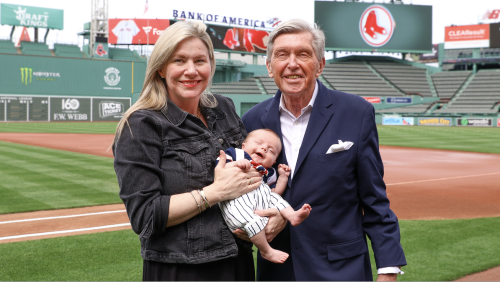
_______________________
Chapter 9: The World Stage
THE TRANSITION FROM the localized battlefield of municipal public relations to the grand theater of international commerce required more than a shift in title; it demanded an entirely different alignment of his internal energy.
By the time George K. Regan Jr. left the quiet sanctuary of the hospital and stepped firmly into his role as Global Chairman, the strategic architecture of his life had permanently realigned.
He had survived the grinding, incremental warfare of the CEO suite, and in doing so, had discovered that his true utility lay not in managing the daily friction of the domestic offices, but in executing long-range, historic calculations.
Inspired by the beautiful new legacy of his newborn son, George IV, and anchored by the profound clarity he had found during his time of rest, Regan looked beyond the familiar silhouette of the New England coastline.
He had spent fifty years defining the narrative of his city; he was now ready to weaponize that experience on the global grid.
The battlefield he chose was the FIFA World Cup.
To the uninitiated, soccer’s ultimate pageant arriving in New England seemed like a natural, almost inevitable consequence of modern sports capitalism. But to those who understood the deep, subterranean history of the region, the tournament’s presence was a monumental historical heist.
Four decades earlier, when the United States had won its long-shot bid to host the 1994 World Cup, Boston was completely outside the matrix of international sport. The national team had failed to qualify for forty years, the region possessed no professional soccer infrastructure, and the global football elite viewed the city as an insular, cold-weather baseball enclave dominated by the provincial rhythms of Fenway Park.
It had taken a fiercely disciplined, backroom syndicate of Boston’s ultimate heavy hitters to break that isolation and land the matches for the first time in 1994.
That original, historical coalition—a convergence of event planner Dusty Rhodes, attorney Bob Caporale, a Portuguese concrete magnate named Tony Frias, and a rising young public relations fixer named George Regan—had systematically engineered the initial proof of concept.
They had convinced a cynical international hierarchy that a football match could not only survive but explode within the cultural fabric of New England.
Now, the stakes were infinitely higher. The tournament was no longer just an athletic exhibition; it was a multi-billion-dollar multicultural carnival, a massive geopolitical juggernaut that threatened to overwhelm the physical and operational infrastructure of any municipality it touched.
As the Boston Host Committee assembled to navigate the terrifyingly complex choreography of transportation grids, security perimeters, and international corporate sponsorships, Regan assumed his familiar role as the ultimate strategic architect.
Through Regan Communications Group, he secured the definitive mandate as the official communications agency for FIFA World Cup Boston.
Inside the Union Wharf war room, Regan looked at the tournament through the same diagnostic, sociological lens he had applied to the papal visits and political campaigns of his youth. He understood that the assignment extended far beyond the simple promotion of athletic matches.
The challenge was an exercise in emotional transfer—taking a foreign, global phenomenon and fusing it directly to the local businesses, neighborhood communities, and historic identity of the city.
Working side-by-side once more with his old ally Robert Kraft and the Kraft Group, Regan engineered the complex media scaffolding that transformed the region’s sports identity in real time.
When international superstars like Kylian Mbappé and the elite squads of France and Morocco descended upon Foxborough—rebranded for the summer under strict international protocol as “Boston Stadium”—the potential for a cultural and operational disconnect was immense.
The scorching summer heat regularly soared past ninety degrees, a middling Red Sox season was testing the city’s collective patience, and the influx of hundreds of thousands of foreign visitors threatened to paralyze the metropolitan core.
But Regan’s campaign, anchored by the sweeping, international “Welcome World” initiative orchestrated alongside Meet Boston, controlled the narrative from the moment the first flights touched down at Logan Airport.
They positioned the raw hospitality and historic culture of the city at the dead center of the story. When global ticket search engines and international fan surveys officially crowned the stadium as the single best World Cup venue for fan experience in the United States—outclassing more modern, multi-billion-dollar domes in Los Angeles and Dallas—it was a triumph of deliberate, atmospheric engineering.
Regan had managed the delicate calculus of perception perfectly, balancing the economic reality of the regional boom against the fierce, protective pride of the neighborhood streets.
By the time the final match concluded on a hot July Thursday, the tournament had generated an astronomical 14.2 billion estimated media impressions across the globe, broadcasting a sleek, safe, and wildly vibrant image of Boston to every corner of the civilized world. It was a massive, unprecedented economic injection that completely redefined the traditional parameters of a New England summer.
Standing in the executive corridors as the multicultural crowds spilled out into the plaza, New England Revolution President Brian Bilello delivered the ultimate historical verdict, declaring that Boston had fundamentally “won the World Cup.”
Regan, chewing on the magnitude of the moment, looked across the arena he had spent forty years constructing. His mind moved past the corporate data and the global broadcast statistics, anchoring itself back to the essential, human partnerships that had made the heist possible.
“Boston is Boston,” the patriarch observed, his voice carrying the calm, absolute authority of a man who had seen every era of the city’s evolution. “But the Krafts paved the way so the World Cup would be a success. Boston needed a shot in the arm. It woke the city up.”
The baby-faced reporter who had once spied on the narcotics trade from the sand of Wollaston Beach had completed his ultimate transformation.
He had utilized his new freedom as Chairman to execute his grandest, most ambitious calculation, proving to the international corporate elite what City Hall had learned decades earlier: that the geography of power may expand across oceans, but the master of the arena remains unchanged.
___________________________
Epilogue: The Voice in the Arena
THE GREAT LUXURY of the modern, technocratic age is neutrality. In an America increasingly fragmented by polarized corporate algorithms, the safest posture for any grand public enterprise is silence—a careful, bloodless retreat into the comfortable margins of the consensus. To remain entirely neutral on the volatile matters of the day is a sound fiscal calculation, a shield designed to protect corporate billing and keep the peace among diverse client portfolios. It is a path chosen by thousands of modern practitioners who have traded the raw, unpredictable velocity of public conviction for the quiet safety of the status quo.
But George K. Regan Jr. was never a creature of the status quo. He had been blooded in an older, more muscular version of the American republic, raised within a New England political culture where a man was defined exclusively by his willingness to take a stand and defend his territory. He was, by his own cheerfully unvarnished admission, an intensely outspoken man, a kinetic force who simply did not possess a mute button.
The trait was a source of endless affectionate amusement within his immediate family. Earlier in his marriage, driving back from Gillette Stadium through a blinding summer monsoon with his wife, Elizabeth, and her five-year-old niece, Lulu, Regan had launched into a sprawling political narrative, delivering the history with his customary, high-decibel animation.
Unexpectedly, from the back seat, the child broke through the performance. “GEORGE, WILL YOU JUST SHUT UP ALREADY?!” she blurted out. Regan had burst into immediate, delighted laughter, turning around to face the kid. “Young lady,” he said, shaking his head, “do you know how many people would love to have said that to me over the last fifty years?”
The complication, of course, was that the adults in his world rarely had the luxury of tuning him out. His voice carried institutional weight. During a wedding reception in the early autumn for his close friend, former Boston Police Commissioner Willie Gross—an event where Regan shared co-ring bearer duties with Gross’s Maltese dog—a steady procession of law enforcement officers, past and present, approached his table.
They came to offer quiet, deeply personal expressions of gratitude for his decades of unyielding support through the city’s dark, anti-police crosscurrents. At one point, a senior official paused, posing the fundamental question that defined the modern era of public relations. “It’s tremendously appreciated by all of us for everything you do,” the officer noted, “but why do you do it? Wouldn’t it be easier just to keep your mouth shut sometimes? Wouldn’t it make more sense financially for your business to stay neutral?”
Regan did not flinch from the calculation. He understood the math of survival as well as any accountant. “Oh, I’m sure I’ve lost a lot of money over the years by speaking up, but that’s okay, because anyone who knows me knows I’m not about the money,” he reflected. “I’ve lost clients who have told me we differ on things, and I’m sure I’ve lost what would have been future clients that never said anything because they don’t have a voice.”
For Regan, the loss of capital was a minor tax compared to the ultimate bankruptcy of losing one’s identity. He believed with a fatalistic certainty that those who choose neutrality eventually find themselves unable to speak at all. The lungs were a gift from the Creator, a temporary loan meant to be spent in the defense of others. It was the foundational lesson passed down from Kevin White fifty years earlier in the smoke-filled rooms of City Hall, and Regan viewed himself as the keeper of that dying, tribal fire. He was passing the doctrine down to a new generation of fixers—to anyone who had the stamina to care about the soul of a community.
It was Robert F. Kennedy who had captured this exact, rare American necessity during his historic Day of Affirmation address in South Africa, noting that moral courage is a far rarer commodity than bravery in battle or great intelligence, yet remains the one essential, vital quality for those who seek to alter an unyielding world. When Theodore Roosevelt spoke his immortal words about the critic not counting, praising the man whose face is marred by dust and sweat, he was articulating a timeless truth about the republic: it is not the silent observer who shapes history, but the voice in the arena.
The young kid from Quincy had been that voice for Boston since the autumn of 1968, running through the July sun to deliver ad copy, spying on the beach narc trades, and steering the public perception of the city through every major civic convulsion of the late twentieth century.
“It’s definitely not easy,” Regan admitted, looking out through the plexiglass window of a helicopter hovering twenty-five hundred feet above the Atlantic. The aircraft was shuttling him from the Willowbend Country Club on the Cape toward a quiet lunch at the Great Harbor Yacht Club on Nantucket Island. Below him, the vast, historic topography of New England unfolded—a landscape of brick, granite, and deep blue water that he had spent his entire adult life organizing. “But I never take unnecessary risks. And the rewards from the dedication are far more fulfilling than anything I may have lost. I consider myself very blessed for the life I live, the life I have been given. I consider myself lucky.”
He was, by every metric of the American dream, a profoundly fortunate man. He had survived the political wars, built a national commercial empire, outlasted his rivals, and finally found the great, transcendent love of his life in Elizabeth.
And as the helicopter cleared the shoreline, drifting toward the open horizon of a global future, he remained entirely secure in his destiny—carrying with him the permanent blessing of his family, the enduring memory of his mother Ann, and the endless, invisible sets of good luck underwear that had seen him safely through the arena.
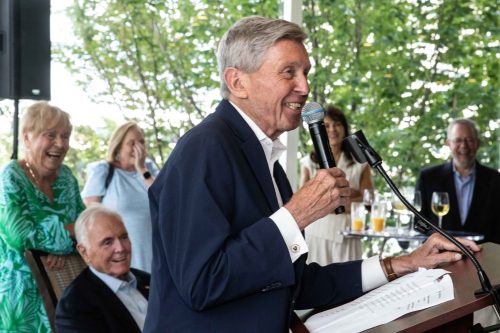
_________________
