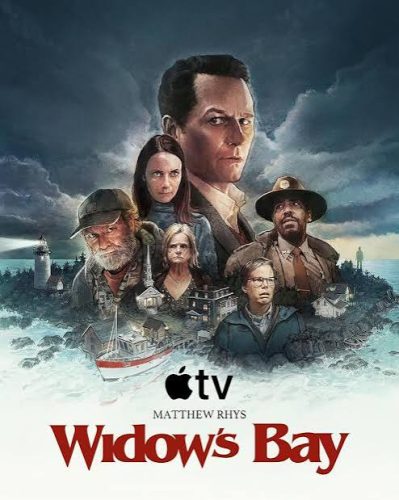

How a “Wonderfully Strange” Horror-Comedy Rewrote Hollywood History—and the Local Casting Legends Who Put Massachusetts on the Map.
_________
WHEN THE CURTAINS FELL at the Peacock Theater in Los Angeles on Monday night, Hollywood wasn’t just talking about a victory; they were trying to rationalize a structural shift in the comedic universe. Apple TV+’s breakout freshman series, Widow’s Bay, stormed the 78th Emmy Awards, shattering records to take home a monumental 14 Emmy Awards, including the coveted Outstanding Comedy Series.
To understand why this feels so jarring, you have to look at how we typically consume the concept of “Massachusetts” on screen. The North Shore and the greater Boston area are no strangers to the Hollywood spotlight, but they exist in our collective cultural memory as a prestigious, aggressively masculine canvas for high-stakes trauma.
This is the geographic space that gave us Oscar-winning cinema like Good Will Hunting, The Departed, Shutter Island, Knives Out, Sound of Metal, and Manchester by the Sea.
It’s the place that hosted massive North Shore blockbusters like The Perfect Storm—which converted a tragic, real-life Gloucester fishing voyage into an exercise in high-budget existential dread—and The Proposal, which performed the bizarre alchemy of transforming the quaint, tourist-choked shops of Rockport into Sitka, Alaska.
We are conditioned to see titans like Matt Damon, Ben Affleck, Leonardo DiCaprio, Sandra Bullock, Ryan Reynolds, George Clooney, and Mark Wahlberg walking these frost-dusted streets while grappling with deep emotional paralysis or moral decay.
Yet, the type of historic night Widow’s Bay just enjoyed at the Emmys operates on an entirely different frequency.
For decades, Massachusetts has been a factory for prestige biopics and gritty crime thrillers. But an absolute landslide victory for an atmospheric, eccentric horror-comedy about a stressed-out mayor (played by Matthew Rhys) dealing with small-town municipal zoning laws and cosmic, ancient evil?
That isn’t just a new chapter; it’s a complete rewriting of the regional script.
The show completely swept the evening, collecting trophies for writing, directing, acting, and cinematography. But as the glittering cast celebrated on stage, the true heartbeat of the show’s success echoed some 3,000 miles away in the streets of Boston.
For all of its supernatural terrors and sharp wit, Widow’s Bay owes its historic night to the authentic, rugged, and wonderfully strange spirit of Massachusetts. And nobody understands that spirit better than Angela Peri and Lisa Lobel, the co-owners of Boston Casting.
Rewriting the Emmy Record Books
What happened on Monday night wasn’t just a sweep—it was a historic, record-shattering shockwave that forces us to reevaluate how television comedy is actually measured.
By securing 14 total trophies across the Primetime and Creative Arts ceremonies, Widow’s Bay broke the all-time single-season record for a comedy series.
The irony here is thick: the previous record of 13 wins was set just one year ago in 2025 by fellow Apple TV+ stablemate The Studio, meaning the previous benchmark barely had time to exist as a cultural metric before this “weird” New England juggernaut completely eclipsed it.
While a strong freshman performance was anticipated given its 19 total nominations, the sheer scale of the landslide was a thrilling surprise. Industry insiders expected a neck-and-neck battle with the final season of Max’s Hacks. Instead, Widow’s Bay captured nearly every category it entered.
THE LEGENDARY 14-EMMY HAUL OF WIDOW’S BAY
- Outstanding Comedy Series
- Outstanding Lead Actor in a Comedy Series (Matthew Rhys)
- Outstanding Supporting Actor in a Comedy Series (Stephen Root)
- Outstanding Supporting Actress in a Comedy Series (Kate O’Flynn)
- Outstanding Guest Actress in a Comedy Series (Betty Gilpin)
- Outstanding Writing for a Comedy Series (Katie Dippold)
- Outstanding Directing for a Comedy Series (Hiro Murai)
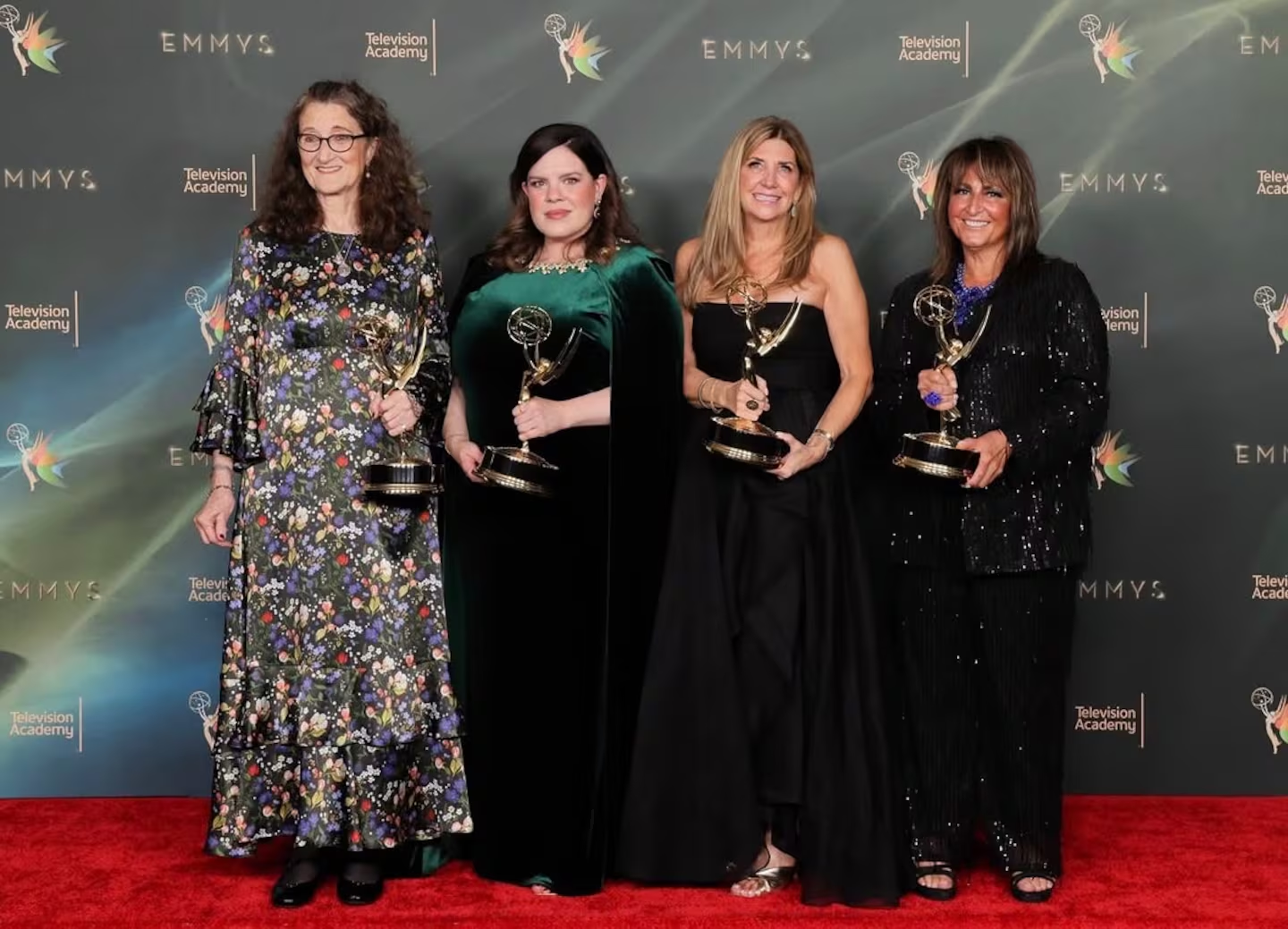
- Outstanding Casting for a Comedy Series (Angela Peri & Lisa Lobel)
- Outstanding Cinematography
- Outstanding Music Composition
- Outstanding Music Supervision
- Outstanding Production Design
- Outstanding Sound Editing
- Outstanding Sound Mixing
Adding to the night’s historic context, lead star Matthew Rhys accomplished an unprecedented feat that feels almost mathematically impossible in the modern television landscape.
He personally went home with three trophies, capitalizing on his Widow’s Bay victory while simultaneously winning Best Actor in a Limited Series for Netflix’s The Beast in Me—becoming the first man in history to win two leading actor Emmys on the exact same night. It was a bizarre moment of monoculture dominance in a fragmented streaming era.
The Boston Architects of a Hollywood Record
Among the show’s historic haul was a deeply emotional, highly localized milestone: Peri and Lobel won their very first Emmy Award for Outstanding Casting for a Comedy Series.
For the two Massachusetts natives—Lobel grew up in Newton, Peri in East Cambridge—the gold statuette represents the pinnacle of a relentless, 40-year journey anchoring the local film industry.
“We just sat there soaking it in,” Lobel later told WCVB Boston. “It was like a dream—an out-of-body experience.”
To fully appreciate their victory, one has to look back three decades to when the duo first founded Boston Casting. In those early days, Hollywood viewed New England primarily as a backdrop for quick exterior B-roll shots—a quick frame of Fenway Park before fleeing to cheaper soundstages.
Peri and Lobel fought to change that narrative, spending decades proving that Massachusetts possessed both world-class crew and the raw acting talent to sustain massive productions. When creator Katie Dippold brought the eerie world of Widow’s Bay to life, she leaned heavily on that local infrastructure, setting up cameras primarily across Cape Ann.
The Coastal Canvas: Nailing the “Mythical Mysticism”
“Places like Gloucester and Rockport, for me, just gave you that essence for free,” lead actor Matthew Rhystold The Boston Globe. “You don’t have to suspend any imagination. It’s all in front of you.”
Dippold’s choice to shoot on location rather than a sterile Hollywood soundstage was a crucial aesthetic choice. The production anchored itself in Rockport, MA, turning the narrow, shop-lined peninsula of Bearskin Neck into the show’s main town square.
Real-life landmarks became instantly recognizable sets. A weathered shingle shop on Old Harbor Road was transformed into the exterior of The Salty Whale restaurant, and a local ice cream shop stood in with minimal Hollywood makeup.
Down the road in Gloucester, the team tapped into the area’s historic maritime architecture. Lane’s Covestood in beautifully as a rugged, isolated island landing, complete with the real-life shingled harbormaster building dressed up for the screen.
Half Moon Beach provided the perfect backdrop for Mayor Tom Loftis’s unhinged ceremonial first swim of the summer, while the historic Eastern Point Lighthouse added a looming, gothic sentinel vibe that anchored the show’s supernatural lore. To expand the island’s scope, production stretched inland, using the Berlin Town Hall for municipal meetings and shooting deep interior sets at New England Studios in Devens.
Production Triumphs, Tides, and Shingled Realism
Filming on the rocky Massachusetts coast brought a unique set of rewards and severe operational challenges that built the show’s specific identity.
The Realism Advantage: The greatest asset was the sheer visual and historical weight of the region. The salt air, the rolling morning fog, and the genuine, weathered texture of century-old shingled buildings gave Widow’s Bay a rich, atmospheric texture that money simply cannot buy on a backlot. The cast embedded themselves locally, famously spending their off-hours consuming massive quantities of fresh local oysters.
The New England Obstacles: Shooting on the coast meant battling fickle maritime weather and the unrelenting logistics of a working harbor. Shifting tides frequently disrupted water-bound camera setups, and the narrow, historic corridors of Bearskin Neck left virtually zero room for massive Hollywood grip trucks and trailers. Production teams had to execute tight, surgical closures—shutting down local spots like Eastern Avenue’s Vita Bella Ristorante—while carefully balancing the daily operations of local fishermen and shop owners.
Populating a “Wonderfully Strange” World with Local Legends
The visual authenticity meant nothing without people who sounded and acted like they belonged there. Balancing the razor-thin line between genuine entertainment and small-town political absurdity required a masterful ensemble—and that is where the concept of regional authenticity stops being a marketing buzzword and becomes a tangible reality.
Instead of importing every minor role from New York, Peri and Lobel populated the island with genuine Massachusetts fixtures.
South Boston’s own Marilyn Busch brought pitch-perfect regional humor to her role as Kathy, channeling the exact blend of sunshine and sharp-tongued skepticism the North Shore is famous for.
Saugus native and East Boston High alumnus Jimmy Shirts added undeniable regional grit to the background fabric of the town, playing a character credited fittingly as a “Local”.
“We have some great talent right here in Boston,” Shirts said. “Let’s face it.. How do you beat being in a 14 Emmy Award winning series? You simply can’t. Unless you’re winning the Emmy yourself.”
THE HOMEGROWN ENSEMBLE OF WIDOW’S BAY
- Lonnie Farmer (Harbormaster) — Boston theater veteran and local fixture.
- Chris Andrew Ciulla (Ferry Captain Lee) — Everett, MA native and acclaimed voice artist.
- Tom Kemp (Shep Clark) — Milton-based character actor and regional mainstay.
- Mike Jablon (Chef) — Boston-area actor and Emerson College alumnus.
- James J. LaBonte & Matthew J McLaughlin — Massachusetts-based set veterans grounding the town’s local flavor.
The depth of the local casting extends straight to the shoreline. Everett native Chris Andrew Ciulla anchors the island’s isolation as Ferry Captain Lee, while celebrated Boston stage veteran Lonnie Farmer layers on authentic community gravity as the Harbormaster.
Milton-based character actor Tom Kemp grounds the town council dynamics as Shep Clark, Boston area native Mike Jablon handles the kitchen as Chef, and regional staples like James J. LaBonte and Matthew J McLaughlin populate the background taprooms and town halls—ensuring the fictional island feels like a living, breathing community.
The Massachusetts Production Coalition, where Shirts is a proud individual member, celebrated the historic sweep on social media, praising the “talent and craftsmanship” of the local cast and crew who helped build the series.
Returning to the Bay: Season 2 Whispers and Rumors
With 14 Emmys cementing its place in television history, the immediate question on everyone’s minds at the afterparties was rooted in consumer demand: When do we go back to the Bay?
Fortunately, Apple TV+ officially greenlit Season 2 back in June, and the creative wheels are spinning. Showrunner Katie Dippold recently opened up a 20-week writers’ room to map out the next chapter of the island’s ancient curse.
While fans are eager for a quick turnaround, star Kate O’Flynn dropped a production reality check, revealing that principal photography is eyeing a March 2027 start date to ensure the scripts are completely finalized through the winter.
The scheduling timeline has also sparked massive logistics rumors across Massachusetts. Industry insiders whisper that production planning is working around the massive footprint the FIFA World Cup matches set this summer in Boston, intentionally choosing to time the Season 2 shoot to capture the pristine, atmospheric New England spring before summer tourism spikes.
As for the locations? While a return to the beloved seaside streets of Rockport and Gloucester is guaranteed, location scouts have reportedly been spotted eyeing historic colonial backdrops further inland. Buzz is building around a potential return to the eerie Rebecca Nurse Homestead in Danvers, alongside heavily rumored expansions into historic Salem to deepen the show’s occult lore.
Wherever the cameras land, Angela Peri and Lisa Lobel will undoubtedly be standing by, ready to draft the next army of local talent.
Why the Curse Caught Fire
Ultimately, Widow’s Bay has captured the cultural zeitgeist because it respects its environment by recognizing a fundamental truth about New England: it doesn’t treat small-town residents like caricature punchlines. Instead, it frames their stubborn, hardened skepticism as the ultimate defense mechanism against ancient, cosmic evil.
It is a show built on the premise that a town hall argument over zoning laws is just as intense—and twice as funny—as a ghostly possession. It suggests that a ghost isn’t nearly as terrifying as a town selectman who refuses to approve your deck permit.
As set-jetting tourists begin flocking to Cape Ann to locate the real-life Salty Whale or walk the docks of Bearskin Neck, the real-world economic impact of the show is booming. Local walking tours are already popping up to guide eager fans through the real locations.
For the New England film community, this Emmys sweep is validation of a 40-year dream. Widow’s Bay didn’t just win because it was brilliantly written and executed; it won because it felt texture-rich, atmospheric, and entirely real.
“It took us so long to get where we are,” Lobel reflected. On a historic Monday night in Los Angeles, they finally arrived.