


SLAINE’S Story Evolves
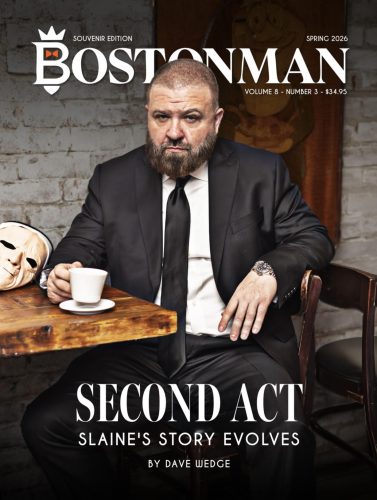
Clothier: Gibblees Fine Clothing
Stylist: Amanda Vargus
Jeweler: Richie Riccardo
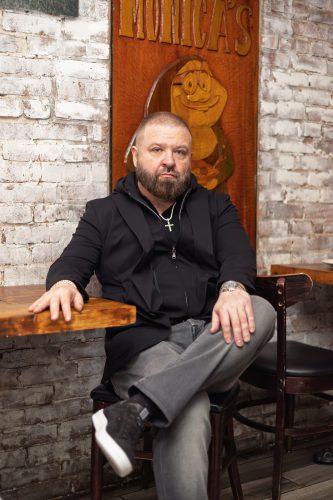
Location: Monica’s Trattoria
I been to places that there ain’t no coming back from
Then took a different path, built another platform
They thought that they left me for dead but got the facts wrong
Now I’m coming back for ‘em, and I’m in a new state of grace
And so the world’s not at all what it seems
After we fall, we evolve with our dreams
We built those bridges better, look at what we did together
They say no one lives forever, but I’m in a new state of grace
– “A New State of Grace” by Slaine
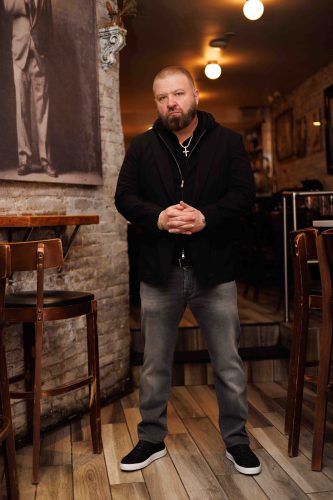
GEORGE CARROLL sits alone in a hotel room in Bratislava, Slovakia.
It is 3:30 in the morning. He has just come off stage.
The adrenaline is still there, but it’s familiar now. Another show. Another night with La Coka Nostra. He’s done this a thousand times. It’s not the frenzy it once was at its peak, but after all these years the rooms are still full. People still show up. The same songs still hit. In the world they came from, they’ve become something close to classics.
Thirteen years ago, the night would have kept going. That version of him would still be out somewhere, chasing it until the lights came up.

Not this night.
His phone is in his hand. Back home, a seventeen year old kid has overdosed. A friend of a friend. The kind of call that doesn’t wait.
He is already working the problem, calling every contact he has, trying to find a path, knowing time is not on anyone’s side and that adolescent beds remain one of the hardest gaps in the system to close.
This is what his life looks like now. It does not matter where he is. A green room in Prague. A set in Oklahoma. A hotel in Slovakia. The calls come. He answers.
Because he gives a shit.
“A lot of people don’t really understand what I do,” he says. “I’m not a doctor. I’m not really a businessman. My work has always been advocacy. I’m the point of contact when someone needs help.”
“When I got sober, people wanted to know how I did it,” he continues. “So when they struggled, they called me. And I’d find resources for people. That’s how it started.”
People reached out from everywhere. Not just friends. Fans. Strangers. Messages on social media from families who didn’t know where else to turn. Parents. Siblings. People in the middle of it.
“At first I didn’t even know what to do,” he says. “I just knew I couldn’t ignore it.”
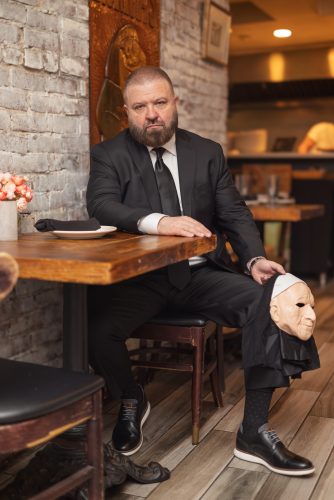
What followed was not a business plan. It was a process. Carroll began immersing himself in the system, learning how treatment actually worked, where the entry points were, where people got stuck, and why.
“I started figuring out who to call. What places were legit. What places weren’t. How insurance worked. Where the gaps were.”
That learning curve would become the foundation for everything that came next.
What started as one alcoholic helping another has grown into something much larger. It has also placed him in a position few people ever occupy, somewhere between street level reality and institutional influence.
To understand the force of George Carroll’s advocacy, you have to start with the artist he once unleashed on the world.

More than twenty years ago, Carroll arrived under the name Slaine, and he didn’t just enter hip hop, he carved out a lane that felt unmistakably Boston. Not a borrowed version of the city, not a polished export, but something raw and immediate. He looked like the guys on the corner. He sounded like the neighborhood.
There were other Boston artists who broke through in different ways, some with wider reach, some with deeper roots in hip hop’s foundation. But no one captured the feel of the city quite like Slaine. The corners. The cadence. The contradictions. It was specific in a way that couldn’t be replicated.
That accent, sharp and unfiltered, cut through boom bap drums like glass, carrying dense, multisyllabic bursts that felt wired, volatile, and alive.
The music moved in extremes. At one moment it was darkly funny, almost reckless in its bravado. The next, it turned inward, exposing something heavier, something closer to tragedy.
What made it resonate wasn’t just the technical precision or the energy. It was the truth. Slaine wasn’t performing a character so much as documenting a reality. His work captured a generation of young people across Greater Boston coming of age inside a culture where drugs and crime weren’t abstractions, but part of the landscape.
That authenticity made him an unlikely but perfect bridge between worlds. It’s why House of Pain tapped him to help carry their legacy forward after a decade-long absence. And it’s why filmmakers looking to define a modern Boston noir found him impossible to ignore.

In Gone Baby Gone, directed by Ben Affleck, in The Town, and in Killing Them Softly, directed by Andrew Dominik and starring Brad Pitt, he didn’t just play roles, he embodied a world the camera was trying to capture.
As Gloansy, one of the Charlestown bank robbers in The Town, George has some of the most memorable lines, including his “authenticious” quip during a police interrogation, and shouting in a thick Boston accent, “Now that’s how ya drive a cah!” after escaping cops in a wild chase.
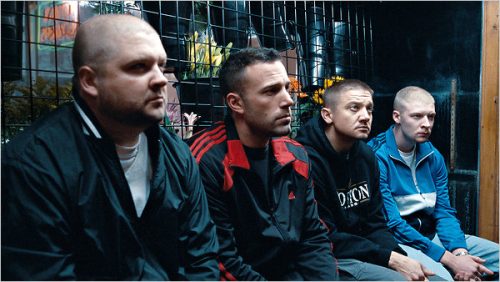
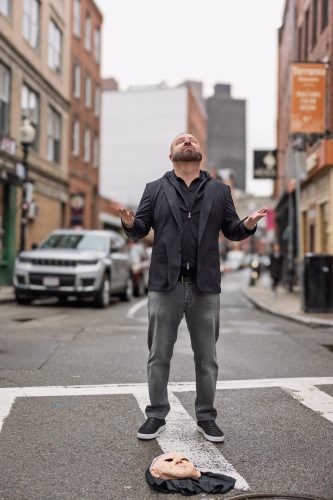
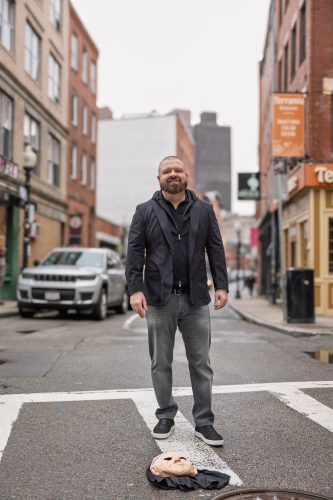
The nun mask he wore in the film’s signature shootout has become iconic, not only because of its creepy imagery, but because of the scene when the mask-wearing robbers get out of a car right next to a cop, who slowly turns away, pretending not to see them.
It’s a symbolic moment in the film that subtly captures the essence of Boston’s code of silence, a major theme in the film.
While The Town was a hit that opened many Hollywood doors, Carroll struggled with addiction until he got sober 12 years ago. After years of recovery work in the community, he was given the opportunity to build something real. Something that works. Real access to care for the people who need it.
Armando Petruzziello came calling. The two had been friends since 2000, when they crossed paths at Emerson College. Petruzziello was working as an electrician. Carroll was in the mailroom, trying to get his records played on 88.9.
Twenty years later, both had found success. They came back together around a shared mission, to build something real.
Alongside partners Steve Whalen and Fred Starikov of City Realty, they co-founded Charles River Recovery in Weston. Later, with Jon Foster, Carroll and Petruzziello opened Grand Rising Behavioral Health in Norwood.
Two facilities built to provide the kind of care he once struggled to find himself.
“He believed in me first,” Carroll says of Armando. “You don’t forget that.”

Charles River Recovery is not a pop-up outpatient office or a loosely run sober home. Step through the glass doors and it feels closer to a hospital in motion. The building stretches across three floors and nearly 80,000 square feet housing 111 inpatient beds for detox and clinical stabilization. Around it, a full continuum of care moves constantly, with outpatient services treating another 40 to 70 patients a day.
It does not shut down. Twenty-four hours a day. Seven days a week. Every day of the year.
Inside, a staff of more than 170 keeps it moving. Doctors. Nurses. Clinicians. Therapists.
Admissions and intake. Case managers. Recovery support staff. Kitchen crews. Human resources. An outreach team working in constant coordination.
In just four years, more than 7500 people have passed through its care.
And while Carroll helped build the vision, he is quick to redirect the credit.
“I might have helped build it, but I’m not the one holding it up day to day,” he says. “This place runs because of the commitment of my partners and the people inside it.”
He points first to Executive Director Jess Conte, her leadership team, and then to the broader staff.
“They’re the professionals. They’re the ones doing the real work. This is their house. They’re the heart and soul of it.”
Many of them come from the same communities as the patients they serve. It shows in the feel of the place. Not institutional. Lived in. Earned.
“I love these people,” he says. The idea was to bring a level of care typically reserved for the well to do into reach for a blue collar population. A place where people could recover with dignity.
In many ways, it has done exactly that. The reputation is strong. The phones ring constantly from union halls and municipal departments. Hospitals rely on it as a pressure valve, sending patients who have stabilized but have nowhere appropriate to go next. It helps keep emergency rooms from backing up even further. Roughly forty percent of the patient population is on Medicaid.
For Carroll, it is as close to the vision as he imagined. What he did not anticipate was how complex it would become to sustain something at this level while staying true to that mission. The economics on making it all work have been difficult.
“I got into this to advocate for people who needed help,” he says. “Then I realized I had to advocate for my staff too. Then the facility itself. At the end of the day, it has to function as a business. Otherwise it’s not sustainable and then you can’t help anyone.”
That tension sits at the center of the industry, and increasingly, at the center of policy conversations.
“There are days it feels like you get your ass kicked just to wake up and come back and do it again,” he says. “But that’s the work.”
There is a reason many treatment centers stay out of network. By focusing on a smaller portion of the population with top tier insurance, they can operate at higher margins and avoid the constraints that come with broader access.
The reality is more complicated. Addiction treatment has long attracted operators who see opportunity before responsibility. Aggressive marketers. Sales driven models built around high reimbursement instead of long-term outcomes.
But for policymakers, the problem is no longer theoretical. Emergency rooms are overwhelmed.
Municipal systems are strained. Families are navigating a fragmented network with no clear entry point.
Carroll has become someone those decision makers call, not because of a title, but because he understands how all the pieces actually connect.

“George leads by example. He is an inspiration to so many, not only because of his success as an artist and actor, but because of his commitment to helping others,” says Massachusetts Senator Nick Collins, who represents South Boston and Dorchester and has worked with George on treatment issues.
“His experience, knowledge and credibility in the recovery field are crucial as we all work together to close gaps in treatment and create an equitable system that provides resources for anyone who needs help.”
Another friend and ally, Boston City Councilor John Fitzgerald, recalls seeing Carroll perform in the late 90s at the Midway in Jamaica Plain and remains struck by his commitment to the city he loves and calls home.
“George has always had an influential presence in Boston,” says Fitzgerald. “Aside from all the glitz and glamour, he remains committed to the recovery scene back home. That’s a sign of a truly grounded individual who never forgot where he came from. He chose to channel his energy and influence into helping others find a path to sobriety and a better life. It’s an action that speaks louder about him than any script or lyric could, and we are lucky to have him here doing the real work.”
Those policy conversations are becoming more frequent. Hospital systems. State officials. Developers looking at how to reimagine healthcare infrastructure. The kind of discussions where clinical insight, operational experience, and lived reality rarely exist in the same person.
Carroll does not frame himself as a policy expert. He frames himself as someone who learned the system by surviving it, then working inside it long enough to understand where it breaks.
“I didn’t set out to learn this,” he says. “I had to learn it. I had to figure out how to navigate it. Then I started to see where it wasn’t working.”
“I don’t have a desk. I don’t have an office,” he adds. “My office is the community. My job is to be out in the field.”
But increasingly, the field extends beyond the streets and into boardrooms, into planning sessions, into conversations about how to build something better.
Not just more beds. Not just more programs. But systems that connect. Systems that hold.
The same path that nearly took him out has given him something else. A working knowledge of where the system fails, and where it can be rebuilt. That intersection between art and reality has only become sharper.

In 2025, Carroll starred in King Ivory, a bone chilling crime drama centered on the fentanyl epidemic in America.
Acting alongside James Badge Dale, Melissa Leo, Ben Foster, and Michael Mando, he plays a character caught inside the same crisis he confronts in real life. The film earned the Ambassador of Hope Award at the prestigious Venice Film Festival and underscores a reality he knows well.
He still tours. Still acts. Still records. The music is not going anywhere.
“At the end of the day, I love making music,” he says. “That’s the foundation. It’s part of who I am.”
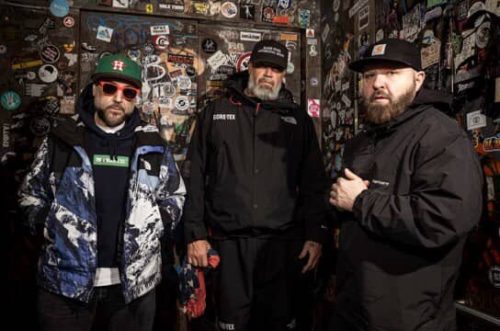
But the focus has shifted.
“Music was my 14-year-old dream. I have different dreams now.”
Asked how he sees his life now, he pauses. “It’s not a comeback story anymore,” he says. “It’s not about surviving.”
He sips his coffee.
“It’s about building.”
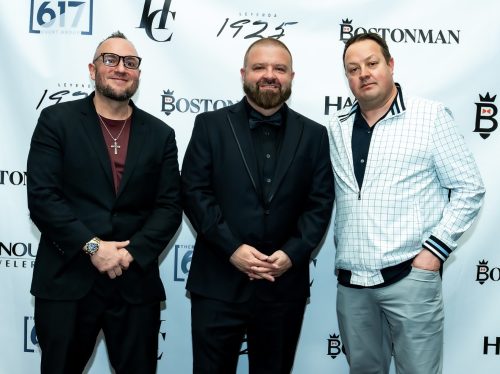
Dave Wedge is a New York Times bestselling author and former Boston Herald reporter. His next book, “Blizzard of Lies: Karen Read, John O’Keefe and the Shocking Unsolved Murder in Cop Town USA,” comes out July 28.
