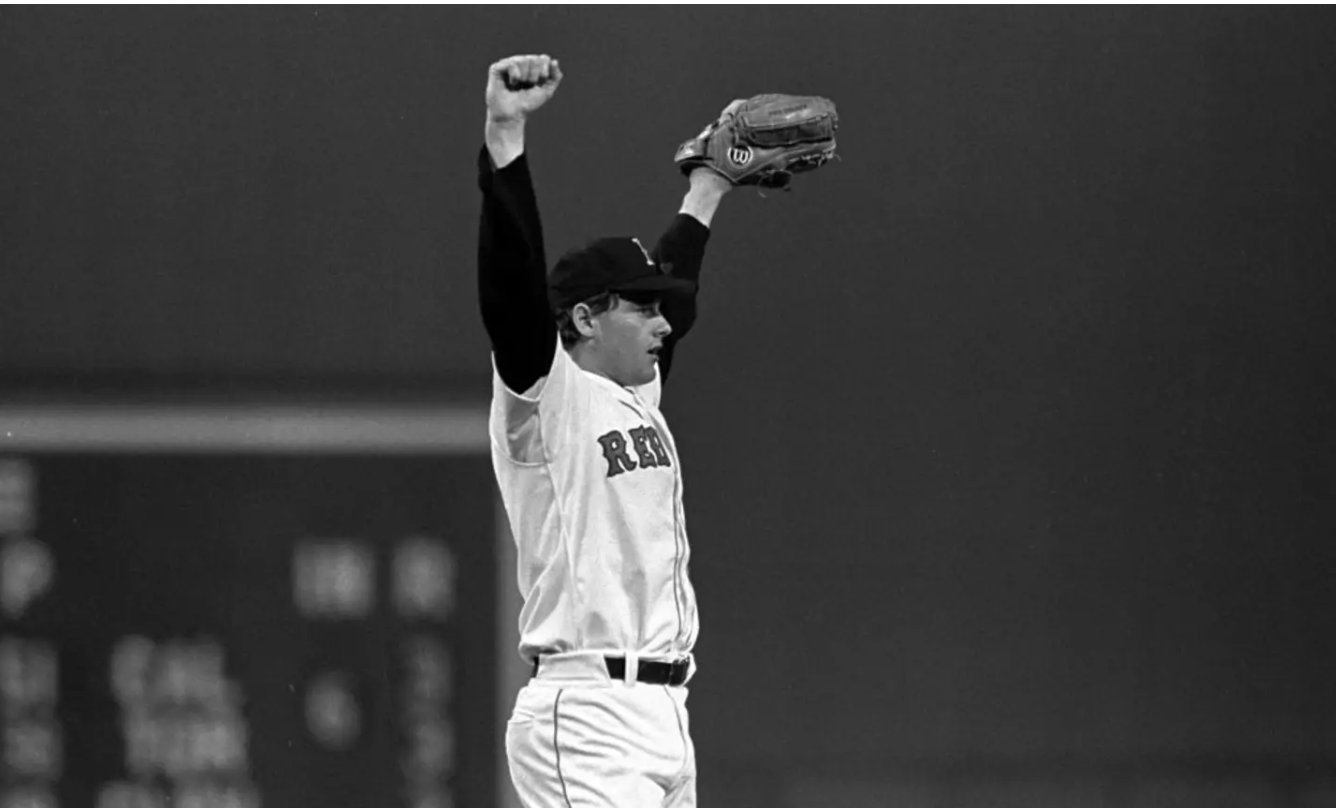

Forty years ago the Boston Red Sox came as close to winning a World Series that a team can without claiming the Commissioner’s Trophy. Led by a then 23-year old phenom -the AL MVP, Cy Young Award winner & All Star Game MVP- Roger Clemens and the ’86 Red Sox, remain one of the most discussed (and debated) enigmas in team history.

ROGER CLEMENS wasn’t a trust fund prospect, not a David Clyde.
Clemens was selected by the New York Mets out of San Jacinto, a Houston area junior college as the 315th pick in the 1981 amateur draft, but did not sign.
Eight years earlier, Clyde was the first overall pick in the 1973 draft, also from a Houston area school–in front of eventual Hall of Famers Robin Yount and Dave Winfield. Just three weeks later he made his major league debut with the Texas Rangers—a five inning win over the Minnesota Twins.
Unlike David Clyde, in his late teens, Clemens was still physically developing. So in 1981 he went unsigned, transferring to the University of Texas instead to continue his growth.
At Texas, he compiled a 25-7 record with a 2.44 ERA, striking out 241 batters in 275 innings which included six shutouts. A two time All-American while at Austin, he set a then NCAA record by hurling 35 consecutive scoreless innings in 1982.
During the ’83 season Clemens -with teammate Calvin Schiraldi- formed one of the most lethal pitching tandems in college baseball history, combining for a 27-7 record, 2.40 ERA/216 K’s.
Roger was the winning pitcher in the championship game of the College World Series that year -a complete game exclamation point over Alabama- punctuating a collegiate career that saw his number 21 the first ever retired in Longhorns baseball history. Five days earlier, he fired eight inspired innings -striking out 12- versus arch rival Oklahoma State, hours after being selected by the Boston Red Sox in the first round of the ’83 amateur draft.
Not that he was a glamorous pick then either. There were 11 pitchers selected in that draft before Clemens was snatched off the board at number 19.
He wasn’t, in fact, even Boston’s preferred selection.
In those days, certain members of the media were allowed to sit in on draft rooms, and in 1983, I was there in the thick of things in the Sox war room.
The pitcher they coveted was a slight righthander from the University of Michigan named Rich Stoll, selected by the Montreal Expos three slots earlier at 16; prompting a draft prep book and briefcase tossed in angst against the wall.
Clyde won 18 games in his career; mostly remembered now as a “cautionary tale” in MLB annals not to rush players to The Show too soon.
Stoll never made the majors; and appeared with the Expos in the spring training of 1995 as a replacement player.
In his third season and 39th major league start, eight months after a serious operation for a torn labrum, Clemens notched his career 19th win—one more than David Clyde and Rich Stoll combined.
In his next start, April 29, 1986 -40 years to the day of the release of the Spring 2026 BostonMan Magazine cover story you are now reading- he set a major league record by striking out 20 Seattle Mariner batters (without allowing a walk).
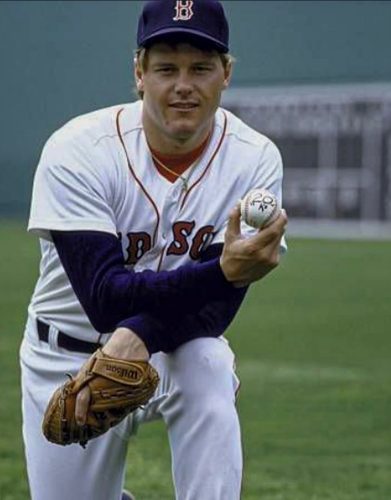
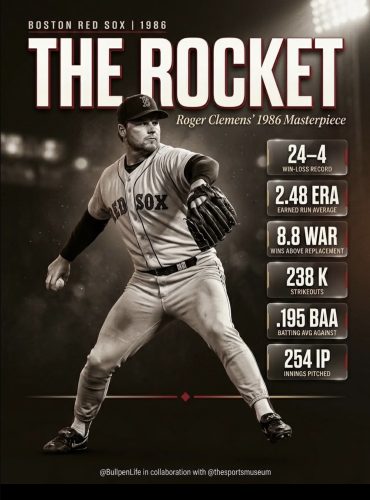
That start highlighted a season which saw Clemens register a major league best 24 wins to only four defeats, while posting league leading numbers in ERA (2.48) and WHIP (0.97).
And to think, it almost didn’t happen.
“There was an unusual amount of traffic, even more than normal, on Storrow Drive that day (4/29/86),” recalls Clemens. “I hadn’t moved for about 45 minutes and it was almost an hour before first pitch. I finally decided to put my car in park, and run the rest of the way to Fenway. Luckily a couple Boston police officers saw me, recognized who I was and cleared a lane for me get through.”
“Fisch (pitching coach Bill Fischer) wasn’t happy with me at all and was about to scratch my start,” he says. “After the game he said ‘show up anytime you want from now on.'”
Winner of his first 14 decisions during the ‘86 campaign, Clemens did not lose a game until July.
Along with Wade Boggs, he was the dominant leader of a Red Sox pennant-winning season that earned him the Cy Young, MVP, and All-Star Game MVP awards, the last of which he stood as the winning pitcher for the American League, tossing three perfect innings in his hometown of Houston.
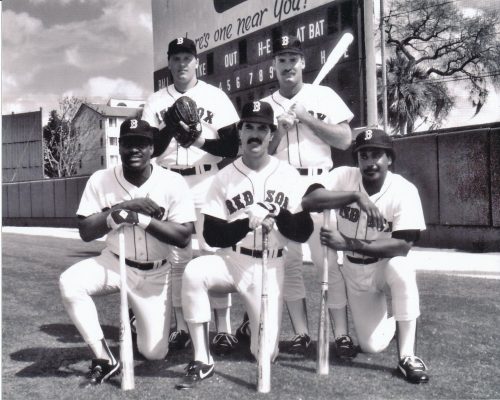
Boggs, meanwhile, led the league in batting avg (.357); W.A.R (8.1); walks (105); OBP (.453), and a slew of other offensive categories in 1986. The batting title was his third in a historic run that saw him capture five total in a six year span from ’83-’88.
For Clemens, the April 29th, 1986 start was history: 20 strikeouts, 0 walks, defining his career. In between innings that night, Elton John’s hit song ‘Rocket Man’ blared over the loudspeakers at Fenway, prompting Bruce Hurst to declare: “That’s you Roger. You’re The Rocket Man!”
The name stuck, eventually shortened more fittingly to ‘The Rocket’.
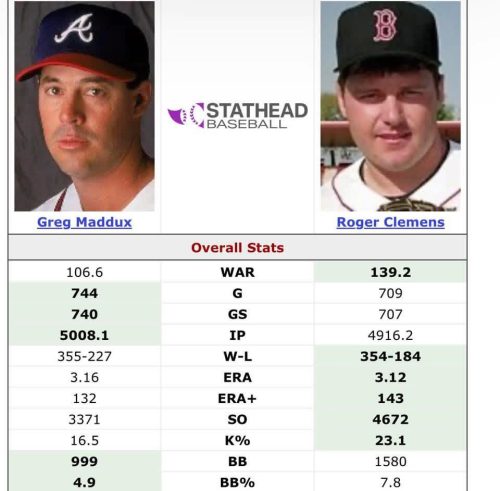
The winningest pitchers born after Pearl Harbor are Greg Maddux (355) and The Rocket (354).
Roger won seven Cy Young Awards, most period. He is the winningest pitcher not in the Hall of Fame, despite never once failing a drug test.
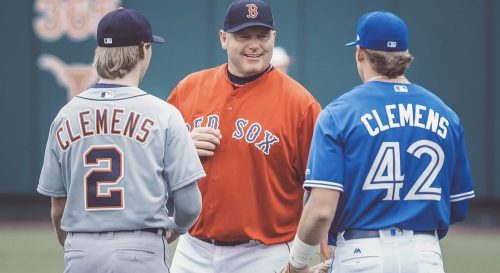
At age 63, now a father of two major league infielders, Clemens shares:
“Maddux once told me we pitched very much alike. We threw strikes first. It was always about command for both of us.”
20 strikeouts, 0 walks. Twice in his career.
704 Wins, 11 Cy Young Awards, Greg Maddux and Roger Clemens.
FOLLOWING HIS JUNE 1983 SIGNING, Clemens zoomed all the way from Class A Winter Haven of the Florida State League to Class AA New Britain that summer. Almost three months to the day of winning the College World Series he worked another championship game gem, going the distance in a 3 hit/12 K shutout of the Lynn Pirates to clinch the Eastern League World Series.
“I had just come from pitching in front of 20,000 in the College World Series. Three weeks later, I’m in Winter Haven pitching in front of 11 people. It’s easy to see who’s heckling you when there are only 11 folks in the crowd,” he jokes.
His first season of professional baseball saw him post a microscopic 1.33 ERA over 81 innings while registering 95 strikeouts against only twelve walks, 7-2 record.
While at Winter Haven he stirred things up in a game with the Detroit Tigers’ Lakeland club when burly first baseman Ronald Davis wiped out Roger’s Longhorn and Winter Haven teammate Mike Brumley with a hard slide into second. Clemens, from the dugout steps, glared at Davis and warned “You’ll get yours!”
Two days later, with Roger on the hill, several Lakeland batters heard 99 mph fastballs whistle high and tight by their ears, including Davis who got drilled by a pitch thrown so hard it ricocheted into the crowd.

Eight months later, for his first spring training outing in 1984, Clemens -facing Detroit- was wearing the parent Sox uniform for the first time. The Tigers, whose training facility in Lakeland was just 15 miles away, would eventually win the World Series that autumn amassing 104 wins with a tough, loaded roster that included -among others- Kirk Gibson, Alan Trammell, Lou Whitaker, Darrell Evans, Howard Johnson, Larry Parrish, and Chet Lemon.
Perhaps the toughest Tiger of them all was Sparky Anderson, Detroit’s manager at the time. He told Boston writers upon arrival at the ballpark:
“I had to tell our players on the bus to stop talking about this Clemens guy. It was story after story the whole ride.. hitting one of our minor league guys in Lakeland.. our guy being taken by ambulance to the hospital.. how hard he throws.. Enough already with the fear mongering.. I got sick of hearing it and had to shut the bus up.”
Despite a very strong spring, Clemens started the 1984 campaign in Pawtucket, blowing away AAA hitters during the first month of the season with a 1.91 ERA in 46 1/3 innings before receiving the call up for his major league debut in Cleveland on May 15.
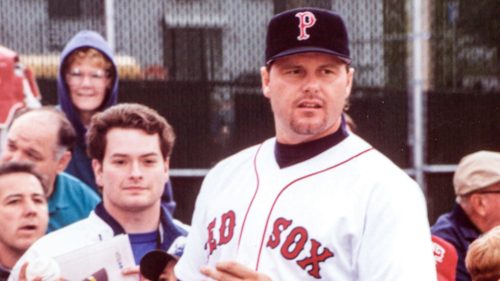
“I thought I had a good chance of making the club out of spring training,” Clemens says. “The last day of cuts were April 1st -April Fools Day. When I was called into (Red Sox manager) Ralph Houk’s office, he complimented me on a dominant spring but said I would start the year in Pawtucket. I was waiting for the ‘April Fools’ part to come, but turns out he wasn’t joking.”
Once called up, Clemens made 20 starts his maiden season, going 9-4, 4.32 ERA, then had his 1985 season cut short after only 15 starts (7-5, 3.29) submitting to the shoulder labrum operation.
His intense rehab -a work ethic that would become a hallmark over his 24-year career- resulted in a spring comeback a mere eight months after the operation (performed by a then relatively unknown surgeon, Dr. James Andrews).
In his fourth start of that ’86 season he did something no one had done before —struck out 20. More remarkable, he walked no one.
Watching the historic performance on that cool, windy night from the visitors dugout, Mariners manager Chuck Cottier compared his combination of strike-throwing and power velocity to Sandy Koufax and Bob Gibson.
It was Gibson, ironically enough, tasked as an assistant pitching coach with the Mets in 1981, who evaluated a Clemens workout after the Mets drafted him that year advising assistant GM at the time Lou Gorman not to sign him.
“Nothing special about his stuff or makeup,” Gibson concluded.
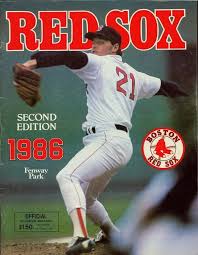
Clemens in many ways was a throwback pitcher, one of the last remaining from an era who -despite the Gibson report- indeed did hold a similar makeup (and mindset) to the greats of generations before him.
Growing up near Houston, he found ways into the Astrodome -dubbed the Eighth Wonder of the World- to watch (and listen to) Nolan Ryan, the preeminent power pitcher of that generation warm up during bullpen sessions.
“That undeniably left an impression on me,” Clemens says. “He was effortlessly throwing maybe 95 (mph) warming up -no where near his hardest- but it always sounded like 200 (mph) in that empty dome with no one else in there.”
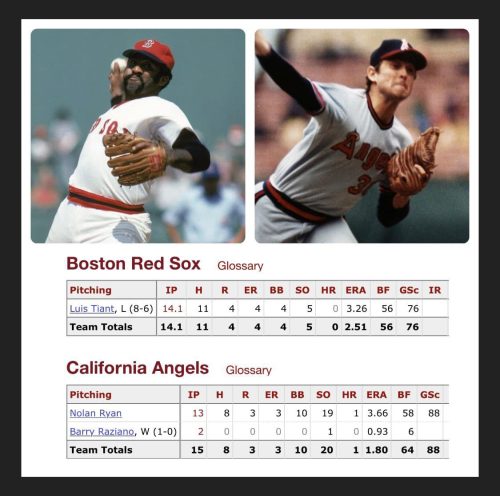
Another impression occurred on June 14th, 1974, a warm summer evening in Anaheim where Ryan, then with the California Angels, stood opposite Luis Tiant and the Red Sox.
The summer of ’74 saw Ryan uncork a fastball clocked at 101 mph, a Guinness world record at the time. Prehistoric speed guns in the 70’s, however, measured pitches as they crossed home plate; compared to 21st century technology where a pitcher’s release point is used to measure velocity. Adjusted to modern methods, physicists and pitching analysts cite that pitch being closer to 109 mph -believed now to be the fastest pitch ever thrown in a major league game.
In that June matchup against Boston, Ryan unleashed a staggering 235 pitches over 13 innings, striking out 19 and walking 10. It is said his fastball was still hovering around triple digits well into the extra innings. Over 50 years later, Nolan is still angry manager Bobby Winkles took him out.
Tiant, meanwhile, became the last MLB starting pitcher to work into the 15th inning (163 pitches) only to lose on an opposite field bloop by future teammate Denny Doyle in the 15th. Safe to say ‘El Tiante’ will hold the last ’15 inning/complete game’ distinction for the remainder of time.
Clemens went 24-4 during that historic 1986 season, good for Cy Young, MVP, and All-Star MVP honors. The trifecta also earned Roger recognition as the first player in MLB history to garner all three awards in the same season.
Back in ’86 there were still current and former players -plus some members of the media- that felt a pitcher didn’t impact the game enough to warrant wining a League MVP. Among the most vocal in this group? All-time homerun king, Henry Aaron.
“I wish Hank Aaron were still playing today,” Clemens replied smiling when notified of Aaron’s comments.
Ironically, Doc Gooden was 24-4 the previous year for the Mets. The two squared off as starters at the AS Game; a showdown MLB heavily promoted as WS preview material featuring the game’s two best young aces since Jim Palmer and Tom Seaver in 1969.
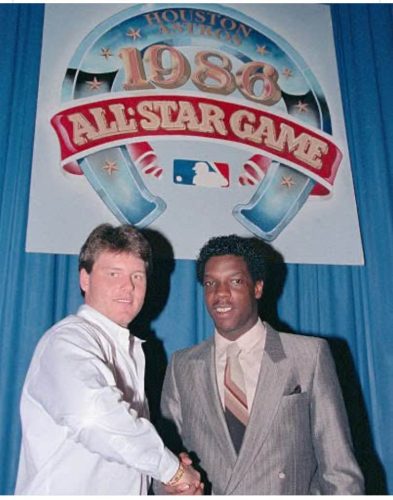
That midsummer classic featured nine combined players from the Red Sox and Mets.
Joining Clemens were teammates Boggs, Jim Rice and Rich Gedman. Arguments for Dwight Evans, Don Baylor, Bruce Hurst, and Oil Can Boyd were also made, most ardently from Oil Can himself, for which he earned a team suspension following his meltdown over being left off.
Gooden brought Darryl Strawberry, Gary Carter, Keith Hernandez, and Sid Fernandez with him on the NL squad. Ron Darling, Lenn Dykstra, Ray Knight, and Jesse Orosco easily could have been there as well.
When we were flying home from Houston together after the game Roger said to me:
“Getting to bat (which he hadn’t done because of the DH rule in the AL), especially against Gooden, made me realize how tough it actually is to hit a fastball.”
He then started utilizing his own heater more frequently.
On June 29th, with the trade deadline approaching, the Red Sox sent Steve Lyons to the Chicago White Sox in exchange for -by then- cagey veteran Tom Seaver. (The other key deal that summer involved fleecing Dave Henderson and Spike Owen -another Longhorns teammate- from the Mariners for a garden variety of spare parts.)
It was Seaver’s nine-inning record of 19 K’s in a game, set on April 22nd 1970, that Clemens broke earlier that year with the first of his 20K-0BB outings.
Soon in the far corner of the home clubhouse, Seaver was surrounded by Clemens and Hurst, soaking in any and all knowledge the future HOF hurler and 300+ game winner was offering.
Hurst, the league leader in strikeouts prior to a June stint on the DL, had engaged in two early season duels with Seaver’s White Sox, dropping a 3-1 decision on April 12th, before evening the score six days later with a 2-1 Red Sox victory.
“We were young then,” says Clemens. “I was only 23, and Hursty 28. Tom was 41, but he was still pretty special. We used to watch as he would change speeds, change locations and use both sides of the plate. Tom made a 17-inch plate into 24 inches.”
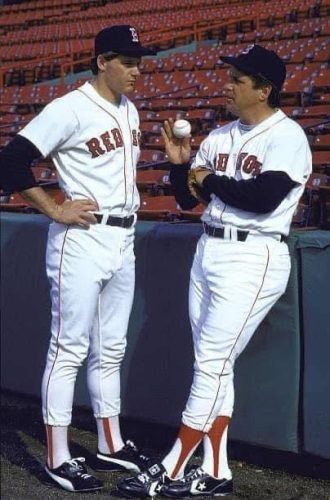
With Seaver in the fold, Hurst closed the season 8-3 over its final two months (one of the losses a meaningless game after the Sox already clinched) while Clemens won his final eight decisions over that same span.
On the afternoon of Sunday August 25th, at the end of a road trip in Texas, Clemens had a 2-0 lead with one out in the eighth inning, before giving up a 2-run homer off the foul pole to Rangers backup catcher Gino Petralli. The Sox then lost the game when Calvin Scharaldi served a walk-off home run to Ruben Sierra in the ninth.
Seaver, who had been home in Connecticut watching, got to the Red Sox clubhouse at four o’clock the next day. He walked straight to his locker, turned to Clemens, and said:
“What the (-_) were you throwing? The only thing Petralli could do is bale and hack at a ball inside, and you threw it there. Throw your fastball up and away and you’ll see what he’s thinking.”
Clemens never made the same mistake again.
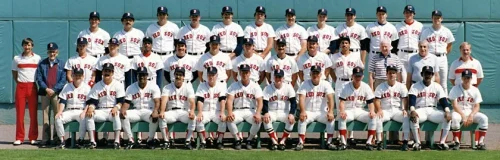
The mistake he did make however, was not refusing to allow Sox manager John McNamara to relieve him in the fatal sixth game of the ’86 World Series.
Start with this: if Seaver hadn’t hurt his knee with two weeks left in the season, the Mets wouldn’t have won. Al Nipper would not have been forced into the postseason rotation, and an emotional Oil Can would not have had any delusions of starting a winner-take-all Game 7.
The Mets simply were not beating Seaver in Shea Stadium, a mound no pitcher in MLB history ever won more games on.
“It sure would have been fun for (Seaver) to pitch a World Series game at Shea (in ’86),” reflects Clemens. “That was his stomping grounds.”
And then there’s this: Clemens start on Game 6 was coming with five days rest. He was a perfect 9-0 in 1986 on that amount of time between starts, going the distance for most of them.
By the fifth inning, Clemens was still carrying a no-hitter. In the bottom of the seventh, and the Red Sox holding a 3-2 lead, he worked a, 1-2-3 inning.
He was then due up in the top of the 8th with Dave Henderson on second and one out. Clemens at the time had allowed only four hits and one earned run.
He had developed a couple of mild blisters that bled. An inside slider to Mookie Wilson in the 5th had put an unusual amount of pressure on the right index finger and then in the 7th -again facing Wilson- slightly overcompensating the grip on his breaking pitches to not disrupt the blister he then tore the fingernail on his middle finger.
“Why did everything happen with Mookie at the plate that night?” Clemens wondered in his book Rocket Man that we wrote together in 1987.
When pitching coach Bill Fischer asked if he was OK—according to Fischer— Roger told him that all four hits were off of breaking balls that created the bleeding, but he could throw fastballs, which no Mets hitter had located or caught up to all night. The forkball was still effective as a secondary pitch to mix things up as well.
“He grabbed a bat, had his helmet on and intended to hit,” Fisch emphasized.
McNamara, nonetheless, decided to pinch hit Clemens for rookie Mike Greenwell, who struck out on three consecutive Roger McDowell sinkers. The Sox eventually wound up leaving the bases loaded without adding any insurance runs.
His night officially over, Clemens in between innings went into the clubhouse to wrap his arm with ice, then to the bullpen to watch some of the game, before returning to the dugout.
“They had the World Series trophy already set up,” he recalls. “I didn’t even want to look at it. They were setting up champagne and preparing for the celebration. Even in that moment it felt eery. I turned my head and went straight to the dugout.”
In the bottom half of the 8th, the Mets pushed the tying run across off Scharaldi (Clemens Longhorns teammate). Then -after regaining the lead on a Henderson blast, Boggs double, and Marty Barrett single in the 10th– Boston dropped the game, 6-5, when the Mets scored three times in that cursed, history altering bottom half of the inning with two outs.
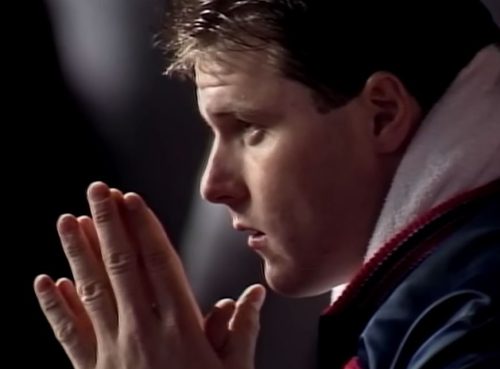
Would Clemens have closed out the final six outs in Game 6 the way Dick Radatz would have done had he pitched for a winning team? Hurst is among the many that believes so. Remember, the Sox were a single strike away (Schiraldi had Ray Knight at 0-2 with two outs in the tenth) from winning the World Series.
“There is no way Roger asked out,” Hurst affirms. “He was a fierce competitor.”
Media members who took the elevator down in the tenth, before the game’s conclusion, were greeted when the door opened to the message:
“Congratulations, Boston Red Sox, 1986 World Champions, Bruce Hurst, MVP.”
In a later Bob Costas interview, McNamara, amidst heavy scrutiny for pulling Clemens and not relieving Bill Buckner for Dave Stapleton as a defensive replacement in the later innings (as had been done in all seven of Boston’s postseason wins) claimed Clemens begged out and Buckner begged to stay in.
In that top half of the seventh, with the bases loaded and LHP Jesse Orosco on the mound for New York, Buckner (career .218 average versus LHP) somehow convinced McNamara to let him face the Mets bullpen ace, whom he was a career 3 for 19 against. Available to pinch-hit was Don Baylor, owner of 31 home runs in ’86, and 108 of 315 lifetime dingers off southpaws. Buckner harmlessly flied out to Lenny Dykstra on the first pitch he saw.
IN SPRING TRAINING 1999 after Clemens was traded to the New York Yankees, Fischer -then a coach with Atlanta- did a video interview with me in Braves camp. In that interview, Fischer vehemently denies that Clemens asked out, and off the record told me that McNamara had taken much grief for pulling Clemens in favor of Schiraldi.
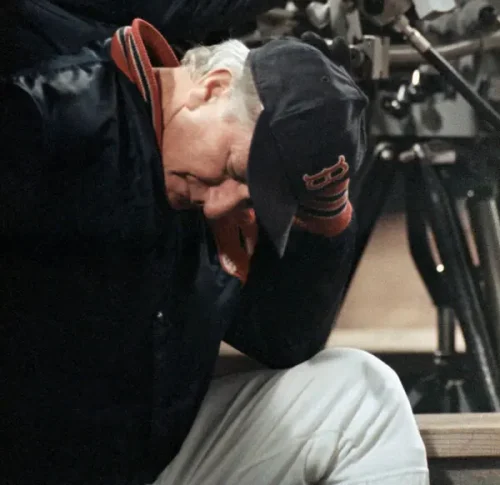
Working on a special feature of Game 6 and the ’86 World Series for Sports Illustrated, I sat down with more than 15 Red Sox players who were part of that game and series at a medical center in Worcester. The conversations and revelations transpired were not something McNamara would have wanted to witness (think Grady Little and Pedro Martinez, 2003).
I wrote about it in The Globe, McNamara threatened to sue me, but when he learned I had the Fischer tape, I never heard of that lawsuit again.
McNamara was fired at the 1988 AS break after some personal issues arose. Morgan Magic ensued.
FOLLOWING THE DEVASTATING WS LOSS, the Red Sox chose to renew Clemens during the spring of ’87 at close to the minimum salary, per the owners-controlled system at the time. Roger walked out of camp with his Hendricks Brothers agents. GM Lou Gorman’s triumphant comment was “the sun will sign, the sun will set and I will have lunch.”
A $500,000 qualifying offer was extended to Seaver as well. Failure to close out the WS had left a bitter lingering taste with Tom Terrific though. He opted to retire instead.
Back on the advice and consent of the Commissioner’s Office, Roger turned in his second consecutive Cy Young season in 1987, starting 36 games, while accumulating 281 1/3 innings. He had a 20-9 record/ 2.91 ERA and fanned 256 for the year. Despite leading the league in wins, complete games (18), shutouts (7) and W.A.R (9.4) he wasn’t happy as the Sox stumbled to 78-84 and fifth in the AL East just one year after winning the American League pennant.
He won 18 and 17 games respectively over the next two seasons, posting similar numbers to those of ’87. Following the firing of McNamara, the Sox did reclaim the AL East in ’88 with a 46-31 second half resurgence under Joe Morgan, before being swept by a mighty Oakland Athletics team in the ALCS.
Clemens grit and determination were on full display the night of July 25, 1988. On a searing-hot night (game-time temperature of 100 degrees) in Texas, Clemens fired 161 pitches, striking out 14 Rangers in a three-hit complete game shutout. It was a throwback performance worthy of comparisons to Ryan, Tiant, Koufax, Gibson, Palmer and Seaver.
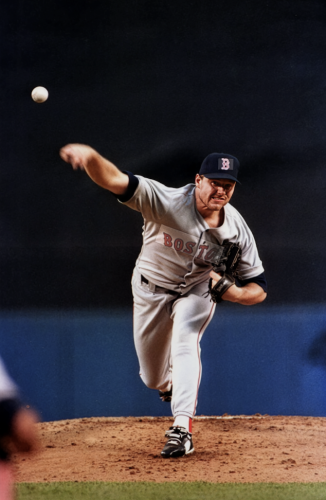
Then in 1990, Roger was 21-6, 1.93 ERA -by far the most dominant pitcher in baseball that season even though the writers seemed it fit to somehow award Bob Welch the Cy Young- but the team once again got swept in the ALCS by Oakland in a series best remembered for home plate umpire Terry Cooney inexplicably ejecting Clemens in the second inning of Game 4, for what he thought were arguments over balls and strikes. (Clemens was actually conversing with his catcher, Tony Pena.) The Sox were slowly falling apart.
Clemens would win his third Cy Young Award (his last in Boston) in 1991 tallying 18 wins while securing his second of three consecutive ERA titles (2.62) in the AL, (he won seven total over the course of his career) but the Red Sox found themselves on the outside looking in at postseason baseball.
They went from Joe Morgan to Butch Hobson in managers, Lou Gorman to Dan Duquette as general manager, finished first only in 1995 before Clemens would leave as a free agent after the 1996 season.
On September 18th, 1996 -in his third to last start in a Red Sox uniform and more than ten years since tossing his masterpiece on April 29th, 1986- Clemens threw a second 20 strikeout, no walk game. If anyone thought he was, as Duquette said—although didn’t really mean—in the “twilight of his career” Roger made sure one of the last memories of him in a Red Sox uniform was going to be the same as one of the very first: 20K – 0BB.
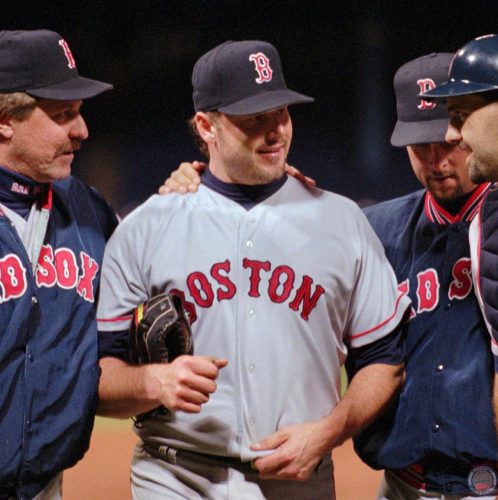
THAT OFFSEASON HE SIGNED with the Toronto Blue Jays and in two seasons was 41-33, 2.33 while picking up his fourth and 5th Cy Youngs, striking out 563 and capturing the coveted pitchers’ triple crown -leading the league in wins, ERA and strikeouts- in both 1997 and ’98.
On July 12, 1997 -his first game back at Fenway- he pitched with dominant vengeance allowing only one hit over eight innings with 16 strikeouts. After whiffing Mo Vaughn to end the 8th, Roger slowly walked off the field, staring up at Duquette’s box. Message delivered.
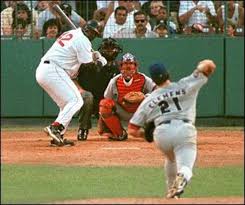
By 1999, George Steinbrenner decided Roger should spend part of his career wearing pinstripes in The Stadium—even if it were the new Stadium.
He traded David Wells—who finished his career with 239 wins, more than Whitey Ford, Don Drysdale, Jim Bunning or Pedro Martinez—in a loaded package for Roger in February.
That autumn, 16 years after earning series clinching wins within months of each other in the College and Eastern League World Series’, Clemens finally won MLB’s biggest prize going 7 1/3 innings, allowing only one ER, in a decisive Game 4 clinching victory over the Braves.
An October later, he put on one of the great postseason shows. Ever.
After two subpar starts against postseason nemesis Oakland at the outset of the 2000 playoffs, he went into Seattle for Game 4 of the ALCS with media outlets circulating predictions everywhere -on air and in print- that, finally, today was twilight time for The Rocket.
He brushed Alex Rodriguez back in the first inning.
“Alex was complaining, but the way they call the game now, that pitch would be a strike,” Clemens said reminiscing the post-season classic with me this past March.
“I had all three pitches going,” he said. “The fastball, the tight slider, and my split-finger that day was filthy.”
By the time he reached the fifth inning, he had a no-hitter and the velocity on the fastball was touching 100 MPH. In the seventh inning, Mariners outfielder Al Martin scraped a ball off Tino Martinrez’s glove for the only hit Clemens surrendered.
“If Tino was just half an inch taller, I would have had a no-hitter,” Roger mused.
Twenty-five years later I was asked to name the greatest postseason pitching performance I ever witnessed. I replied immediately. Roger Clemens, 9-1-0-0-2-15, 5-0 win.
I’m not the only one close to Roger who thinks so either.
“My sons have said,” Clemens says. “As good as 4/29/86 was, if looking closely at both games (Game 4 ALCS vs Mariners and 20k-0BB vs Mariners) they feel with the magnitude of what was at stake, Game 4 ALCS is the superior performance.”

Oh, think about greatness in a Yankee uniform? After the masterpiece in Seattle Clemens faced the New York Mets in the 2000 Subway World Series, just eight days later. He threw out a 8-2-0-0-0-9.
That’s 17 -3-0-2-24 in just over a week, both clutch wins for his team.
The following year, Clemens recorded the sixth and final 20-win season of his storied career, when he became the first pitcher in MLB history to begin a season 20-1 -thus catapulting him to his sixth Cy Young.

On June 13th, 2003 -at 40 years old- Clemens earned his 300th career victory, simultaneously picking up his 4,000th strikeout in the same game against the St. Louis Cardinals at Yankees Stadium.
He was set to hang up the cleats after the 2003 season, but when good friend Andy Petitte bolted New York for Houston in free agency, he was able to convince Roger to join him for the ride.
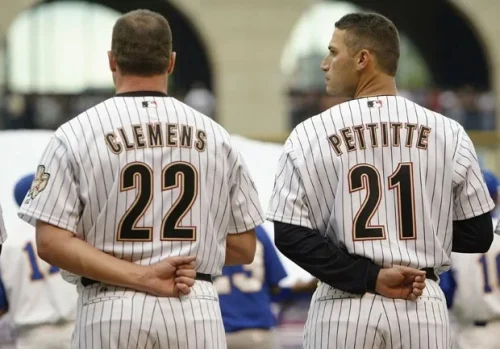
So at age 41, Clemens became an Astro, won another Cy Young -his seventh and final- while bagging another ERA title at age 42. He pitched again in the World Series, notching 4 of his 12 career postseason victories in his 3 seasons in Houston.
ROGER CLEMENS 354 WINS are second most behind only Greg Maddux’s 355 by any of the 10,000+ pitchers who have thrown a pitch in the big leagues after Franklin Roosevelt died on April 12, 1945.
He is the only pitcher in the history of the game to win multiple Cy Young Awards in three different decades. He led the league in wins four times and in strikeouts five. The annual honor awarded to the best pitcher in college baseball is called The Roger Clemens Award. His 192 wins in a Red Sox uniform are tied for most in franchise history with, who else? Cy Young.
OK, in his Yankees days, a trainer and a teammate testified that Roger tried some illegal substances, even if he never tested positive and there has never been any evidence suggesting otherwise. In June 2012, Clemens was cleared of all charges related to illegal substance allegations by a federal jury in Washington, D.C. They found him not guilty on all six counts of perjury, obstruction of congress, and of making any false statements.
In that Seattle game, he threw 100 MPH within inches of Alex Rodriguez. Against the Mets, he faced Mike Piazza, beaned him and took Piazza out of the All-Star Game. In that world series game, he threw a pitch that shattered Piazza’s bat. When it flew in pieces near Clemens, he picked it up and tossed it near Piazza going down the line.
Later, Yankees manager Joe Torre recalled that because pitching coach Mel Stottlemyre was sidelined battling Multiple Myeloma Cancer he was watching the game in Torre’s office instead of the Yankees dugout.
“Mel told me Roger came in the half inning after the incident and was so devastated how it all had unraveled that he was crying,” Torre passed on.
In his Boston days, when the position players’ took batting practice, Clemens would go run out on the Charles River to maintain his legs and his strength, then on his way back to Fenway stop to see hospitalized kids at the Dana-Farber Cancer Center or Children’s Hospital.
When he was retired and helping the Astros minor league pitchers, one spring training he pitched in a game and faced his oldest son Koby. Roger brushed him back as if he were Arod.
“You couldn’t have been surprised, Peter?” Koby asked me. Next at-bat, Koby roped a base hit.
No, I wasn’t surprised Koby. I was thinking about your dad’s first preseason start in a Sox uniform, Sparky Anderson, and that bus ride from Lakeland to Winter Haven in 1984.
The end.
__________

Peter Gammons is the preeminent baseball writer of his generation, whose influence on the sport and the people who cover it spans six decades. Born and raised in New England, Gammons was mentored by the revered basketball coach Dean Smith at the University of North Carolina. Smith told him that being a good listener was not only the key to journalism but to life—and Gammons has long taken that to heart. His early calling card was his Sunday notes column in the Boston Globe, which combined baseball and pop culture to deliver a weekly joyride through the sport. His story from Game 6 of the 1975 World Series is still considered the greatest game story ever written on deadline, and led to his hiring by Sports Illustrated in 1976. He moved to ESPN in 1990, becoming the first sportswriter the network ever put on TV.