

I’LL ALWAYS REMEMBER the first time I really fell in love with men’s suits. I had recently moved to Boston, barely out of college, and was home in my half furnished “21-year-old first totally on my own apartment” watching a Red Sox game.
Filled with the wide-eyed wonder and ambition of a kid with big dreams, ready to make his mark in the big city, I had already felt an instant identity and connection to Boston. EVERYTHING about my new city just seemed cool.
And that’s when a NESN camera zoomed in on a well-dressed gentleman in the crowd that evening at Fenway Park. “And Boston native, Joseph Abboud is here with us at the ballpark this evening,” Don Orsillo observed.
“It’s always nice to see Joseph Abboud at Fenway,” Jerry Remy added.
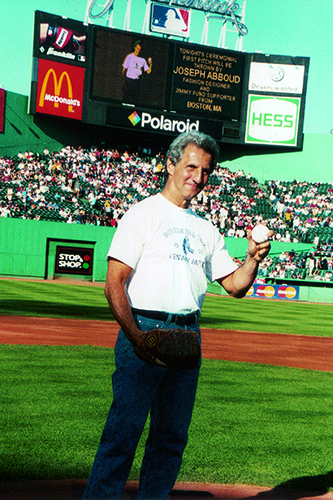
All I knew about Joseph Abboud was that his name was on the ONE suit that I owned, a gray flannel suit, and I had bought at a Men’s Wearhouse at the local mall by my parents house in Connecticut. But now, there he was, on the screen of my big boxed early 2000s television set, with Jerry Remy and Don Orsillo gushing over him.
For whatever reason, right in that moment, my gray flannel suit had a little more meaning.
Abboud, born in Boston to a working class Lebanese family, was raised in the South End and later Roslindale; graduating from UMass Boston in 1972.
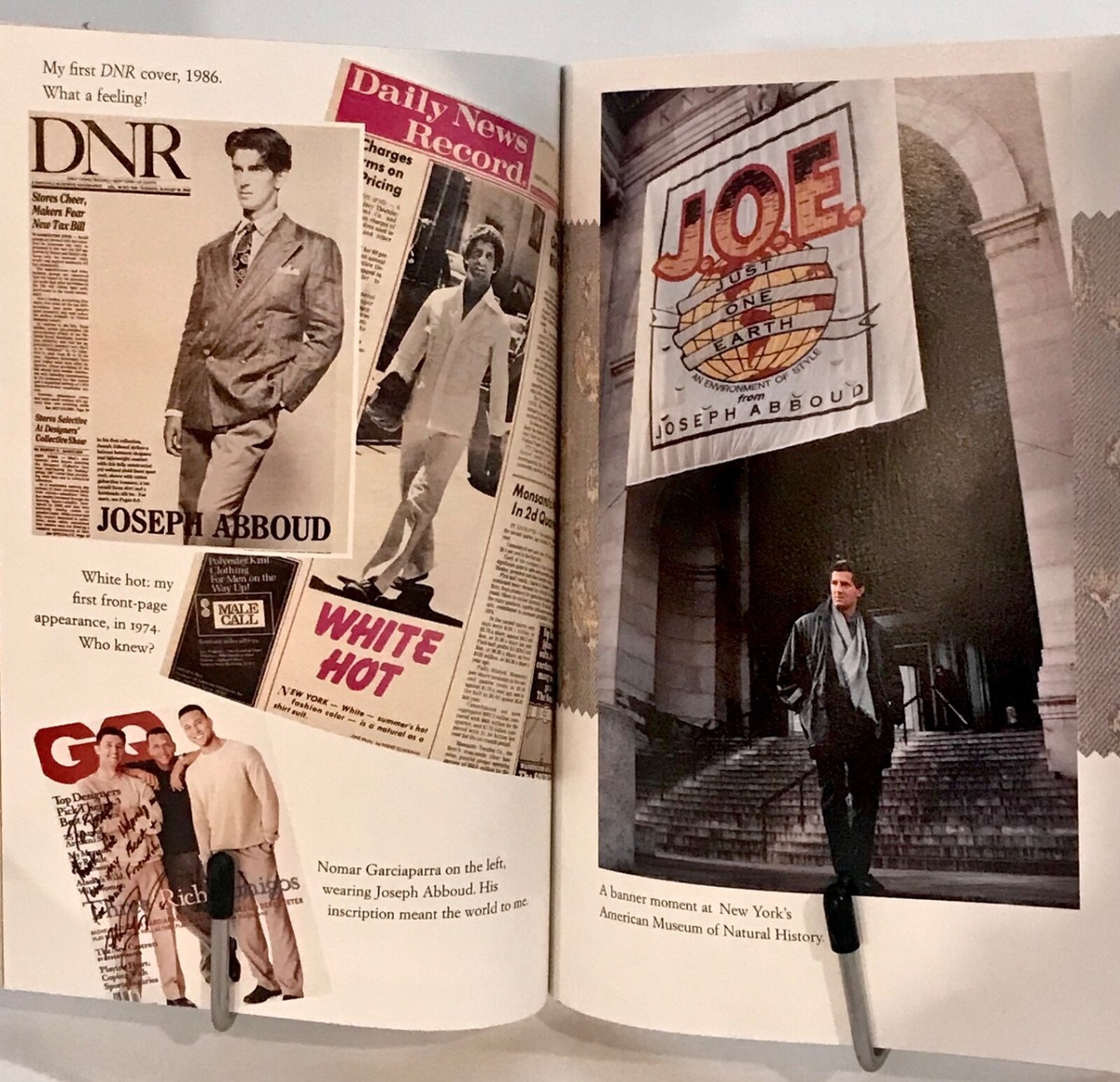
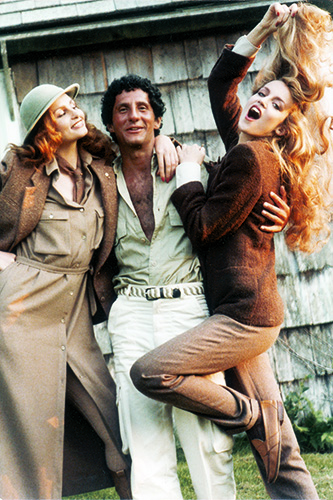
Abboud spent his formative years in fashion at the trendy men’s boutique, Louis Boston, before joining on with Ralph Lauren in 1981 -pulling him out of Boston to Manhattan- where he ultimately became associate director of menswear design under RL.
In 1986, he launched his own line, and by 1989/1990 he was making history by becoming the first designer to win the CFDA (Council of Fashion Designers of America) award for Best Menswear Designer two years in a row.
For the last thirty-five years, Abboud has continued to be a global innovator, leader, and authority in men’s fashion, has orchestrated some of the best produced fashion shows in the industry, and his created a legacy undoubtedly synonymous with excellence for eternity.
All while proudly, and unabashedly, reminding everyone he is from Boston.
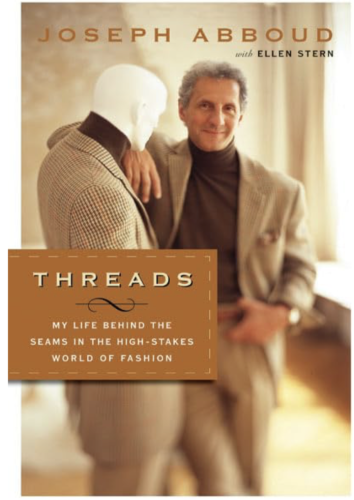
The following is an excerpt from Joseph Abboud’s 2013 autobiography, Threads: My Life Behind the Seams in the High-Stakes World of Fashion, written with Ellen Stern and available at most places where books are sold.
_____________________
Chapter 1 – Guy in the Gray Flannel Suit
_____________________
Doctor. Lawyer. Native chief. Fashion designer.
Most guys don’t do surgery on a daily basis, or sue somebody, or open a casino. But everyone deals with what I do: fashion.
“What’ll I wear?” Comes up every morning.
The CEO says, “Does this tie work with that suit?” The art director wonders, “Should I wear my cords with a T-Shirt or a cable-knit?” Even people who don’t give a damn about fashion have to admit it into their lives.
There’s covering our nakedness, and then there’s image. A man’s clothes tell the world how he wants to be perceived. Whether he’s wearing a pair of rusty jeans or a beautifully cut Italian suede jacket, he has an image of himself in mind. All clothes make a statement. The right clothes make a statement that will open doors.
That’s why most businessmen wear a suit. It’s easy. They don’t have to think too hard about it, and they always -well, almost always- look correct. A suit says, “Take me seriously.” It’s subliminal, but it’s real.
My very first suit was a little white cotton three-piece, bought for my first communion at Holy Name Church in West Roxbury. I wore it with white bucks, a white shirt, and a white bow tie, right out of Truman Capote. I looked so angelic, so holy. But a communion suit doesn’t count.
My first real suit was a beigy, tweedy mod thing from Jordan Marsh, and being able to buy it at a famous store in downtown Boston was a pretty big deal. It made me feel legitimate. But I was sixteen, and the suit wasn’t expensive, so nobody took my tailoring requests too seriously. When I went to pick it up, disaster! I looked like a clown. I’d wanted the sleeves lengthened and the pants shortened, and they’d done exactly the opposite. My first suit experience wasn’t a good one.
But it should have been. Buying a suit is a major event, because it makes you look -and feel- important. At twenty-one, every young man should have a great navy or gray suit that he can wear to an interview, a bar mitzvah, a funeral, a wedding. He also needs a navy blazer and a pair of chinos. With those three fundamentals, he’s covered for any event. On his feet: anything from penny loafers to wingtips, but shoes should never be outlandish or detract from the outfit.
An observant guy looks around and notices how others dress and walk and decorate their homes. Sooner or later, he makes up his mind how he’s going to look -and how he’s going to be. Is he going to be flamboyant? Is he going to dress like the guys in the stockroom or dress like the boss? Depends on where he’s headed.
A young friend of mine named David Black, who was toiling in the mail room at a publishing company, came in one day wearing a suit, shirt and tie. “What are you all dressed up for?” somebody asked him with a sneer. The answer: for himself.
Working in the mail room didn’t mean he couldn’t dress well and look professional. He wasn’t going to let other people’s perceptions of him keep him down. And they didn’t. He quickly rose through the ranks to become a prominent literary agent in New York. No, it wasn’t just the clothes that got him promoted, but he had a certain image of himself, and the clothes helped him project that image. The first time we met, a few years ago, David was wearing a putty-colored dress shirt with a soft collar, a soft collar, a soft print tie, and a navy blazer -all Armani, so he made some kind of apology. I didn’t care whose label he was wearing, because he looked great. He had a lot of other things going for him too, of course, but that strong first impression made a difference. We connected, and now he’s my agent.
There’s a migratory pattern to developing your wardrobe and taste as you become more successful. It’s like traveling. The first time you travel, you feel lucky to get on any flight from anywhere on a price you can manage. You don’t care if you sit with the chickens. Then, as you get a little bit more successful, you fly coach. When you’re a junior executive, you can travel business class. And then, as the CEO, you’re going first class. It’s an obvious analogy, but its exactly what happens.
For example, most guys who are starting to move up the ladder relate to a pinstripe suit almost instinctively. They figure, “It’s been done before -by my father, my boss, my father’s boss -and it’s a classic. I’m the boss now, so it’s my turn.”
If you remember the musical How to Succeed in Business without Really Trying, you’ll remember the final scene of the movie, in which the outgoing chairman of the board is wearing a navy chalk-stripe suit with a soft butter yellow vest, a white shirt, and a silver tie -and Robert Morse, being introduced as the incoming chairman of the board, appears exactly the same suit, vest, and tie. He’s not just following in his boss’s suit pattern. It’s a spoof but a spoof with a lot of truth behind it.
The other best choice is a beautifully cut solid or chalk-stripe gray suit with a white or white tattersall shirt, a silver woven tie -nothing too bright or too flashy, no tone-on-tone thing happening, no tricks- and a pair of dark brown suede shoes. (Brown with gray shows confidence, and it’s one of the dream color combinations for the powerful guy. It’s sophisticated, it’s soft, and it doesn’t scream.) With a fine gray worsted or gray fannel, the fabric doesn’t get in the way. You’re not hiding anything. You see the cut, the fit, the details, the stitching. And besides, any woman will tell you that the sexiest guy in the room is the guy in the gray flannel suit.
There are more than 200 steps in making a suit, from measuring to stitching to pressing to pockets to linings. (A cheaper factory might do it in eighty steps.) You’ve got to go through this little ballet in which the fabric’s treated just right, it’s sewn just right, the tension of the needles is just right so it doesn’t pull, the softness of the shoulder is just right. Then comes the marriage of the inner linings, the shoulder pads, and all the other interior parts to make sure that everything is moving and fluid.
When the front of the jacket is made, the pockets are basted up. This keeps the front of the garment stable while its being sewn or pressed. When it gets to the rack at Bloomingdale’s or Saks, the pockets are still stitched. A good salesman will certainly mention it, or the tailor will open them when the suit is altered. But I’ve actually had people say to me, “I like your suits, but I don’t like the fake pockets.”
The final step, the pressing, involves seven or eight steps of its own. The front of the coat gets pressed, the shoulder gets pressed, the lapel gets pressed, the pants get pressed -on computerized machines set to the correct pressure for different fabrics. Overpressing will make the fabric look flat and more commercial, it will make the fabric shine, and it will press the lapel down into the jacket so you see an imprint of the pocket below -like a panty line. So, as with a good sirloin, it’s generally wiser to underdo than overdo.
It’s these little details that make the difference between a great suit and a not-so-great-one. People in the fashion business know what to look for, but the average guy trying on a suit doesn’t. And he shouldn’t have to. Designing it, sewing it, and pressing it so it looks, feels, and fits right. That’s our job.
______
THREADS: My Life Behind the Seams In the High Stakes World of Fashion can be purchased HERE.
