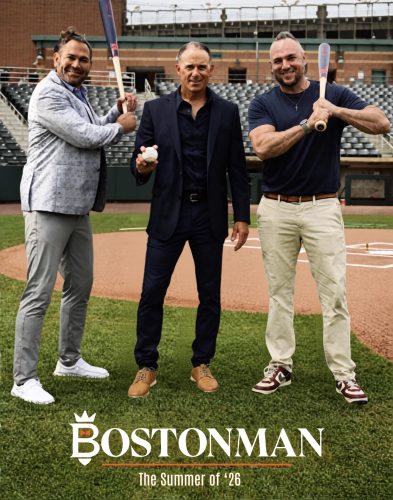
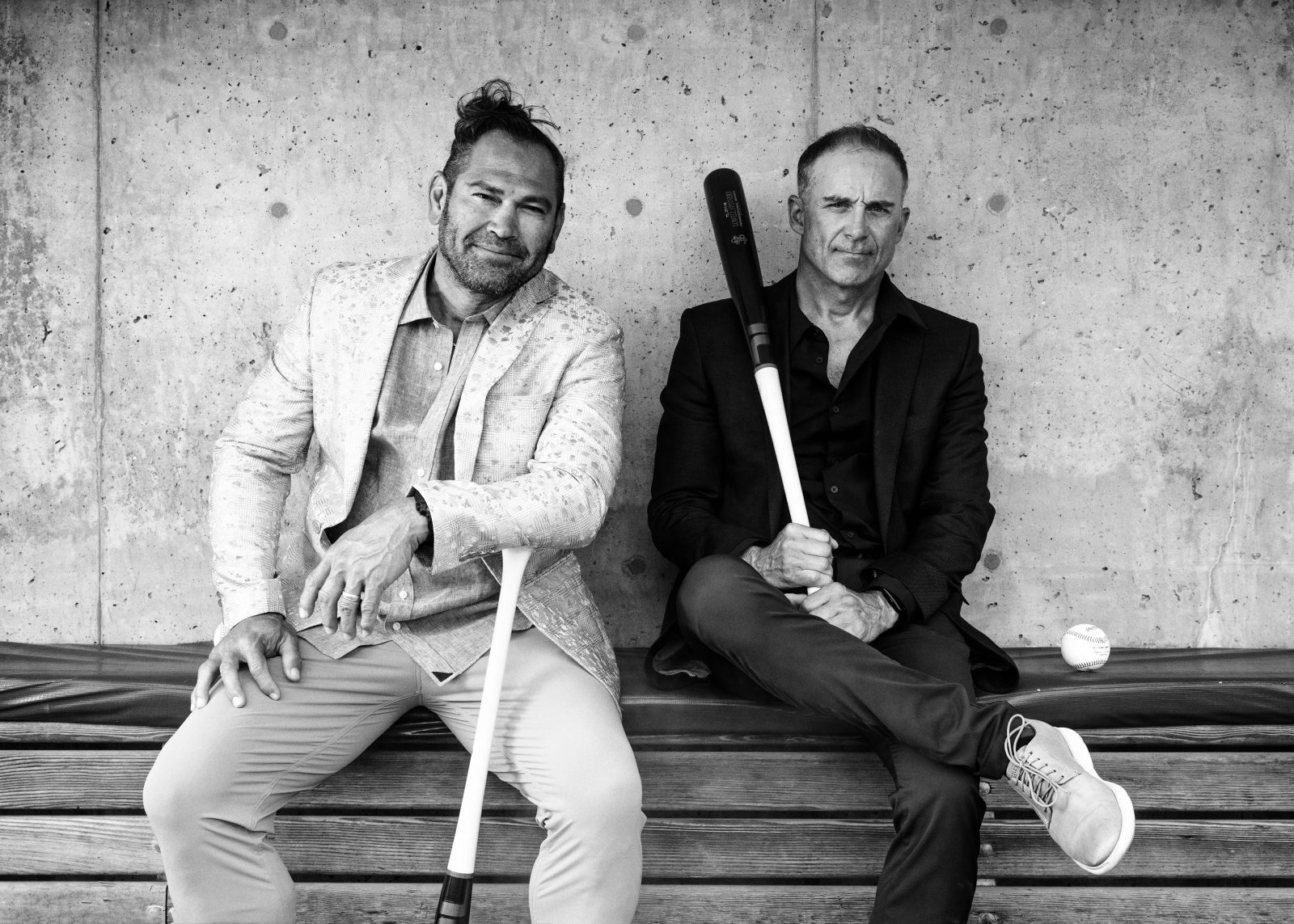
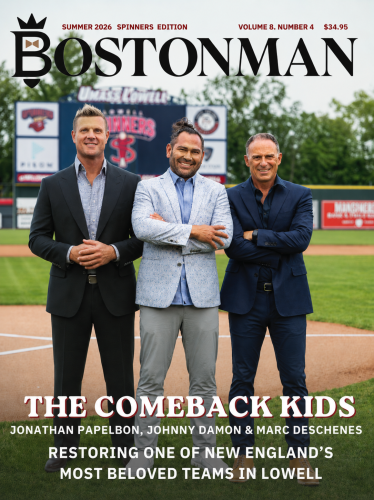
Spinners baseball returned to Lowell this summer. Principal owner Marc Deschenes says he leaned into the team’s history, as well as its link with Red Sox and major league greats like Johnny Damon and Jonathan Papelbon, to rekindle the region’s love affair with the sport. He shares the inside story of the 2026 season, why the Spinners matter to the Merrimack Valley, and what’s next.
____
_______
“Baseball in the Merrimack Valley has been a big presence in my life,” says Marc Deschenes, principal owner and chief baseball officer of the Lowell Spinners of the Futures Collegiate Baseball League (FCBL), a wood-bat summer collegiate league. “During my professional playing days, I would always come back here and do private instruction. Then I started the youth program here, so to be able to go out there now and bring these high-powered, high-level, high-exposure college athletes — who are at that next step to professional baseball — was important to me. And, quite frankly, it’s been a lot of fun for my kids to be a part of that this summer, growing up around the baseball field and in the park like I did”
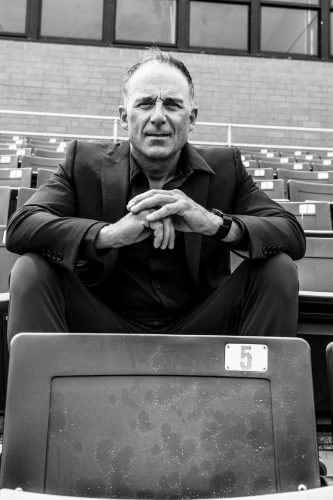
Deschenes and John Croteau — the Spinners’ chairman and chief executive officer — are the forces behind this summer’s return of the beloved Spinners brand to the city’s LeLacheur Park for the first time since 2019. The original Spinners franchise was the Boston Red Sox affiliate in the Single-A New York-Penn League from 1996 until the COVID-19 pandemic cancelled the 2020 minor league season. Then, that winter, as part of a Major League Baseball reorganization of its minor league system, the Spinners franchise was one of 40 teams disbanded.
But, last July, the FCBL announced a partnership with UMass-Lowell (home of LeLacheur Park) to return baseball to the Mill City.
“The FCBL was — and still is — looking for expansion,” Deschenes says. “The announcement last July was when it all came together — and it all took place rather quickly. We thought through what the process of owning a franchise would look like. Everything seemed to line up as far as the synergies with other endeavors and businesses I have. It adds to that portfolio, and it seemed like a good opportunity to bring summer baseball back there. We put a proposal and presentation together.”
Deschenes and Croteau announced the name, logos, and uniforms of the franchise on Nov. 18. They then set about a rapid effort to build out the organization it would take to operate the club for a 60-game season beginning in late May.
“I think the landscape of LeLacheur Park and the popularity it had back in the day made it really easy to envision and take those next steps,” Deschenes says.
The history of baseball in Lowell, though, stretches back far beyond the original Spinners franchise of the late 20th and early 21st centuries.
A Tradition of Baseball in Mill City
As early as the 1860s and 1870s, baseball became popular in the blue-collar “Mill City,” known for its importance to America’s Industrial Revolution. The town’s team in the 1870s even turned down an invitation to join the National League after its 1876 founding. The city won multiple New England League championships in the late 1800s and early 1900s, but professional baseball had departed Lowell by 1947.
In 1996, though, businessman Clyde Smol moved the Elmira (N.Y.) Pioneers of the Class-A New York-Penn League to Lowell, rebranding as the Spinners. By 1998, the team was playing in the brand-new LeLacheur Park under new owners Drew and Joann Weber.
By 2000, the Spinners were selling out every game in the 4,700-seat park — a streak that would run for 10 years and 413 games. According to the Spinners’ website, “For more than a decade, summer nights in Lowell meant packed stands, creative entertainment (dubbed “Spinnertainment”), and award-winning promotions overlooking the Merrimack River, and a city that had fully embraced its team. The Spinners were not just successful. They were essential.”
As a Red Sox affiliate, they also tied perfectly into the region’s deep love for the Olde Towne Team. Many future Boston (and MLB) stars got their professional start in Lowell, including Mookie Betts, Kevin Youkilis, Jacoby Ellsbury, Hanley Ramirez, Andrew Benintendi, and Jonathan Papelbon — among many others.
“Lowell’s where I started my career, and it’s a great town for baseball,” says Papelbon. “It’s a blue-collar town, the people love their baseball, and even though I played just one year there, I still identify with it.”
Looking to the Future (s League)
By summer 2025, though, the link to the national pastime was fading into Lowell’s past. But then word came down that the Futures League — which key members of the original Spinners franchise had a great hand in founding in 2011 — was ready to expand. Not only that: Lowell was their city of choice.
Deschenes — a native and resident of nearby Dracut who played at UMass Lowell and now owns and operates USA Prime New England, a youth club baseball and softball program with facilities in North Andover and Tewksbury — knew what the return of baseball could mean to Lowell. “The Lowell Spinners were an integral part of the community,” he says. “When they went away, there was a void in the summer When we got word that the city of Lowell was bringing a franchise back, we jumped at it.”
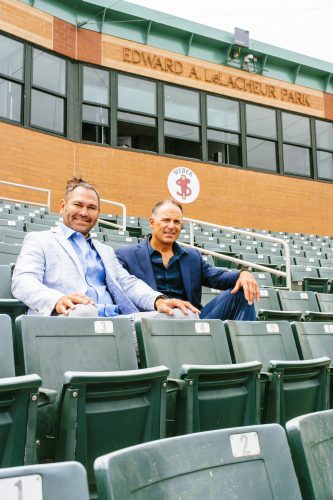
After spending 13 seasons in the minor leagues as a player, Deschenes knew what a new franchise could mean for the city. By teaming with long-time local tech executive Croteau and a group of limited partners — including Red Sox Hall of Famer Johnny Damon — Deschenes seized the opportunity, and the ownership group was awarded the franchise in November.
“The FCBL has been fantastic to work with,” Deschenes says. “The leaders and owners in the organization are very good and very eager to provide good experiences on the baseball field and in the stands. There’s a lot of good collaboration with the other ownership groups.”
Lowell joined teams in Burlington, Vt. (Vermont Lake Monsters), Nashua, N.H. (Silver Knights), New Britain, Conn. (Bees), Norwich, Conn. (Sea Unicorns), Westfield, Mass. (Starfires), and Worcester, Mass (Bravehearts) as part of the FCBL’s 2026 campaign. Since its inception, the league has seen 33 players eventually make a major league roster, including current players Mickey Gasper (Red Sox), Emmet Sheehan and Ben Casparius (Dodgers), Jeremy Pena (Astros), Sal Frelick (Brewers), and Ben Rice and Cam Schlittler (Yankees).
Deschenes credits the partnership of his fellow FCBL executives for smoothing the path as the Spinners launched this season. “When we were coming on board, we were behind the eight-ball with roster construction,” he says. “We didn’t start building our roster until last December, and most of the others in the league were completed. Between that and understanding the best way to go about group sales, season tickets, how to communicate with the fans, we really learned from the other owners.”
Building the Dream — and the Team
From the get-go, Deschenes and his leadership team knew that success would not be measured merely on the field. “We had to find a way to put butts in seats,” he says. “We had to go out there and energize the community again with different offerings, not only between the white lines. It’s why we brough back the idea of ‘Spinnertainment’: how could we create a program and an environment where people want to come back?”
Hiring the proper staff “came down to one guy,” Deschenes says. “Tim Bawmann.”
The long-time sports executive was president and general manager of the Spinners franchise back in their early 2000s heyday. “His experience and presence in this game and in Lowell is legendary,” Deschenes says. “He was there when they had 10 consecutive years of sellouts, so bringing those best practices to the organization was integral.”
From there, Deschenes says, it was a race to opening night: May 29. “We had three months to get this thing up and running,” he says. “My day-to-day consisted of anything from LeLacheur Park cleanup to hanging outfield wall signs; sponsorships, group sales, season ticket sales, social media presence, you name it.”
He adds, “It was interesting and really enjoyable, because I got to learn all aspects of the business. To be able to see how those all flowed and how they were important to the product that we were going to put on the field was important.”
Deschenes brought on Lowell native and professional baseball instructor Dawy LeBron as general manager and Jessica Pautt as office administrator and group sales leader. “That’s the nuts and bolts of the everyday, onsite staff,” he says. “Then we had anywhere from 20-30 college-level interns that would be in on gameday, as well. Those interns were a big part of our success. They really wanted to be involved in the business and understand the best practices.”
In addition, Deschenes leaned into bringing in well-known advisors who would not only give of themselves for his players but also strike a chord in the local community —Damon joined as a limited partner in ownership and former minor league teammate Papelbon was ready and willing to play a role as well.
“That was part of my goal from the start: bringing on other good people that have a passion for the game, that want to give back to the game, that are figureheads in the area,” Deschenes says. “Damon and Papelbon both won World Series here, so they’re very recognizable. To be able to bring them on and have their leadership and the passion they spread with their message was integral to the visibility and exposure.”
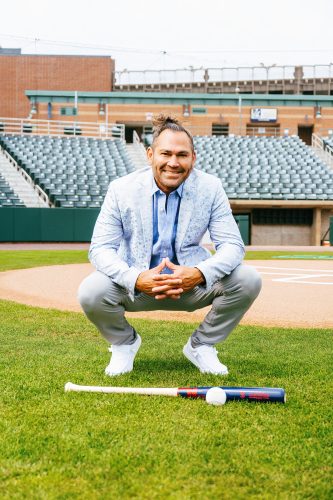
Damon says, “I felt the timing was important for me to get back into baseball, and I have many friends from the Lowell area. I understand what it means to lose an important part of your community, and major league players always do their best for communities and the charities in the communities.”
Papelbon adds, “I played with Marc in Double-A and Triple-A. It’s always special to see former teammates and friends, and seeing what he was doing here, I wanted to jump on board and do anything I could. When Marc or anyone in the organization has any questions or concerns, they know I’ll give honest feedback. It’s a strong organization. It’s pros working with pros.”
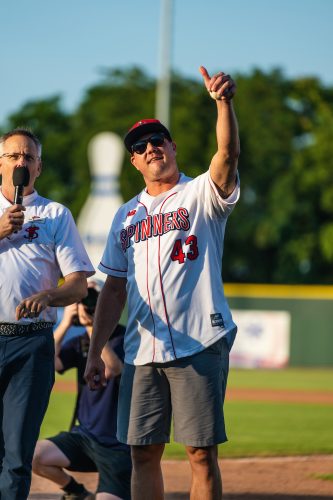
Deschenes believes their involvement is much more than cosmetic. “They want to be boots on the ground,” he says. “They’ve both been out to the stadium this year, and they want to do more as we build this thing. Johnny will be out for our golf tournament on Sept. 24 and then do a celebrity Home Run Derby the next day at our park. The people know he’s not just a behind-the-scenes investor. He’s here and wants to keep this fire stoked.”
The final piece of the pre-Opening Day puzzle: a team roster. “We had 16 colleges represented on our roster. My pedigree from my playing days and my connections were really advantageous in putting the roster together,” Deschenes says. “I have the trust and credibility with college coaches allowing them to know that this was going to be a good place to put their kids for the nurturing, the player development, and the competitive edge pieces. College coaches want their players coming back to them better than when they sent them to us. I think we provided that with our coaching staff and with the facilities we’re able to offer.”
Did It Work?
The Spinners’ brass was happy with its build. It thought it had done the right things, touched the right nerves, tugged the right heartstrings. But the true test came on Friday night, May 29, when Lowell hosted its first FCBL home game against Nashua.
The answer came loud and clear: a LeLacheur Park-record crowd of 5,125 braved intermittent rain to cheer on the Spinners in an eventual 5-3 loss. But no loss ever felt more like a win — for the community or the organization.
Asked his most memorable moment of the 2026 season, Deschenes says, “It’s Opening Night, for many reasons. We always wondered, ‘How are going to provide this experience on Night One? Are we going to have butts in the seats? Can we sell this thing out? Can we really deliver on all the things we said we were going to deliver?’ To be able to sit back that night, after it was all said and done and the first pitch was thrown … to be able to go up into the stands, walk through the concourse, shake hands and get hugs in regard to the experience people were having … thinking about it gives me goosebumps. You felt so much excitement and energy.”
But the excitement didn’t wane much from there. Though the Spinners finished with a 21-38 record and in sixth place in their first season, the franchise finished second in home attendance in the Futures League.
“Our sustainability was good,” Deschenes says. “Especially our Friday, Saturday, and Sunday games. We had good crowds and good energy at the park those nights. Part of the original goal was to figure out how we supercharge the stadium for midweek games. We did a really good job encouraging people to get out with certain promotions and different ideas on those nights. Lo and behold, we surpassed our projections.”
The team’s marketing and ticket sales efforts played a huge role in that success. Yes, Lowell was ripe for a return of the Spinners — but such a knowledgeable baseball community will be able to smell any whiff of insincerity on the part of a new franchise.
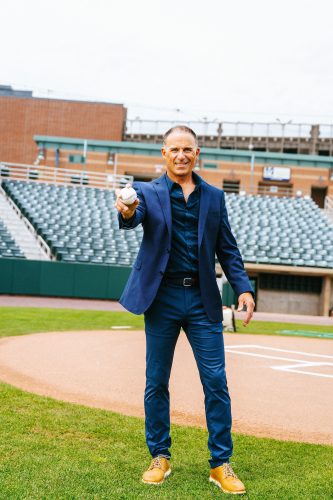
“Social media was massive for us. From Jackie Bruno and her team at Newsmaker Marketing to our social media team on site, that was an integral part of us getting out there and getting noticed,” Deschenes said.
Deschenes says that Bruno’s agency drove a lot of local and regional coverage early in the process — and especially around the start of the season. “Once we started to hit that local and regional coverage, everything grew like wildfire from there,” he says. “You saw ticket sales increase; you saw the outreach on email and on social build.”
He continues, “As a baseball guy, I keep coming back to ‘There’s no I in team.’ It was all hands on deck — a good collaboration of smart, creative people working together to get something out there that became powerful in a hurry.”
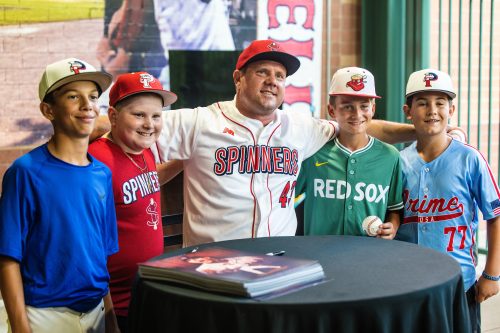
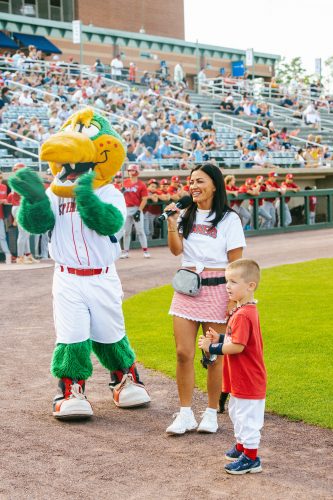
And once folks were in the stands, Deschenes says Bawmann’s expertise drove a true return of “Spinnertainment.” Promotional nights, bobblehead giveaways, post-game fireworks, kids running the bases — all those pieces that make attending a baseball game in 2026 much more than just attending a baseball game — were planned and executed successfully.
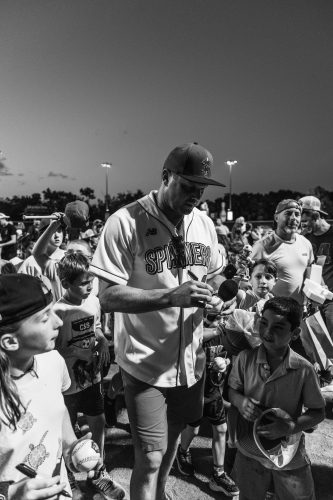
“It was really fun creating that run-of-show every day,” Deschenes says. “How are we going to build on things the crowd really likes? How are we going to generate more interest between innings and after the game? For me, I love when the kids run the bases after the game. Seeing the excitement in being able to be on the field, run the bases, slap the players’ hands afterwards and get autographs — it’s extremely impactful and inspirational.”
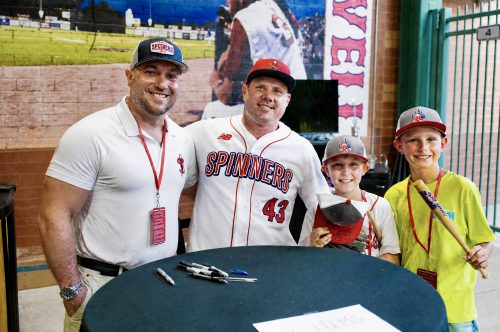
On Damon’s night, he threw out the first pitch, signed bobbleheads of himself, and even took a seat in a dunk tank for charity. “It was a memorable night, getting to talk to the players and the fans, and doing the dunk tank. It was great to see the community back together for baseball,” he says.
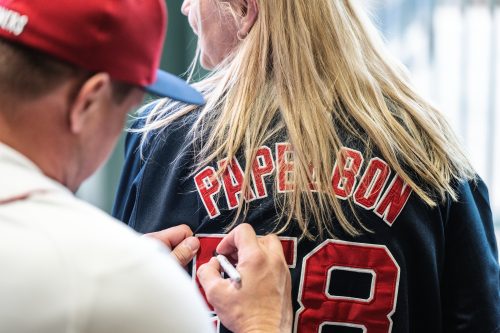
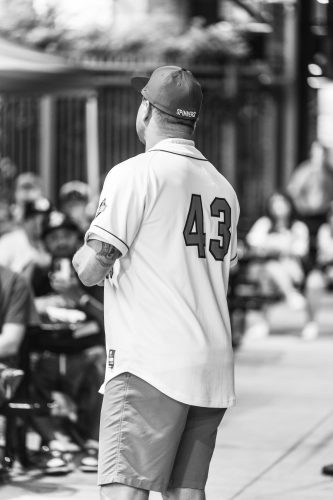
And Papelbon is grateful to be the first retired number for the Spinners, especially considering all the major league talent that’s come through Lowell. “To get my number retired there was just as good as getting into the Red Sox Hall of Fame,” he says. “To me, it signifies to me how the Lowell brand has continued on and how the city still reveres baseball.”
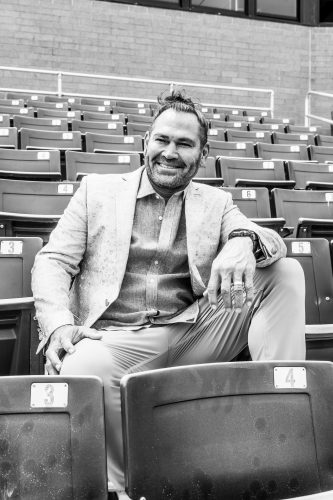
Deschenes says the community’s vocal response to the Spinners’ return is not only gratifying but also motivating. “What’s even more powerful than those memorable moments throughout the season is the consistent feedback we’ve gotten from the community — both locally and regionally,” he says. “There have been so many ‘thank you’ messages. ‘We’vemissed this. Thanks for bringing it back.’”
Deschenes continues, “We’re grateful we had the support of the fans, and that was with just three months of planning! With a full year of planning, we’re even more excited about progress moving forward.”
That said, Deschenes notes two goals — one for 2027, and one for the continuing health of the new Spinners franchise.
“My key goal for 2027 is to keep true to our deliverables: be fan friendly, affordable, and community engaged,” Deschenes says. “And No. 2, our M.O. here is ‘bigger and better.’We’re not complacent. We’re not satisfied with being No. 2 in the league in attendance. We want to provide more offerings, more entertainment, and a better product on the field.”