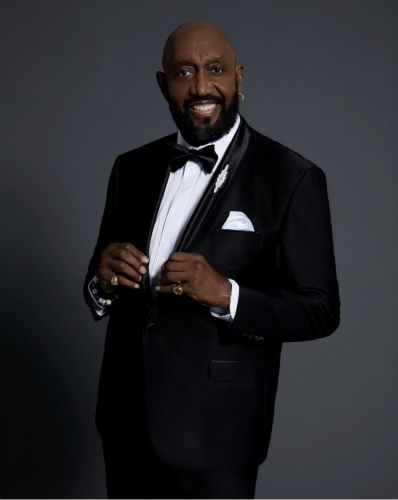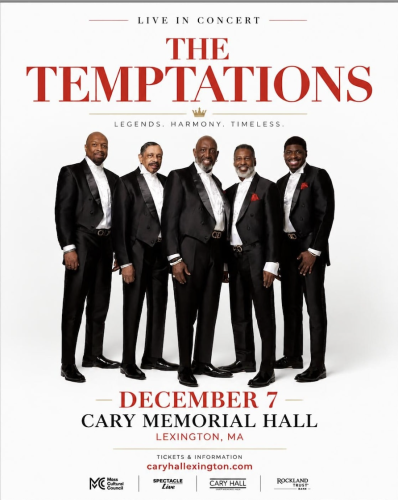

As the Last Original Member & Founder of the Temptations, Dr. Otis Williams Opens up to BostonMan Magazine on Outlasting the Storms, Fighting for Unity, and his Timeless Mandate for the City of Boston
________
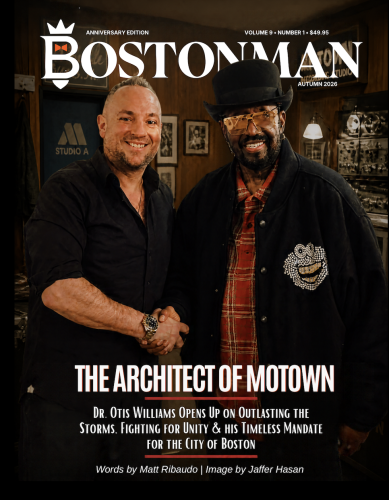
[Publisher’s Note: The following essay is an accumulation of BostonMan Magazine Publisher Matt Ribaudo and Temptations founder Dr. Otis Williams backstage conversations over the last four years. BostonMan Magazine (Ribaudo) has had the honor of conversing with Dr. Otis backstage at his shows on four separate wonderful occasions beginning in December 2022. This story, however, has been much more than four years in the making. For Matt Ribaudo, these first hand accounts about Dr. Otis Williams and the Temptations are a lifetime’s journey in lessons.]
________
TO UNDERSTAND the extraordinary trajectory of American popular music in the latter half of the twentieth century is to understand that it was rarely a product of mere inspiration.
It was, rather, a product of rigorous, unyielding machinery, built by men who understood the precise intersection of discipline, talent, and cultural timing. It was an exercise in industrial production applied to human emotion, a systematic assembly line designed to manufacture a flawless, bulletproof version of the American Dream.
__
IN DECEMBER, when the bitter winter wind cuts off the Atlantic and whistles down the brick alleyways of Massachusetts, the calendar for a contemporary publisher becomes a grueling test of physical endurance. The evenings are no longer one’s own; they are bartered away to a relentless succession of non-profit galas, holiday cocktail parties, corporate dinners, and the high-value professional gatherings that form the essential social infrastructure of BostonMan Magazine’s Legacy Club. It is a demanding world of brief handshakes, ambient lighting, and the constant, exhausting exchange of professional capital.
Yet on Sunday, December 11th in 2022, that entire institutional blur was brought to an abrupt and spectacular halt. The destination was the Chevalier Theatre in Medford—”The Chevy,” as the locals call it with a certain fierce, working-class affection. To understand why this particular ticket mattered, one has to understand that my relationship with the Motown catalog has never been a matter of casual listening. It has been an ongoing, lifelong obsession with the structural engineers who built the soundtrack of modern America. I belonged to that generation of listeners who viewed the label not as an oldies station playlist, but as a monumental cultural shift.
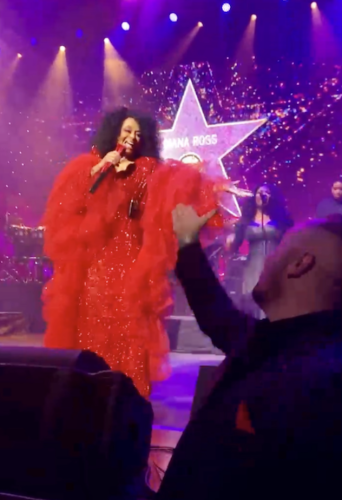
I was, after all, the young man who had once famously exchanged a standard mid-concert greeting with Diana Ross from the front row of the Wang Theatre.
Thus, when the marquee in Medford promised a joint appearance by the Four Tops and The Temptations, it felt less like an evening of entertainment and more like an audience with the surviving cabinet members of a vanished empire.
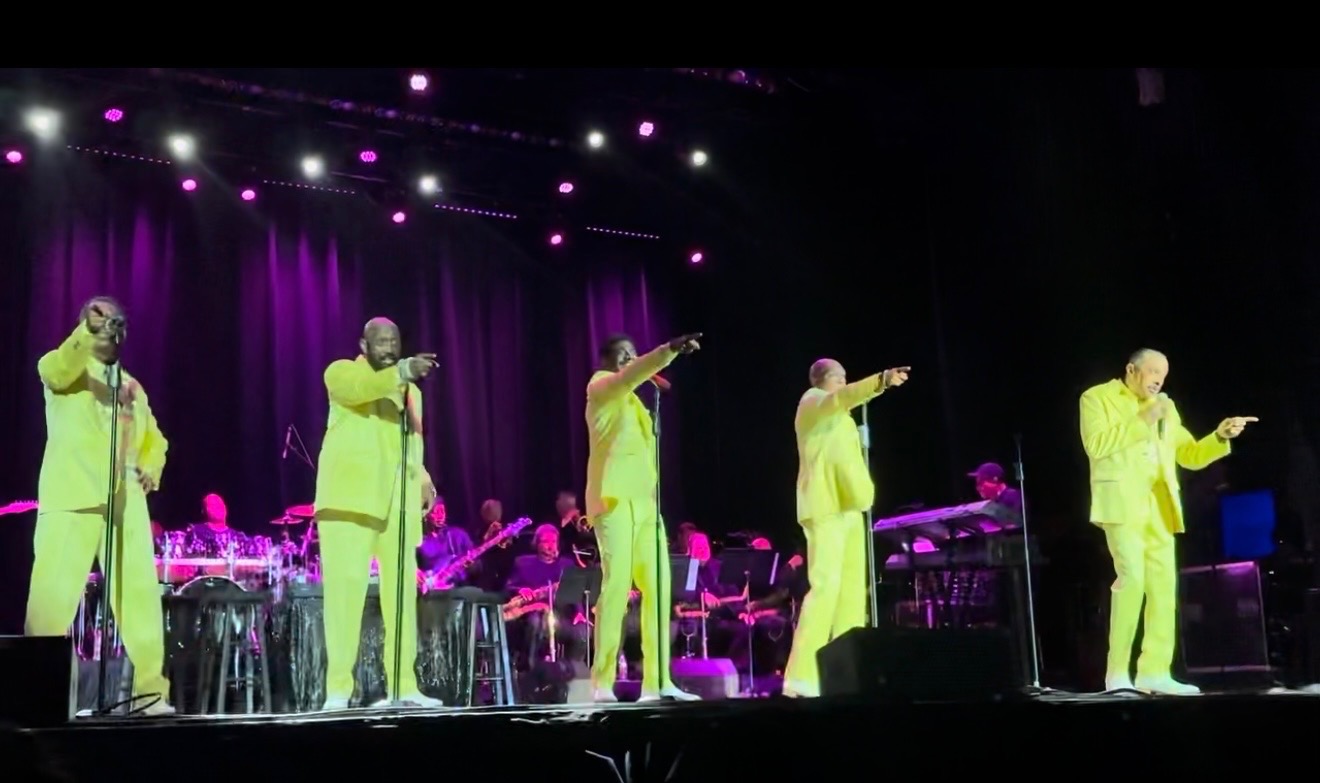
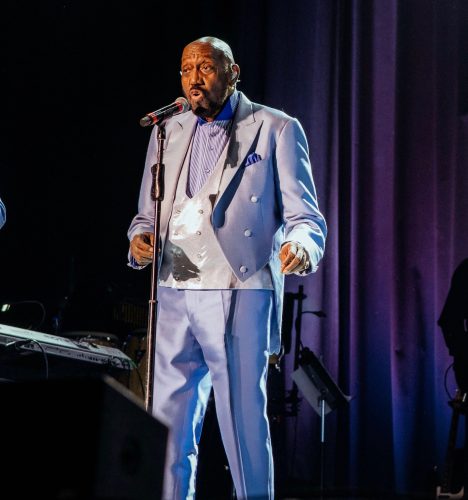
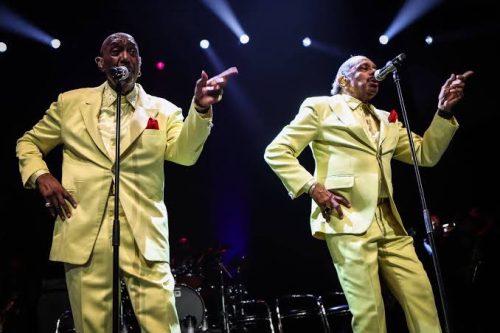
From the front row, the view was an exercise in pure institutional majesty. Duke Fakir, the last surviving pillar of the Four Tops, led his ensemble through a ferocious, rhythmically flawless opening set that had the theater’s aging floorboards rocking, setting the precise baseline for what was to follow. When the house lights shifted to a deep, dramatic hue, the headliners arrived. They wore matching, dapper suits of bright, uncompromising yellow, and they moved with a military precision that was completely synchronized. At the center of this tight vocal phalanx stood Dr. Otis Williams.
Now north of eighty-years old, his posture remains completely unyielding, his eyes carrying the calm, steady gaze of a general who had survived every major engagement of a long and bloody campaign.
As the ensemble launched into a pristine, chronologically devastating parade of hits—moving from the buoyant, youthful optimism of “The Way You Do the Things You Do” to the sophisticated, melancholic architecture of “Just My Imagination”—one was struck by the sheer physical reality of what was being witnessed.
This was not a tribute act. This was the direct, unbroken continuation of an American institution that had outlasted the auto factories of Detroit, the political assassinations of the 1960s, and the very men who had first given it a voice.
To watch Otis Williams lead his men through those complex, syncopated maneuvers was to witness an educational demonstration in institutional survival. He was the keeper of the blueprints, the lone architect who had weathered the volatile clashing of massive egos, the destructive pull of sudden wealth, and the profound personal grief of burying his brothers, all to ensure that the machine continued to run exactly as it was designed.
The Great Migration and the Detroit Foundry
The discipline that defined Otis Williams on the stage of the Chevalier Theatre did not begin in the polished rehearsal rooms of West Grand Boulevard; it was forged in the harsh, highly segregated realities of the pre-war American South, an environment where structure was the only alternative to chaos. Born Otis Miles Jr. on October 30, 1941, in Texarkana, Texas, his early world was one of strict boundaries and limited horizons. Raised primarily by his two grandmothers—women of monumental Christian fortitude who brooked no deviation from familial duty—young Otis grew up within a specific, rural southern soundscape. On Sunday mornings, it was the raw, unvarnished, muscular spirituals of the traditional Black church, music where the vocal delivery was an essential act of survival. On Saturday nights, it was the distant, melancholic strain of acoustic country blues floating across the dirt roads. It was a world that taught a young man the fundamental value of structure, the necessity of emotional containment, and the absolute importance of the collective over the individual.
The true pivot in his life occurred when, as a young teenager, he packed his few belongings into a single suitcase and boarded a northbound bus to join his mother in Detroit. He was entering the great industrial foundry of post-war America, a city defined by the relentless, rhythmic thud of heavy machinery.
The Detroit of the early 1950s was an absolute juggernaut of production. The assembly lines of Ford, Chrysler, and General Motors operated twenty-four hours a day, generating a level of economic autonomy that drew thousands of Black families out of the Jim Crow South in search of a predictable wage. In the neighborhoods of the city’s North End, a parallel form of industrialization was taking place on the asphalt. On every street corner, beneath the pale glow of the gas lamps, young men gathered in small groups to compete in brutal, unyielding vocal tournaments, copying the complex harmonies of the Orioles, the Cadillacs, and the Moonglows.
For Otis, this street-corner culture was an alternative to the factory gate. It was a highly organized, deeply competitive world where a sharp ear and a tight vocal blend were the only currencies that mattered. He recognized early on, with a rare and brutal self-awareness, that he did not possess the soaring, acrobatic solo range of some of his neighborhood rivals. He was not a vocal tightrope walker.
His genius was of a different, more significant nature: he was a natural organizer, a man who understood the mechanics of chemistry and the necessity of order. He possessed a geometric understanding of how voices could be stacked together to create a sound that was infinitely more powerful than any individual soloist. “I’m the glue that holds everything together,” Williams would later reflect when analyzing his role in those early years. “I’ve learned over the years that people are human and have mood swings, regardless of how talented they are”.
He began his apprenticeship in earnest, organizing a succession of teenage vocal groups—the Otises, the Siberians—and drilling them for hours in tiled high school bathrooms and concrete alleys, using the natural echo chambers to refine their blend. It was a cutthroat environment; if an ensemble slipped out of tune or missed a synchronization cue, rival singers would ruthlessly shout them off the corner. Through sheer administrative willpower, Otis kept his operations intact, eventually forming Otis Williams & the Distants and scoring a minor regional success with a track called “Come On.” But Otis had his eyes on a larger empire. He watched with a quiet, analytical intensity as a sharp, ambitious former boxer named Berry Gordy began purchasing property on West Grand Boulevard to establish Hitsville U.S.A. Otis knew that talent was cheap, but organization was rare; he prepared his men to enter the Motown system not as transient pop stars, but as a permanent institution.
The Classic Five and the Cost of Brilliance
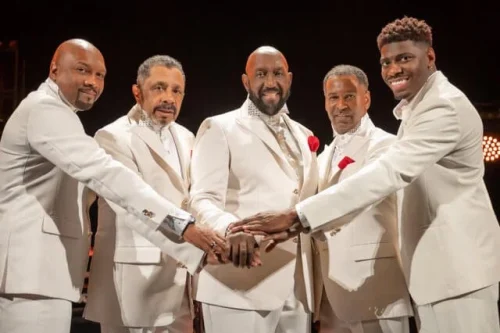
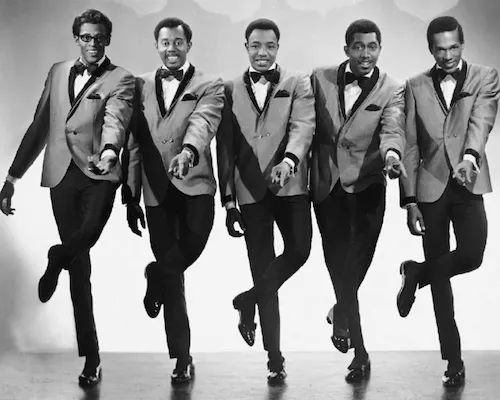
By 1961, Otis had engineered the definitive talent merger of the Detroit street scene, uniting with Eddie Kendricks and Paul Williams from a rival group known as the Primes, and pitched a new collective built on absolute, militaristic discipline. Along with his rock-solid, deep-voiced bass singer Melvin Franklin and Elbridge “Al” Bryant, the newly consolidated Temptations signed with Motown. The initial years were an exercise in brutal perseverance. While stablemates like the Miracles and the Supremes scaled the charts, The Temptations languished, earning the mocking insider moniker of the “No-Hit Wonders”. But Otis refused to alter his management style. He kept his men locked in the studio for exhausting, eight-hour rehearsal blocks under the unyielding eye of master choreographer Cholly Atkins, drilling their footwork until they moved as a single, five-headed organism.
The trajectory of the group shifted permanently in late 1963 when Al Bryant was dismissed following a backstage altercation at Motown’s annual Christmas party. His replacement was David Ruffin, a tall, bespectacled vocalist from Mississippi who possessed a raw, visceral, church-wrecking urgency that gave the group its definitive counterweight. When paired with Eddie Kendricks’ sweet, angelic falsetto, the group had two distinct vocal poles. In late 1964, when Smokey Robinson handed them “My Girl” with Ruffin’s desperate, longing lead vocal, the record blew the hinges off the American pop landscape.
The era of the “Classic Five” had arrived, but the view from the summit of global popularity was instantly plagued by internal rot. As the hits piled up—”Ain’t Too Proud to Beg,” “Get Ready,” “Beauty Is Only Skin Deep”—the fragile psychological balance within the lineup began to fracture under the weight of massive fame. Ruffin, increasingly consumed by a severe cocaine addiction and blinded by the adulation of the crowd, began to view himself as separate from the collective. He demanded that he travel in a custom, mink-lined private limousine separate from the group’s communal tour bus, and eventually insisted that Berry Gordy alter the marquee to read David Ruffin & The Temptations.
For Otis Williams, this was an attack on the foundational ideology of the group. The Temptations were built on a pure, democratic system where every man received equal pay, equal spotlight, and a fifth of the vocal matrix. Otis recognized that to give in to Ruffin’s star complex would mean the death of the institution. “Achieving significant success and adulation can be a strong aphrodisiac,” Williams later noted of that turbulent period. “A group needs to operate as one unit and cannot have members going in different directions”.
Ruffin’s behavior grew increasingly erratic; he began missing rehearsals, arriving late to soundchecks, and treating his brothers as mere employees. The final break occurred on a weekend in June 1968. The Temptations were booked for a prestigious engagement at a supper club in Cleveland, Ohio. When the curtain rose for the opening set, Ruffin’s microphone stood empty; he had skipped the performance entirely to watch his girlfriend perform at a venue back in Detroit.
Otis called an emergency meeting in a hotel room with Melvin, Eddie, and Paul. With a heavy heart but an unyielding commitment to the collective structure, Otis put the vote to the floor. On June 27, 1968, Motown issued a press release that sent shockwaves through the music industry: David Ruffin was out.
The dismissal was an immense gamble that nearly broke their global fanbase. Ruffin did not go quietly; for months, he stalked the group’s live shows like a ghost. During a performance later that year, as the newly hired Dennis Edwards stepped up to sing Ruffin’s signature lines on “Ain’t Too Proud to Beg,” Ruffin suddenly materialized from the wings, leaped onto the stage, snatched the microphone straight out of Edwards’ hand, and belted out the lead line to a stunned, roaring audience before vanishing back into the night. It was a theatrical, heartbreaking display of raw genius clashing with unvarnished chaos. Behind the scenes, Otis had to play the cold role of executioner, weathering public outrage and the deep, lasting anger of Eddie Kendricks, who never fully forgave Otis for cutting their brother loose.
The tragedy only deepened in the years that followed. Paul Williams, the emotional heart of the group and the man who crafted their iconic stage choreography, was quietly losing a brutal battle with alcoholism and sickle cell anemia. Otis watched in horror as his brother’s health collapsed to the point where oxygen tanks had to be stationed in the theater wings just to keep him standing through a set. By 1971, Paul was forced to retire.
Just two years later, on August 17, 1973, Paul was found dead on a Detroit street corner, a gun near his body. While authorities officially ruled it a suicide born of personal agony, the circumstances sparked immediate doubt that continues to linger over his legacy. For decades, distinct factions within the Motown community and his own family have pointed to conflicting details in the police report, suggesting foul play, while others believe his exhaustion finally caught up with him. Reflecting on his late, great friend, Otis has always chosen to focus on the unmatched standard of performance Paul brought to the stage: “Paul Williams was one of a kind. He poured his heart and soul into our music and performance”. Shortly after Paul’s departure, Eddie Kendricks also walked away for a solo career.
Through every dressing room shouting match, every emergency meeting in Berry Gordy’s office, and every devastating funeral, Otis Williams remained the unmoveable pillar. He endured the fury of fans who couldn’t accept a lineup without Ruffin or Kendricks because he understood an essential truth that his peers failed to realize: “The Temptations still stand today, not in spite of those who left us, but because of them”.
Racism, Resistance, and Strength
The true measure of Otis Williams’ character, however, is not found merely in his ability to survive corporate boardroom power struggles or internal artistic friction. It is found in how he navigated the violent social turbulence of an America tearing itself apart at the seams. To be a Black performer touring the United States in the early and mid-1960s was to occupy a space of profound psychological and physical danger. The Temptations were traveling directly into the teeth of Jim Crow, crossing structural boundaries where their gold records meant absolutely nothing to a hostile white establishment.
Williams has frequently recalled the brutal, institutionalized humiliation the group faced during the early Motown Revue package tours. In his memoirs and interviews, he details the cold reality of the Southern circuit, where the rules of engagement were dictated by naked prejudice. The group would perform to packed houses of screaming, adoring fans, only to find themselves barred from using the front doors of the very venues they filled. They were forced to eat on the tour bus because local diners refused them entry, and they relied on the “Green Book” network to find segregated boarding houses that would accept Black travelers.
But the resistance they encountered went far beyond systemic denial; it frequently escalated into direct, terrifying turbulence. During a tour stop through the deep South in 1964, the Motown bus was pulled over on a dark, isolated highway by local law enforcement officers whose intentions were clear from the moment they unholstered their weapons. The young men were ordered off the bus, subjected to aggressive search tactics, and met with racial slurs designed to break their composure. Later on that same tour, while traveling through a deeply hostile county in South Carolina, the bus was struck by gunfire from a passing vehicle.
It was a moment of stark, terrifying clarity. The margin between stardom and violence was paper-thin. In that midnight dark, trapped on a highway surrounded by systemic hate, Otis Williams faced a choice that would define the entire moral trajectory of his life. He could have chosen bitterness. He could have allowed the unvarnished malice of the world to infect his spirit, transforming his organizational drive into a weapon of reciprocal hostility.
Instead, Otis looked at his terrified brothers and chose a different kind of armor: he chose love, structural strength, and radical dignity. He ordered the men back onto the bus, insisted they maintain their composure, and dictated that their response to the violence would be executed with absolute precision on the stage the following night.
“We went through a lot of things on the road,” Williams would later reflect when analyzing the terror of those years. “We had the bus shot at. We had to go into places where we couldn’t eat, where we couldn’t use the bathroom. But we didn’t let that stop us. We put our hearts into the music, because we knew that music was the only thing that could break down those walls”.
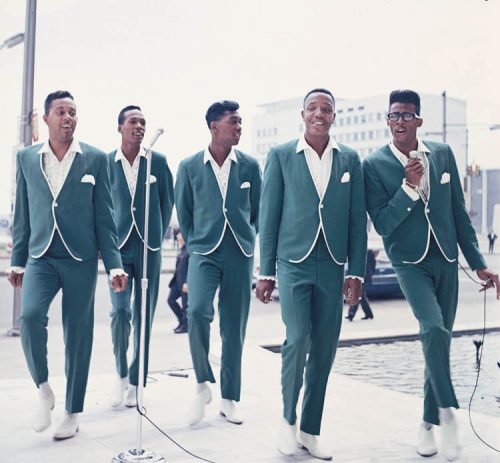
This was the furnace that forged the man. Otis understood that every time the five of them stepped onto a stage in dapper, identical silk suits—completely synchronized, flawlessly balanced, and unified—they were executing a powerful political act. They were presenting an undeniable image of Black elegance, intellect, and collective power to a country that sought to deny their basic humanity. By refusing to meet hate with hate, Otis turned the stage into an altar of reconciliation, utilizing the immaculate harmony of The Temptations to integrate audiences who, just hours earlier, had been violently separated.
The New England Pipeline and the Battle for Boston
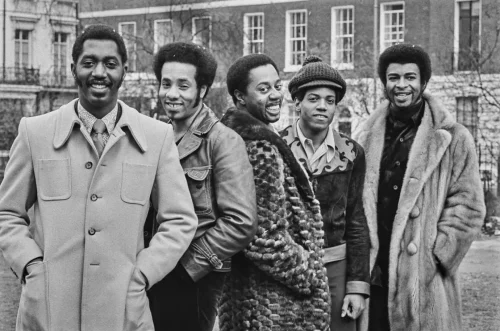
While Detroit was the laboratory where the Temptations sound was formulated, New England—and Boston in particular—served as the vital battleground where that sound was forged into a live performance legend. During the height of the 1960s Motown Revue tours, this region wasn’t a casual stopover; it was a high-stakes proving ground where an act either earned its reputation or lost it.
In those days, routing a tour through New England meant entering a complex, deeply fractured social landscape. Boston was a city defined by fierce working-class neighborhoods and simmering racial tensions, yet its appetite for rhythm and blues was voracious. The local lifeline for this music was WILD 1090 AM, an R&B powerhouse station that functioned as the primary cultural nervous system for the city’s Black community in Roxbury, Dorchester, and the South End.
WILD’s legendary disc jockeys put the Temptations’ early tracks on heavy, relentless rotation. Otis Williams has frequently recalled how crucial those local, daytime-only AM stations were; because WILD had to sign off at sunset due to FCC regulations, the DJs packed every single hour of daylight with maximum soul, transforming songs like “The Way You Do the Things You Do” into local Boston anthems long before they reached the top of the national pop charts.
When the Motown Revue buses finally rolled into town, hitting iconic venues like the old Boston Garden, the energy was combustible. The Garden was a cavernous, gritty arena built for hockey and boxing, notorious for its terrible acoustics and sweltering heat. Yet, when The Temptations stepped onto that stage under the dim house lights, the atmosphere instantly shifted.
They shared bills with the likes of Stevie Wonder, Martha and the Vandellas, and the Supremes, but it was the Tempts who consistently stole the night. Local musicians from the Boston scene would crowd around the sides of the stage just to study the group’s footwork. The precision of their performance had to be bulletproof; New England audiences were fiercely loyal but notoriously tough to please. If a group looked tired or missed a cue, the crowd would let them hear it immediately.
One particular anecdote that Otis Williams has shared from those early East Coast tour grinds highlights the sheer stamina required to break the New England market. In the mid-1960s, the group played a legendary multi-night stand at the Donnelly Memorial Theater (the historic venue on Washington Street that locals would later know as the Wang Theatre).
The demand was so overwhelming that the theater manager added emergency midnight shows. The Temptations would finish their standard evening set, change out of their sweat-soaked suits into a fresh set of matching silk tuxedos, and step back out onto the stage at 1:00 AM to a room that was still completely packed to the rafters.
It was during these grueling Boston marathons that Paul Williams fine-tuned the group’s iconic “Temptations Walk”. Because the Donnelly’s stage was narrower than the sprawling theaters in New York or Chicago, Paul restructured their choreography on the fly, condensing their sweeping, synchronized glides into tighter, sharper, and more vertical drop-steps. The constraint of a Boston stage actually forced the group to become even more precise, creating the exact, razor-sharp stage presence that remains their trademark to this day.
The Temptations didn’t just play the major arenas; they logged thousands of miles hitting the historic ballrooms and theaters scattered across the New England landscape. They brought their polished choreography to the Rhode Island Auditorium in Providence, traveled up to the beachside ballrooms of New Hampshire, and routinely stopped at the Cary Memorial Hall in Lexington.
These regional tours were profound lessons in cultural diplomacy. Otis saw firsthand how the music acted as a bridge across a deeply divided city. In an era where Boston was experiencing severe social upheaval, a Temptations concert was one of the incredibly rare spaces where Black and white kids stood shoulder to shoulder, completely unified by the bassline.
Decades later, that deep historical connection with local audiences is exactly what made the December show at the Chevalier Theatre in Medford feel less like a standard nostalgia tour and more like an emotional homecoming. The venues had changed and the hair had turned grey, but the profound bond between Otis Williams and the people of Boston remained completely unbroken.
The Psychedelic Shift and the Vanguard of Change
The turn of the decade brought with it an entirely new set of rules. As the 1960s bled into the early 1970s, the pristine, uniform veneer of Motown began to fracture under the weight of global reality. The nation was reeling from the assassinations of Martin Luther King Jr. and Robert F. Kennedy, the Vietnam War was escalating into an unending nightmare, and America’s inner cities were bubbling over with systemic frustration. The era of the sweet, radio-friendly love song was suddenly at odds with the concrete streets.
For The Temptations, this wasn’t just a cultural shift; it was an existential crossroads. They had lost David Ruffin, their most explosive lead singer. They were about to lose Eddie Kendricks, whose pure falsetto had defined their romantic ballads. The industry was whispering that the group’s neatly tailored suits and synchronized choreography were relics of a gentler, bygone era.
But Dr. Otis Williams refused to let the group become a nostalgia act. He recognized that to survive, the architecture of their music had to change to match the grit of the times.
Dr. Otis aligned the group with Motown’s resident sonic mad scientist, producer and songwriter Norman Whitfield. Whitfield was deeply enamored by the raw, distorted, funk-infused rock sounds of Sly and the Family Stone and Jimi Hendrix. He wanted to strip away the lush orchestral strings of Hitsville U.S.A. and replace them with aggressive, funky basslines, swirling wah-wah guitar pedals, and driving, Afro-centric percussion.
The transition began in late 1968 with a track that shocked the traditional Motown establishment: “Cloud Nine”. Remembering how he actively pushed for that radical evolution after experiencing the underground rock scene, Williams recalled: “I went back to Detroit and I asked Norman Whitfield… if he had heard Sly and the Family Stone… I said, ‘Well they have a sound I like, we should probably try that'”.
The gamble paid off spectacularly. “Cloud Nine” didn’t just storm the charts; it earned Motown Records its very first Grammy Award in 1969. Otis Williams had proven that his institution could not only adapt but lead the vanguard of an entirely new genre: Psychedelic Soul.
The group traded their traditional, identical tuxedos for vibrant, velvet bell-bottoms, wide collars, and afros, leaning heavily into the aesthetics of the counter-culture movement. They followed “Cloud Nine” with an unmatched string of gritty, socially conscious masterpieces. “Runaway Child, Running Wild” tackled the harsh realities of troubled youth fleeing home; “Ball of Confusion (That’s What the World Is Today)” served as a breathless, hyper-realistic laundry list of political corruption, racial tension, and economic collapse.
Then came 1972’s crowning achievement: “Papa Was a Rollin’ Stone”. Originally a three-minute track recorded by the Undisputed Truth, Whitfield re-imagined it for The Temptations as a sprawling, twelve-minute cinematic epic. Built around an ominous, three-note bassline, a haunting trumpet solo, and a ticking hi-hat, the song gave the group’s new powerhouse lineup—featuring the gritty, soaring vocals of Dennis Edwards and the steady brilliance of Richard Street—a canvas to paint a masterpiece of familial trauma.
The record swept the 1973 Grammys, securing three awards and cementing the group’s immortality. Otis had successfully guided the ship through the most turbulent cultural waters of the 20th century.
Decades rolled on, musical trends like disco, hip-hop, and new jack swing came and went, but Otis kept the engine running. He watched the tragic passings of his beloved brothers—Kendricks, Ruffin, and his closest lifelong friend, bass singer Melvin Franklin. The losses were heavy enough to make any man retire, to sit back and coast on royalty checks.
But that is not who Dr. Otis Williams is.
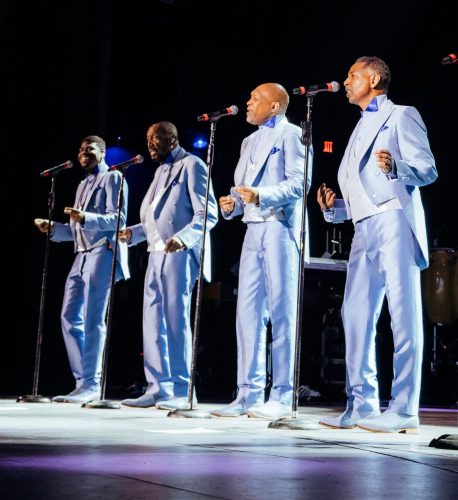
Today, the current lineup of The Temptations—featuring spectacular talents like Ron Tyson, Terry Weeks, Jawan M. Jackson, and Anthony Grant—carries the torch with the exact same military precision that Otis demanded in 1965. They aren’t a tribute act; they are the direct continuation of a legacy, passed down from the master builder himself.
When they took the stage at the Chevalier Theatre in Medford, it was clear that the sonic foundation forged during that gritty 1970s transition remains the backbone of their live power. During a powerful interlude in the performance, Dr. Otis paused to speak directly to the audience. He reminded us that he isn’t a politician; rather, he is a man who has simply seen what works and what doesn’t for the human spirit. He spoke candidly about the futility of division and fear, offering a timeless truth: the only real answer is love, respect, and mutual appreciation.
In a modern landscape where political figures on both sides seem to profit from fracturing us, his message hit incredibly close to home. The Temptations didn’t just sing about equality during the Civil Rights movement; they fought for it on the front lines of a segregated country, using their music as a weapon of peace. The bassline of “Papa Was a Rollin’ Stone” still shakes the floorboards of New England theaters, a direct testament to a time when Otis Williams chose evolution over extinction.
From Broadway Outposts to Regional Altars
The endurance of this legacy hasn’t just been maintained on concert stages; it has been canonized in American theater. When the smash-hit Broadway musical Ain’t Too Proud: The Life and Times of The Temptations made its triumphant regional debut right here in Boston at the Citizens Bank Opera House, it functioned as a massive, cross-generational cultural event. For local theatergoers and lifelong disciples of the sound, watching that story unfold in the Theater District was a heavy experience. The show took the precise history Otis guarded so fiercely and laid it bare, showing a new generation that the glitz of Motown was bought with currency of profound personal sacrifice.
For me, that Boston theatrical run wasn’t a solitary milestone, but another chapter in a lifelong odyssey tracking this group’s live power. Over the years, I’ve logged thousands of miles chasing the Temptations’ lightning across the East Coast. I’ve sat in the crowd at the Twin River Casino in Rhode Island, witnessed their precision under the massive arena lights of Foxwoods in Connecticut, and traced their steps through the high-stakes showroom circuits of Atlantic City. Each performance wasn’t a repeat of the last; it was a renewal of a vow, a chance to witness how a legendary formula handles the friction of time.
Through these travels, the journey evolved from pure fandom into something far more personal. I have now had the distinct privilege of sitting down and sharing conversations with Dr. Otis Williams on four separate occasions. We don’t need to lean too heavily on parsing the details of every single meeting, because each conversation built on the last, reinforcing a shared understanding of community, music, and hustle. Yet, it is impossible not to return mentally to that initial, foundational meeting in the cramped backstage corridors of Medford. It remains the most impressionable anchor because it was the moment the myth vanished, replaced by the quiet, heavy wisdom of a leader handing down a mandate.
The Backstage Mandate for Boston
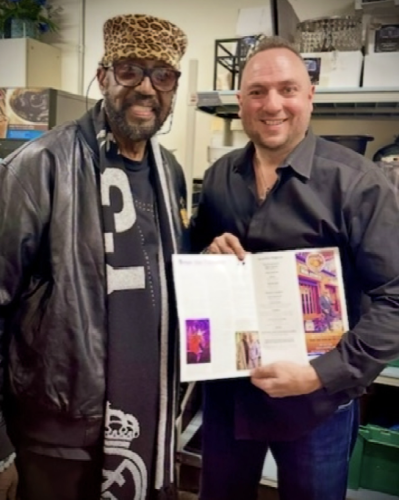
The true magic happened long after the final standing ovation faded and the house lights of the Chevalier Theatre began their slow, amber climb. Thanks to a legendary connection with my buddy ‘Nicky Sinatra’—who functions as an honorary fifth member of the camp—the velvet ropes parted. I found myself being guided past a sea of eager, pushing fans out into a quiet, narrow hallway back by the dressing rooms.
As I waited on a couch, the hallway bustled with the distinct, electric energy of a post-show Motown camp. Nicky was acting as the de facto backstage mayor, chopping it up with Duke Fakir, the Tops, and various entourage characters straight out of a VH1 documentary. Then, as the corridor finally cleared, HE emerged.
When Dr. Otis Williams steps into a room, the sheer gravity of history fills the space. This was the man who had outlasted the storms, who carried the memories of Paul, Eddie, David, and Melvin in every single step, and who still chose to put on the suit and perform night after night. Rising to my feet and extending my hand, all I could offer him was a humble, “Thank you, sir.”
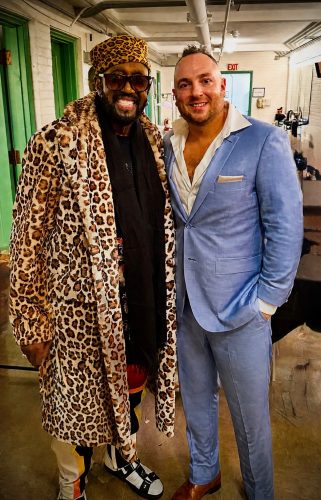
What followed wasn’t a standard, rehearsed celebrity greeting; it was a profound sharing of the torch, a mutual acknowledgment of a shared responsibility toward our community. It was here, in this quiet Medford corridor, that the true thesis of his life crystallized. The mandate he delivered wasn’t born of an easy life or a comfortable career; it was a philosophy hammered out in the crucible of Southern racism, urban upheaval, and unimaginable personal loss. He had every reason to be bitter, every justification to choose hate, yet he stood there and looked past the title of publisher, delivering a charge that shook me to my core: “People speak highly of you. You can help make change. You’re already doing it, even if you can’t always see it.”
He was passing along the ultimate architecture of endurance. He was demanding that we, as a contemporary Boston community, take the raw materials of our own fractured modern landscape and choose love, unity, and strength over division.
For the next ten minutes, the chaos of the holiday season evaporated. I just stood there and listened. I listened to a man who has witnessed the full, turbulent spectrum of American history. Otis Williams is still here because the world still desperately needs the healing ointment of his music. He is the last man standing, not by accident, but by design.
As I walked out into the crisp, biting Medford night air, the baseline was still thumping aggressively in my chest. I had to smile against the New England chill. Was this just my imagination? Not a chance. It was real, it was historic, and it was the ultimate blueprint for how we can choose to change the world.