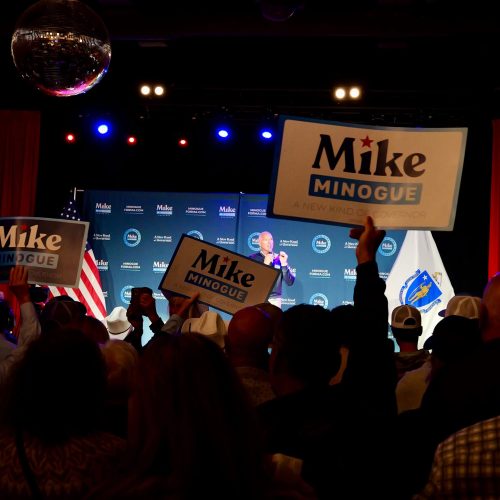


From the Sandstorms of Desert Storm to Biotech Boardrooms and Political Crisis: The Uncompromising Instincts of Mike Minogue
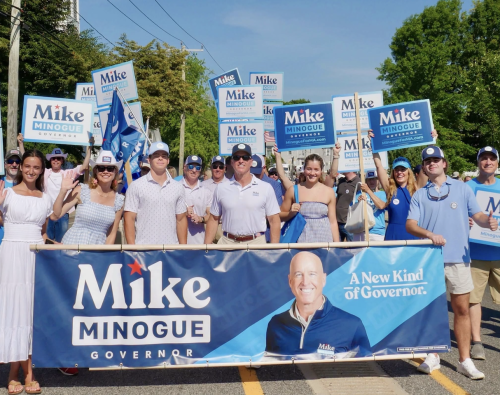
_________
THE TELEVISION STUDIO is a landscape of manufactured coldness—all polished linoleum, cold blue backlighting, and the low, collective hum of air conditioning fighting the heat of heavy broadcast lenses.
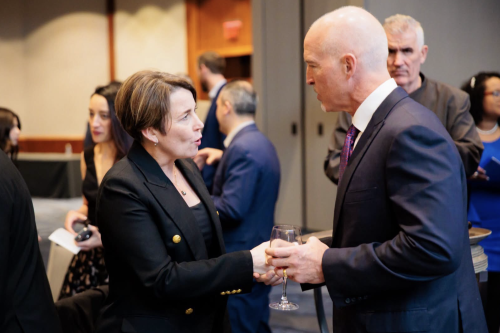
Beneath the studio lights, the air feels thin, heavy with the unique, brittle tension that only high-stakes politics can generate. On the left side of the stage stands Governor Maura Healey, the personification of the state’s entrenched political order, moving with the practiced, fluid assurance of someone who has spent her career mastering the levers of Massachusetts public life.
To her right stands Mike Minogue.
He is a big man, built with the square, heavy-set posture of an old infantry officer, standing behind his podium with an unsettling calmness. He does not use the expansive, theatrical hand gestures of the political class; he simply waits, a clipboard of mental data points ready, his eyes locked on the red tally light of the center camera.
When the moderator pivots to the state’s soaring cost of living, the contrast ceases to be merely visual; it becomes deeply ideological.
Healey answers first, weaving a tapestry of legislative compromises, long-term committee goals, and progressive national benchmarks. It is a defense of the status quo delivered with smooth elegance.
But when the microphone cuts to Minogue, the atmosphere in the room shifts instantly.
He doesn’t look at his opponent; he looks straight into the lens, addressing the families sitting at kitchen tables in Worcester, Springfield, and Lowell. His voice is a flat, unyielding baritone, devoid of oratorical flourish but heavy with the weight of raw analytics.
“The math doesn’t work,” Minogue says simply, his words cutting through the room like a scalpel. He begins rattling off figures with the rapid, muscle-memory precision of a corporate executive parsing an unraveled balance sheet—the hundreds of millions in undocumented state spending, a utility fee system that consumes nearly a third of a working family’s monthly power bill, and a multi-billion dollar state debt that continues to climb while private-sector job growth stalls.
Healey attempts to interject, trying to tie him to national partisan battles and out-of-state donors. Minogue smoothly swashes the attack away with a faint, disciplined half-smile.
“I’m not running for national office, Governor,” he counters softly. “I’m running to be Massachusetts Mike. And right now, your administration is running a $17 billion enterprise into the ground.”
For a few seconds, the studio is dead silent, save for the furious scratching of reporters’ pens in the dark press gallery behind the cameras.
It is the defining collision of the campaign: a professional politician operating on rhetoric versus an elite corporate manager operating on metrics.
Watching him command the stage with such methodical, data-driven detachment, the question inevitably hangs in the cool studio air: who is this political outsider, and how did a man completely unversed in the tribal rituals of Beacon Hill manage to navigate his way to the literal threshold of the corner office?
Lessons of the Desert
To answer that question, one must look far from the air-conditioned studios of Boston, back to the winter of 1991, where the desert of Iraq offered no landmarks—only the absolute, blinding geometry of empty space.
For the young men of the U.S. Army’s 24th Infantry Division, tasked with serving as the western flank’s “tip of the spear” during the ground invasion of Operation Desert Storm, survival depended entirely on the precision of their coordinates.
As a young Second Lieutenant, Ranger-qualified platoon leader, and the division’s lead tactical navigator, Mike Minogue learned early that the margin between success and catastrophe was measured in mere meters.
In those days, the sophisticated Global Positioning Systems that define modern warfare were in their absolute infancy. Military issue relied on older, more grueling disciplines—dead reckoning, terrain association, and the steady, unforgiving sweep of a mechanical compass heading.
When the sandstorms rolled across the featureless terrain, erasing the horizon and plunging the world into a chalky, suffocating darkness, a leader could not rely on instinct. He had to rely on hard data.
A single navigational miscalculation would drive an entire convoy into an uncharted minefield or straight into the dug-in crosshairs of the Iraqi Republican Guard.
For Minogue, the operational pressure was compounded by the human element. He commanded a diverse, heavily armed platoon of soldiers thrown together into a high-intensity conflict.
They were men who did not always agree, men from vastly different corners of the American map, but they developed an unshakeable bond because they were bound to a purpose far larger than themselves.
When the ground order came, Minogue successfully navigated his unit through the sweeping, fast-moving left-hook maneuver designed to cut off Iraqi forces.
His ability to execute mission-critical directives calmly under fire, handle logistics in a shifting environment, and bring his entire platoon home safely earned him the Bronze Star.
The experience permanently shaped his worldview: true leadership was not defined by personal ambition, but by absolute accountability, collaborative trust, and an unyielding commitment to the team you serve.

Roots of the Bloodline
Long before Michael Minogue paced corporate boardrooms or outlined state policy on the campaign trail, his leadership philosophy was forged around a crowded kitchen table.
Born the youngest of four children, Minogue was raised in a traditional Irish Catholic household where faith, family, and patriotism weren’t just passive concepts—they were the foundational pillars of daily life.
To truly capture the resilience underlying Minogue’s worldview, one must look back a few generations. While Minogue built a highly successful corporate career and reached the upper echelons of the medical technology industry, his family’s American story began under much harsher realities.
His great-grandparents arrived in the United States as part of the massive wave of Irish immigrants fleeing poverty and famine.
Upon arrival, they were met by a society deeply hostile to their heritage and their Catholic faith.
During the 19th and early 20th centuries, Irish immigrants in cities across the Northeast were heavily marginalized. They routinely encountered window signs and newspaper advertisements stating “No Irish Need Apply”—a systemic barrier designed to keep them confined to low-wage, manual labor.
Viewed with intense suspicion by nativist political factions like the Know Nothing Party, the Irish were forced to build their own communities, schools, and safety nets from scratch to survive.
Minogue’s great-grandparents and grandparents refused to be defeated by this institutional prejudice. They took the toughest jobs available—laying railroad tracks, digging canals, and working domestic service—with an unwavering work ethic.
They believed that through absolute grit and integrity, they could secure the American Dream for the generations that followed.
This generational triumph over adversity deeply impacted how Minogue’s parents raised him. They passed down the history of what the family endured not as a grievance, but as a lesson in perseverance and gratitude.
For Minogue, knowing his ancestors overcame the sting of “Irish Need Not Apply” instilled a lifelong belief that no barrier is insurmountable if met with relentless hard work.
Driven by this ingrained desire to serve his country, Minogue made the pivotal choice to attend the United States Military Academy at West Point.
Immersed in an environment built on the strict code of “Duty, Honor, Country,” he studied engineering management, graduating with a Bachelor of Science in 1989.
West Point was more than just a college; it was a crucible that permanently shaped his worldview and leadership style.
Even after leaving active duty, his commitment persisted through nine more years in the Individual Ready Reserve (IRR).

The Business of Saving Lives
Following his military service, Minogue sought a civilian career where his operations mindset could still serve a higher human purpose.
He found that calling in the medical device industry, an arena dedicated to improving and extending human life.
The Corporate Apprenticeship
Minogue spent 11 foundational years at General Electric (GE) HealthCare.
Operating under legendary corporate leaders like Jack Welch and Jeff Immelt, he learned the mechanics of scaling businesses, driving technological innovation, and managing immense teams.
He eventually rose through the executive ranks to manage cross-functional business units encompassing over 1,000 employees and generating upwards of $1 billion in revenue.
His hands-on technical acumen even led him to receive four patents for software engineering.
Mastering the Art of Heart Recovery at Abide
When Minogue transitioned to the private sector and took over as Chairman, President, and CEO of Abiomed, Inc. in April 2004, the Danvers-based firm was a modest, struggling medical device company.
Founded by David Lederman in 1981 with the goal of creating an artificial heart, the company’s original paradigm focused on total heart replacement.
Minogue recognized that replacing an organ was a grueling, last-resort option. He shifted the corporate strategy toward heart recovery—allowing a patient’s native heart to rest, heal, and fully recover.
The crown jewel of this strategic pivot was Minogue’s decisive 2005 acquisition of Impella CardioSystems, a German engineering firm that had invented a microscopic, catheter-based miniature pump.
Minogue saw the device’s immense potential. Once inserted through a minor incision in the femoral artery and threaded into the left ventricle, the Impella Heart Pump could pump blood continuously, taking over roughly half the workload of a failing heart.
This relief allowed the damaged heart muscle to rest and recover after severe trauma, such as a major heart attack or cardiogenic shock.
Minogue‘s 19-year tenure at Abiomed was defined by complex regulatory battles and rigorous clinical trials.
In 2007, when Abiomed sought standard 510(k) clearance for the Impella 2.5, the FDA instead mandated the far more grueling and expensive Premarket Approval (PMA) process.
This regulatory hurdle threatened to delay patient access for years and deplete the company’s capital.
Minogue doubled down on hard clinical evidence, executing extensive safety studies and weathering intense corporate pressure, including a high-stakes short-seller securities lawsuit that was ultimately dismissed by the First Circuit Court of Appeals.
Minogue‘s data-driven persistence paid off; the Impella portfolio secured comprehensive FDA approvals, eventually expanding to treat hundreds of thousands of cardiac patients across more than 800 hospitals nationwide.
Under his leadership, Abiomed transformed into an undisputed biotech titan:
Job Creation: Minogue more than doubled the physical size of the Danvers headquarters, investing heavily in state-of-the-art in-house research labs and precision manufacturing hubs.
This expansion created hundreds of high-paying engineering, research, and manufacturing jobs across the North Shore, keeping over 2,000 workers employed within the state.
Commercial Scaling: Annual revenues skyrocketed from a niche base to over $1.2 billion in annual sales, making Abiomed one of the most consistently profitable and fast-growing medical tech firms in the country.
The $17 Billion Exit: The corporate journey reached a historic milestone in late 2022 when Johnson & Johnson acquired Abiomed for $17.3 billion, a massive validation of Minogue’s “Patients First” operational ethos.
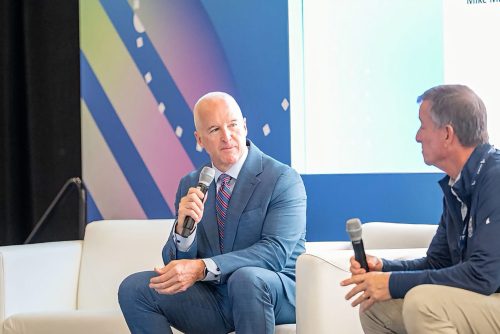
The Concentric Circles of Community
In the modern lexicon of corporate success, philanthropy is often an afterthought—a tidy, tax-deductible line item engineered by public relations consultants to soften the hard edges of a balance sheet.
But to understand the architecture of the Michael & Renee Minogue Foundation, it requires looking past the clinical vocabulary of asset allocation and return to the foundational lessons of that crowded Irish Catholic kitchen table.
There, the young Minogue was taught a severe, almost mathematical truth: that an individual’s worth is measured not by the wealth they accumulate, but by the security they distribute to the community around them.
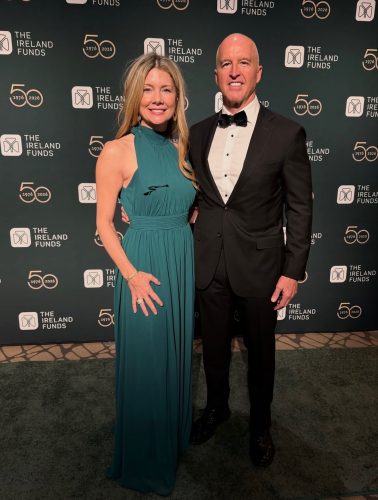
When Michael and his wife, Renee, established their foundation, they did not design it as a distant, abstract engine of global grants.
Instead, they built it with the deliberate, localized precision of an engineering project, anchoring its focus primarily on the very geography that had sustained their own family of five children.
With a quiet capital commitment that has quieted critics and surpassed $10 million in total donations, the foundation serves as a testament to Minogue’s belief that strong societies are built from the bedrock up, rather than mandated by the dictates of a centralized state bureaucracy.
The foundation’s allocation strategy reads like an operational blueprint designed to repair the fraying seams of local civic life. It targets three core vulnerabilities:
The Underwriting of Local Care
Long before Minogue began criticizing the structural inefficiencies of Boston’s centralized healthcare systems on the campaign trail, his foundation was quietly shifting resources into localized clinics and municipal health centers.
The foundation focused heavily on funding pediatric outpatient care and community mental health services across the North Shore and central Massachusetts.
For Minogue, it was never enough to engineer life-saving medical devices inside the sterile laboratories of Abiomed; he understood that the technology was useless if a working-class family in Worcester or Lowell couldn’t access a local primary care clinic when a child fell sick.
Educational Empowerment and Local Opportunity
Believing that the single greatest equalizer in American life is a rigorous, structured education, the Minogue Foundation has directed millions toward alternative schooling initiatives, parochial scholarships, and local youth development networks.
Minogue frequently argues that zip codes should never dictate a child’s destiny.
By providing direct financial grants to community-based educational centers, the foundation has quietly opened doors for hundreds of children from lower-income backgrounds, offering them the same foundational grit and structure that defined his own youth.
The Local Civic Bedrock
To walk through the neighborhoods surrounding Danvers or the communities of the Merrimack Valley is to see the tactile imprint of this philanthropic ethos.
It exists in the funding of community youth football leagues—where Minogue himself spent years volunteering as a youth coach, teaching local kids the metrics of teamwork and discipline far from the lights of corporate boards.
It exists in the localized veterans’ shelters and emergency food pantries that receive regular, unpublicized infusions of capital from the Minogue family trust.
“Wealth is an obligation, not a privilege,” Minogue noted recently during an informal stop at a veterans’ hall in Springfield.
“If you’ve been fortunate enough to build something in this Commonwealth, your first duty is to reinforce the foundation for the people who are still climbing.”
It is this deeply internalized sense of stewardship that transforms Minogue from a traditional fiscal conservative into something far more complex: a leader who views philanthropy not as a substitute for government, but as the primary, pressure-tested proof that a community can take care of its own without waiting for a directive from Beacon Hill.
The Obligation to the Uniform
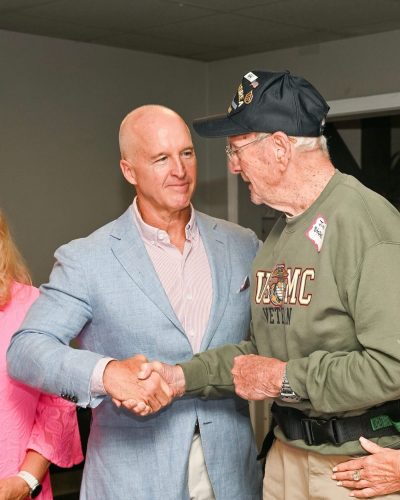
Minogue’s worldview extends well beyond boardrooms and balance sheets. As a father of five children raised in Massachusetts alongside his wife, Renee, he saw firsthand the struggles that everyday families and veterans face.
For Minogue, the obligation to those who served didn’t expire when he hung up his own uniform.
Throughout his corporate climb, he noticed a persistent, troubling disconnect in the American workforce: highly skilled, disciplined military veterans were returning home from deployments only to struggle to find meaningful, purposeful civilian careers.
They possessed unmatched leadership capabilities and pressure-tested problem-solving skills, yet their resumes were routinely overlooked by corporate algorithms that failed to translate military service into civilian terms.
Determined to rewrite this narrative, Minogue co-founded MedTechVets (originally launched in 2012 as the MVP Program).
The 501(c)(3) nonprofit organization was designed with an explicit mission: to act as a bridge, retraining and mentoring military veterans so they can smoothly transition into high-paying, goal-oriented careers within the medical technology and biotechnology sectors.
Under Minogue‘s active guidance as Chairman of the Board, MedTechVets developed a personalized system that pairs transitioning service members with top-tier life sciences executives. The program focuses heavily on:
Strategic Mentorship: Providing veterans with dedicated, one-on-one professional coaching from corporate leaders who understand both the military crucible and the medical device industry.
Resume Translation: Helping veterans re-frame their tactical leadership, operational logistics, and engineering experiences into the specific metrics that corporate HR departments value.
Purpose Alignment: Channeling a veteran’s intrinsic desire to serve a mission greater than themselves into a new civilian focus—saving lives by developing and manufacturing breakthrough medical technology.
Minogue believes the medical device sector is a natural home for veterans because both arenas demand absolute execution, teamwork, and a profound respect for human life.
To date, the program has successfully mentored and placed hundreds of veterans into specialized roles across the country.
Minogue’s hands-on commitment to the cause remains unyielding; after a brief step back, he officially returned to serve a new two-year term as Chairman of MedTechVets, ensuring that the bridge between military service and civilian opportunity continues to grow wider.
The Blueprint for the Commonwealth
Minogue’s pivot into the political arena was born out of frustration with the status quo.
Watching working-class families struggle under the weight of escalating costs, he came to a stark realization:
“Massachusetts is working for some, but not all.”
Positioned as a practical, numbers-driven political outsider, Minogue launched his gubernatorial campaign to challenge the entrenched one-party establishment in Boston.
Central to his gubernatorial bid is his detailed AAOK Plan, focusing heavily on economic relief, governmental transparency, and structural reforms:
Accountability Through Auditing
Minogue argues that state government has evaded oversight for too long, wasting taxpayer dollars and inflating state debt.
On day one, he pledges to enforce rigorous, voter-supported state legislative audits to eliminate fraud and balance the state’s multi-billion-dollar budget with true transparency.
Radical Affordability
With Massachusetts facing high cost-of-living rates and outward migration, Minogue’s platform focuses on families keeping more of their hard-earned income. His targeted solutions include:
Utility Relief: Cutting state-mandated utility fees on day one, which currently comprise nearly a third of residential monthly utility bills.
Energy Innovation: Canceling the state’s unfunded Net Zero mandate—which he states carries a taxpayer burden over $300 billion—in favor of clean natural gas pipelines and modern, modular nuclear energy exploration.
Tax Relief: Implementing a gas tax holiday whenever prices cross the $4.00 per gallon mark, working toward its long-term elimination.
A “Patients First” Healthcare Plan
Drawing from his extensive medical technology expertise, Minogue aims to overhaul the state’s healthcare landscape. His plan shifts expensive, clogged procedures away from Boston’s emergency rooms and pushes care directly into localized, community-based outpatient surgical clinics.
This plan supports primary care doctors and nurses, fights professional burnout, mandates the use of generic drugs via pharmacy benefit managers, and expands community-reimbursed mental health counselors.
Opportunities in Education & Safety
Minogue is a staunch advocate for educational empowerment, supporting Massachusetts’ participation in the Federal Scholarship Tax Credit program to give parents greater choice and financial grants for alternative schooling.
On public safety, he advocates for ending sanctuary state policies, reinforcing strict fentanyl trafficking enforcement, and focusing state resources directly on protecting local neighborhoods.
Outsider Analytics vs. The Establishment
Minogue’s transition from the biotech boardroom to the political arena has set up a fascinating ideological battleground in the race for Governor of Massachusetts.
Running as an outsider candidate, Minogue has focused his campaign entirely on pocketbook economics, fiscal responsibility, and state competitiveness.
This practical framework has fueled highly charged debates and campaign clashes with the incumbent Democratic Governor, Maura Healey.
During televised debates, Governor Healey and state Democrats have consistently tried to tie Minogue to national, hyper-partisan politics, pointing directly to his substantial donations last year to federal Republican figures and a high-profile home fundraiser for the GOP presidential ticket.
Minogue has routinely swiped away these national talking points, steering the conversation back to local issues like high energy costs, housing shortages, and the state’s structural deficit.
“I will be Massachusetts Mike,” Minogue frequently counters, positioning himself as a non-ideological, analytical executive focused on running a struggling “company” called state government.
Yet, the strategic attempt by the Democratic high command to paint Minogue as a rigid national partisan is consistently complicated by the public ledger of his historical corporate contributions.
Public campaign finance records reveal that during his 19-year tenure as a biotech executive, Minogue also directed financial support to high-profile Massachusetts Democrats.
Among these contributions was a $13,000 donation in 2013 to U.S. Senator Ed Markey, a standard-bearer for progressive policy on the left.
Minogue’s camp has long argued that these bipartisan contributions—which also included donations to moderate Democratic congressmen like Jake Auchincloss and Seth Moulton—were simply the pragmatic realities of a corporate leader advancing medical innovation by building relationships across the political spectrum.
To his supporters, the ledger is not proof of ideological inconsistency, but rather verification of his core thesis: that he is an elite manager unversed in tribal loyalty, a problem-solver who has historically dealt with both sides of the aisle to achieve results.
The sharpest policy clashes between Minogue and Healey center on three core pillars:
The 72% Voter-Approved Audit Mandate
A central flashpoint of the debates has been the implementation of the state legislative audit.
Minogue has hammered the Healey administration over state spending transparency, highlighting that Massachusetts ranks near the bottom in private-sector job growth and carries one of the highest per-capita debt burdens in the country.
He has pledged to strictly enforce the government audit approved by a staggering 72% of voters, using real-world corporate transparency to identify waste and balance the multi-billion-dollar state budget on day one.
The Unfunded $300 Billion Net-Zero Mandate
Minogue has mounted a fierce critique against Governor Healey’s aggressive environmental policies, particularly the state’s current Net-Zero energy framework.
He argues that the unfunded mandate would impose an unprecedented burden on taxpayers and drive monthly residential utility bills to record highs.
In debates, Minogue has countered with an alternative, tech-forward energy plan: canceling the mandate on day one, immediately slashing state-mandated utility fees, building clean natural gas pipelines, and exploring modular, modern nuclear energy to protect local manufacturing jobs.
Public Safety & Sanctuary Policies
The candidates have clashed sharply on the logistical and financial strain facing the state’s shelter system. Minogue has directly attacked Healey’s handling of illegal immigration costs, calling for an immediate end to sanctuary state policies.
His platform emphasizes strict enforcement against fentanyl trafficking, redirecting state tax dollars away from emergency migrant housing, and prioritizing the safety and economic stability of local working-class neighborhoods.
The Final Crucible of Accountability
Then in the final breathless stretch of the autumn campaign, the unpredictable human variable collided with the cold mathematics of the Minogue strategy.
On the night of October 18, just days after the heat of the WCVB-TV studio debate, Shawn Oliver, Minogue’s chosen lieutenant governor running mate, was arrested in New Bedford, charged with operating a motor vehicle under the influence of alcohol after a multi-vehicle collision.
In the brutal, unforgiving theater of a modern political race, it was the ultimate crisis—a sudden, catastrophic structural failure at the exact moment the challenger was building momentum.
For a professional political operation, the standard protocol for such a disaster is well-worn: a calculated period of silence, a carefully vetted committee statement designed to obscure responsibility, and a slow, painful retreat behind a wall of public relations professionals.
But Mike Minogue, the old tactical navigator from the sandstorms of the Iraqi desert, chose a different coordinate.
Stepping directly into the media storm, Minogue chose absolute clarity over political convenience.
He did not issue platitudes or wait for the focus groups to tell him how to feel.
Instead, he separated Oliver from the ticket with a swiftness that stunned the Beacon Hill establishment, announcing that he would leave the lieutenant governor post entirely vacant and govern the Commonwealth single-handedly if elected.
To the men and women who had lined up behind the Minogue banner, the candidate’s reaction was the definitive proof of the entire campaign’s message.
For months, Minogue had preached a gospel of ruthless accountability and structural reform, arguing that the fundamental sickness of Massachusetts politics was a systemic refusal to face hard truths and clean up institutional failure.
His supporters looked at the Oliver crisis and saw a leader practicing exactly what he had written in his blueprint: a man who, when confronted with a breakdown in his own ranks, cut through the political noise to enforce the same zero-tolerance standards he promised to bring to the state budget.
Yet beneath the rigid posture of the corporate manager, there was a deeper, more complicated glimpse into the discipline of the West Point graduate.
Even as he cut Oliver from the campaign, Minogue did not cast him out into total exile. In a quiet, remarkably candid gesture, he publicly offered to help his former running mate secure the professional rehabilitation and personal assistance required to mend whatever underlying vulnerabilities had caused such a profound lapse in judgment.
It was a moment that defied the usual tribal cruelties of the political arena—an admission that while public trust demanded absolute execution, human brokenness required compassion.
Naturally, the political establishment viewed the wreckage through an entirely different lens.
Governor Healey and the Democratic high command immediately went on the offensive, framing the arrest not as an isolated human tragedy, but as the undeniable proof of administrative “chaos” within the insurgent Republican challenge.
For the columnists at The Boston Globe, the New Bedford crash threatened to completely derail the pocketbook focus Minogue had built so methodically during the debates, threatening to eclipse his data-driven critique of the status quo with the raw, sensational headlines of a campaign in crisis.
The sharpest indictment leveled against Minogue by the Healey high command, and echoed systematically in the editorial pages of The Boston Globe, had long been that his entire public persona was too tightly wound, a bloodless corporate construct engineered by elite consultants and insulated by the sterile predictability of the boardroom.
The critics argued that Massachusetts could not afford to elect a spreadsheet—that a man whose career was built on the calculated pacing of regulatory approval cycles and quarterly earnings calls would simply freeze when confronted with the raw, volatile, and deeply human chaos that routinely floods the corner office on Beacon Hill.
A chief executive, after all, cannot run a state by algorithm; the life of a governor is defined by the sudden, middle-of-the-night crisis where there are no briefings, no precedents, and no time for committee review.
Yet here, in this agonizingly public fracture of his own ticket, the Commonwealth was suddenly handed its first real-world telemetry on the outsider’s true operational instincts.
Albeit a brief and painful sample size, it was an undeniable look at Minogue under fire.
When the unforeseen variable crashed into his campaign and threatened to drag him into the standard political theater of denial and delay, he did not panic, and he did not retreat into a defensive crouch.
Instead, he made a swift, thorough, and fundamentally structural decision, executing it with the exact same cold, navigational detachment he had once used to steer his men out of harm’s way in the Iraqi night—proving to a watching electorate that when the terrain turned treacherous, his leadership was dictated not by political convenience, but by an unyielding discipline that remained completely unbreakable.
The Home Stretch
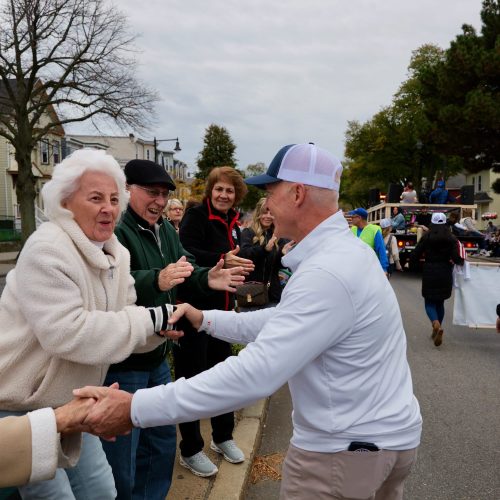
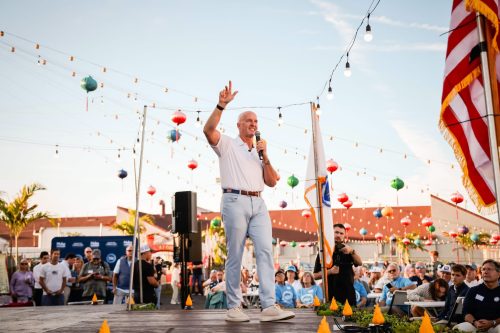
As the general election draws near, Mike Minogue continues to traverse the state, building a diverse coalition of Republicans, independents, and moderate Democrats.
In highly publicized gubernatorial debates against incumbent Governor Maura Healey, Minogue has consistently deflected national hyper-partisan attacks, keeping the focus entirely on local pocketbook issues, high energy rates, and government accountability.
“I will be Massachusetts Mike,” Minogue frequently shares on the campaign trail. “I will only do what’s in the best interest of our citizens, our entrepreneurs, and our businesses.”
With a unique background as a combat veteran, an elite manager, and a dedicated philanthropist, Minogue is offering voters a clear alternative: a tested leader ready to apply real-world analytics to navigate the Commonwealth toward a more stable and affordable future.
____
THE RED numbers on the studio’s digital countdown clock slice through the remaining seconds of the broadcast, bleeding down with the same silent, mechanical absolute that Minogue once tracked on his lensatic compass in the Iraqi desert.
Back at the podium, the cold blue backdrop of the television stage seems to narrow, focusing entirely on the two figures who spent the last ninety minutes contesting the future of the Commonwealth.
Governor Healey is concluding her final remarks, her cadence rising with the professional, practiced optimism of a lifetime spent navigating political conventions and legislative caucuses. It is a performance polished to a mirror shine, designed to reassure, to signal that the established machinery of state government is functioning exactly as intended.
But when you look closer at the man standing a few feet to her right, the performance ceases to be a mere political debate; it becomes a portrait of a completely different American tradition.
Seeing Michael Minogue at this podium—his shoulders squared, his gaze detached from the theater of the room—is to see the intersection of three centuries of quiet, unyielding discipline.
You are seeing the great-grandparents who faced down the window signs of New England that read “No Irish Need Apply,” choosing to dig canals and lay railroad tracks with a silent, ferocious work ethic rather than accept defeat.
You are seeing the youngest of four children raised around a strict, faithful Irish Catholic kitchen table, where personal ambition was always secondary to personal accountability.
You are seeing the young West Point cadet who internalized the words Duty, Honor, Country, and the Bronze Star navigator who guided his platoon through the featureless, blinding terror of a Desert Storm sandstorm by trusting hard data over fragile instincts.
This is why Minogue does not speak in the fluid, emotional poetry of traditional politics.
When he articulates his blueprint for Massachusetts—when he demands a voter-approved audit of state spending or details the exact mechanics of shifting healthcare burdens away from emergency rooms and into local outpatient clinics—he is not auditioning for an ideology.
He is applying the same cold, life-saving precision he used when he took a small, struggling medical technology firm in Danvers and engineered the world’s smallest heart pump to save thousands of failing cardiac patients.
To Minogue, a budget deficit is not a partisan talking point; it is a broken machine.
A utility fee system that crushes a working-class family in Worcester is not a political compromise; it is a navigational error that threatens the entire convoy.
______
THE BROADCAST DIRECTOR counts down the final five seconds, and the red tally lights on the cameras finally click off.
The artificial coldness of the studio begins to lift as the crew moves in to dismantle the set.
Step away from the stage, and the ultimate thesis of Minogue’s improbable campaign becomes unmistakable: he is a man who spent his entire life being tested by variables that could not be solved with a speech.
As he steps out from behind the podium to shake his opponent’s hand, he does so not as a politician looking for a career, but as an executive looking at a broken balance sheet, entirely convinced that with enough grit, accountability, and the right coordinates, any terrain can be successfully navigated.
___