


Inside the Dark Romance of Runway Ball, Season 3
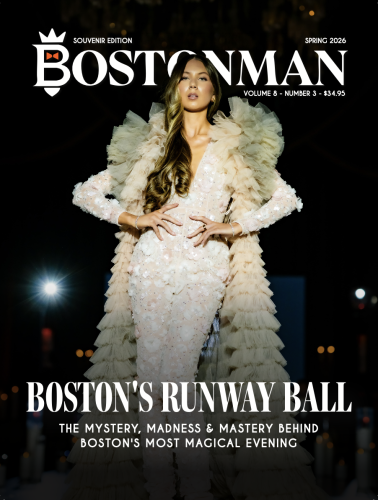
THERE IS A MOMENT — fleeting, electric, almost holy — when the lights in the Grand Ballroom of the Hilton Boston Park Plaza go dark. The conversation stops. The champagne glasses hover mid-air. And the room, packed with Boston’s most fashion-forward, culture-hungry, and impossibly well-dressed, holds its collective breath.
Then the music hits.
And the runway ignites.
This is the Runway Ball. And on the night of December 14th, Season 3 arrived not merely as an event — but as a declaration. Boston, long whispered about as a sleeping fashion city, has awakened. And she dressed for the occasion.

A Movement, Not Just a Moment
When Amanda Vargus, Matt Ribaudo, and Jimmie Espo first dreamed up the Runway Ball, they weren’t just planning a show. They were planting a flag. They wanted a platform bold enough to match the talent already thriving in Boston’s studios, ateliers, and late-night creative sessions — the designers working by lamplight over coffee cups and fabric swatches, sketching silhouettes that New York and Paris would have killed to discover.
Three years later, that flag is flying -signifying a global impact felt far beyond the coastline borders of New England.

“We were in discussions with Michael for two years,” Vargus said of landing this season’s headliner, NYC-based couture legend and Braintree native Michael DePaulo. “I’m truly grateful he trusted our show to represent his brand and to showcase his beautiful designs.”
Ecstatic, she called it. And she wasn’t alone.
For Ribaudo, the thrill was more than just a name on a marquee.
“Stacked top to bottom,” he exclaimed. “The designers, the musicians, the production, the models, our vendors; and of course all of our guests.”

“This show was not easy to put together by any means,” he explained. “But it delivered. I feel like it hit on many different levels; and for different reasons for different people. I feel confident in saying Season 3 continued to expand the footprint of what a fashion production can look like in Boston.”
Amanda, Jimmie and Matt knew something heading in the rest of Boston was about to find out: this wasn’t a fashion show. This was theater. And the theme — Dark Romance — set the stage for something no one in that room would soon forget.

The Dark Romance of It All
Dark Romance. Two words that feel like velvet and shadow, like candlelight in a cathedral, like the last page of a novel you never wanted to end. Season 3 wore its theme like a second skin — woven into every look, every light cue, every note of music that echoed off those gilded walls.


The Grand Ballroom itself seemed to understand the assignment, morphing into the magnificent theatre envisioned by Vargus and helped to implement by Espo’s 617 Event Group team.
The Hilton Boston Park Plaza, a property with the bones of a century of Boston elegance, transformed into something far more primal and more beautiful than its usual grandeur. Draping darkness. Dramatic lighting. The runway stretching out like a runway into the unknown.

An unknown that began coming into focus at the show’s onset as the sounds of Grammy nominated hip hop violinist Rhett Price’s strings delightfully filled the eardrums of the 652 there to bear witness of what was about to unfold.
Performing a blend of custom tracks produced to match the vibe of opening designer Angelo Rosa -fresh from Season 21 of Heidi Klum’s Project Runway- Rhett immediately established the tone for what soon was to follow.
“It was a dream pairing,” Rhett -himself meticulously fitted in Angelo Rosa designs- said of the show opening.
“When Matt called to tell me what he, Amanda and Jimmie were envisioning for my set -and who (Angelo) I would be out there with- I was ecstatic.”
Rhett even got a small taste of the strict timeline models adhere to with wardrobe changes.
As the evening’s co-headlining musician, he performed an abbreviated version of his concert series during the cocktail reception.
Not wanting to reveal the aforementioned Angelo Rosa x Rhett Price designs until the actual show opening, Rhett was styled in a different fit during the reception.
That didn’t leave a whole lot of time for his wardrobe change before hitting the runway.
“I have so much respect for what these models do,” he said. “There is no room for delays. Backstage is a production in and of itself. It’s impressive how some of these models change three or four times over the course of the show and are always ready to go.”
“This is definitely on a higher scale,” emphasized co-headlining musician Marcus Machado — a Rolling Stone-anointed guitarist who plays with the kind of soul that makes rooms go quiet.
Machado, who possesses a resume that includes performances at Madison Square Garden, top runways in New York, tours across two continents -and recognition from Prince (yes, that Prince) as one of the world’s top living guitarists- was drawn to Boston’s Runway Ball for a reason he articulated simply:
“I had to come see for myself what all of the hype was about.”
“The show (Vargus, Ribaudo & Espo) produced last year (2024) received a nice little buzz in New York. I love Boston and I love performing. So I wanted to be part of this.”
Performing during The Runway Ball’s “halftime intermission” his movement was its own apparition of a dark romance interpretation.
In it, Machado didn’t just provide a soundtrack; he provided a pulse, building an anticipation that led into the second half of the show.
Each chord struck landed somewhere between jazz and thunder, between romance and edge — the precise emotional register the evening demanded.
“You’re not just soloing,” he explained. “You’re putting on a show within a show”
The crowd felt it.
Rosario Testeverde, a Beacon Hill interior designer attending his second Runway Ball, leaned toward a friend during Machado’s set and said what many in the room were thinking:
“I’ve been to fashion weeks in Milan, Paris and New York. I’ve never felt a room like this. The music, the clothes, the energy — it all becomes one thing.”
The Designers: Six Visions, One Night
Six designers. Six stories. One stage.
That’s always been the Runway Ball’s formula — and what makes it work is not the number, but the caliber. Season 3 assembled a cast that felt less like a lineup and more like a legacy.
Michael DePaulo closed the show, and the decision was as inevitable as it was inspired. The architect-turned-designer — who spent his childhood sketching both dresses and houses — brings a structural rigor to eveningwear that few can match.
His gowns have traveled from Boston trunk shows to Carrie Underwood’s Christmas album cover, the latter now permanently on display at the Country Music Hall of Fame in Nashville.
Kate Beckinsale has worn his beaded jumpsuits. Gwen Stefani has worn his designs. And yet, standing backstage at the Hilton Boston Park Plaza — the same venue where his older sister was married when he was eleven — DePaulo was the calmest person in the building.
“Those shows make me calm,” he said. “My work is done at that point. I kind of sit back and observe, appreciate it and celebrate it.”
His collection told a story — deliberately, architecturally. Beaded jumpsuits. Grand gowns. A bridal finale that drew tears from at least three people in the front row. “I always like to tell a story,” he said. “I don’t like to just send random pieces up the runway.”
The finale hit like a poem’s last line.
Cult of Individuality brought the muscle and the music. Ron Poisson and Angelo Rosa — the Rhode Island-born duo behind one of America’s most authentic lifestyle brands — arrived in Boston with fifteen looks and a philosophy. “Quality first,” as Poisson says. Always.
A brand born from eight pairs of jeans at the height of the 2008 recession, Cult has since dressed Slash, 50 Cent, Tommy Lee, Daddy Yankee, and Chris Brown — not through paid placements, but through the rare currency of genuine love. “They come in, they believe in the brand, they see what we’re doing, and they rock with us,” Rosa said.
New England’s own Angelo Rosa — a Providence native who appeared (as previously mentioned) on Season 21 of Project Runway — was visibly electric backstage. He promised fifteen looks that would be “so different, yet blend together effortlessly” and that is what he delivered.
“Depending on who the customer is, they can wear it so many different ways. My Runway Ball designs were meant to be very eclectic.”
It was. Donald Santos, a South End boutique owner who spent the better part of intermission describing what he’d just witnessed, put it simply:
“Those looks hit different. That’s not fashion-show fashion. That’s real clothing with an attitude.”
Madeline Malenfant, the Nantucket native and Brooklyn-based sculptor-turned-designer -a castmate and friend of Angelo on Project Runway Season 21- brought something entirely unexpected, and that was entirely the point.
Her collection was built from upholstery fabrics. Not the glamorous kind. The dentist’s-waiting-room kind. The ignored-couch-at-Goodwill kind. The Best Western bedspread kind.
“These fabrics are so ugly and then again quite remarkable,” she said, with the deadpan precision of someone who has thought about this more than anyone else on earth.
She transformed them into something breathtaking. The heavy-duty geometrics and muddy palettes became architectural, surprising, full of an unexpected wit.
“My goal was to make these confusing fabrics into something pretty,” she said.
Valerie Allison, a Wellesley art collector who attended with a group of four, spent twenty minutes after Malenfant’s segment talking about it.
“I kept trying to figure out where I’d seen those prints before,” she said. “And then it hit me. It was like someone found the ugliest fabric on earth and made it the most beautiful thing in the room. That’s genius. That’s actual genius.”
Stephanie Muñoz of Mpoze returned for Season 3 having first graced the Runway Ball stage in Season 1, where her sculptural silhouettes made the room stand a little taller just by existing near them. Bold. Powerful. Undeniably present.
A long-time favorite of BostonMan publisher Matt Ribaudo, Stephanie’s designs first graced the cover of the magazine’s Summer 2020 issue featuring her custom Mpoze x 9Tailors customized for Devin and Jason McCourty.
Stephanie has been sewing since she was seven, and somehow her work still maintains the curiosity and fearlessness of that little girl who first realized she could make something from nothing.
An integral cog with the fashion education community in New England, Stephanie serves as an adjunct professor at Fisher College and on the board of the Boston Arts Academy Fashion Technology Department.
For Season 3 of the Runway Ball, her collection boldly and intelligently showcased designs punctuating the ambition and discovery of her seven year old self with the maturity and nourishment of the present-day educator and fashion design authority she has become.
“That was my favorite presentation of a Mpoze collection I’ve seen from her,” Reinaldo Burgos, observed from his runway seat. “I’m not saying I’m any type of expert, but this was maybe my fifth or sixth time seeing her. I’m always a fan of her work, this one hit different though. Everyone in the seats around us said the same thing. We could feel this collection as each model came down the runway.”
When you wear Mpoze, you don’t feel seen as who you are — you feel seen as who you’re becoming.
Solo Jubin, who lit the room on fire in Season 2 with his daring, expressive work, returned with a collection that dared you to look away.
You couldn’t. His pieces feel like a heartbeat on fabric — each one a raised voice, an unapologetic declaration of self.
Growing up navigating a learning disability, Jubin found in fashion what others found in language: fluency, power, identity. His segment at Season 3 landed like the second act of a play you didn’t realize had started.
Boasting a design aesthetic defined by bold prints, unexpected patterns, and a fearless approach to pushing the boundaries of fashion, Jubin’s Season 3 collection, dubbed “Flow”, featured a denim undertone accenting the designs.
Providing his signature energy and movement, Solo Jubin closed the opening sets (third collection) before intermission.
Exiting the runway stage, Jubin was immediately met backstage by none other than Ribaudo who engulfed the Worcester designer in a congratulatory bear hug with the models who beautifully represented Jubin’s ‘Flow’ designs joining Solo and Matt’s celebration of the electric moment they had just help bring to life.
“I couldn’t help myself,” Ribaudo said grinning. “The aura and stage presence (Solo Jubin) brings to a show is contagious. The way he conveys his energy and rhythm from his soul, to designs, to models, to audience is such a powerful and intimate flow of the creative arts in his work.”
Graciela Rivas brought her signature elegance and intention to the Runway Ball with the quiet authority of someone who has never made a garment she didn’t mean.
Her designs don’t stride down a runway — they arrive. Slow fashion at its most intentional, each silhouette felt like a small love letter to strength and femininity, a merging of past and future.
Graciela’s Season 3 collection showed second -following Cult of Individuality -a crucial slot that typically will either enhance or flatten upscale shows as deliberate as The Runway Ball.
With the arrival of her first model gracefully stepping foot onto the runway, the multi-sensory sophistication of Graciela’s retro-modern style instantly was felt throughout the entire Grand Ballroom; giving the desired shift in energy from Angelo’s streetwear designs into the opulence of Graciela’s eveningwear.
“That was such a breathtaking transition,” Cassandra Sanitate later emphasized. “It had such a beautiful effect, in some ways, similar to the feeling of passage between the Anna Wintour galleries at The Met. You know you’re about to see and feel something powerfully different, but still get a sensation of awe even knowing something is about to happen.”
The connection Cassandra makes in her analogy with Graciela and the Anna Wintour Galleries at The Met resonates. Various Graciela Rivas Collections have been presented within cultural institutions such as the Museum of Fine Arts, Harvard, and MIT. Her designs often hold a presence in world-class galleries as eloquent and natural as they do on world-class runways.
Jessyka Colors, a fashion photographer who has shot runway shows from New York to São Paulo, watched Rivas’ segment from the third row.
“I’ve been on the other side of a lens at hundreds of shows,” she said afterward. “But watching her pieces move through that room, in that light, under that theme — I almost forgot I had a camera. I just watched.”
The Final Curtain?
Vargus and Ribaudo built the Runway Ball on a belief that Boston doesn’t need to borrow its fashion identity from New York, Paris, or Milan. The talent was always here. It just needed a stage worthy of it. It needed a runway worthy of it.
Season 3 proved that point with the force of a standing ovation.
“We dreamt of a platform that wasn’t just another event, but a movement,” Vargus said. “A declaration that Boston’s designers should be celebrated with a show recognized and taken seriously in other cities as well.”
Three seasons in, that declaration has become something stronger: a record.
A record -however- that itself has a tinge of uncertainty in that it may have played its final act.
“To be completely honest, I don’t know what, if anything, is next for The Runway Ball,” Vargus recently confided. “I never want this to turn into a rinse and repeat production. We’ve made a lot of sacrifices and have stood by hard choices in bringing these first three seasons to life. It hasn’t always been fun, and it’s definitely not easy.”
Ribaudo acknowledged his partner’s feelings.
“It’s a lot for our small team to handle and to continue evolving into the next thing each year. Amanda and I admittedly put an enormous amount of pressure on ourselves and others around us throughout the process of producing The Runway Ball, and that’s not always fair to everyone.”
Asked to further elaborate he clarified:
“We need more resources. We need more sponsors. We need to add more people -the right people- to our team. We’ve perhaps outgrown our current venue. It’s a lot of things. If you look at other galas around Boston similar in size to Runway Ball they have 50-person committees in place and treasure chests of assets.”
Ribaudo pauses, possibly reflecting on his words as he processes his thoughts, before concluding:
“I don’t mean for it to be an excuse though. A lot of that is on me. I need to position myself to be able to do more to help put these things in place.”
He then cracks an ever so slight smile, “It’s almost like we’re living out the themes of our shows while producing them.”
Boston’s Runway Ball
If on December 14th, 2025 Dark Romance did indeed end up being The Runway Ball’s conclusion, it was nothing short of a majestic finale, securing a short lived -but special- legacy in the ethos of Boston fashion shows.
The Grand Ballroom of Park Plaza, with its soaring ceilings and century-old bones, held something extraordinary on that magical, dark romantic Sunday evening.
It held six designers who chose Boston. Musicians who electrified the room. Models who owned the runway. An audience that came dressed in anticipation for the event of the year and found themselves at the show of the decade.
Most of all though, it held a community that reverberated a heartbeat for the arts. For fashion. For theater. For music. For culture. For philanthropy.
It held for those that have a creative imagination and a desire holding truths that see no boundaries.
It held for today’s youth, envisioning their dolls as fashion models on a runway while gleefully playing in their toy rooms. Dreaming of the day she will produce her own show.
Dreaming the same way a young girl in Newburyport, Massachusetts did some thirty-five years ago with her dolls. Dreaming the same way young Amanda Vargus once did.
Dark Romance. Two words that sound like a theme — and turned out as a prophecy.
Boston didn’t just attend The Runway Ball these past three Decembers.
Boston owned it.