The story behind Connecticut’s iconic “Caring for Pets” license plate is a masterclass in grassroots policy, creative funding, and community-driven animal welfare. At the center of it all was one dedicated civil servant who steered the program from near-collapse to a national model.
_________
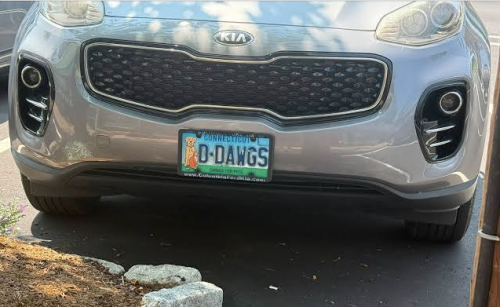
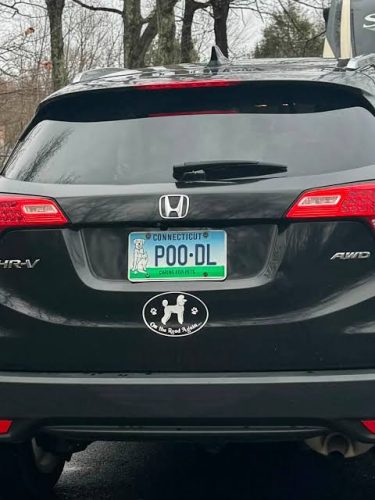
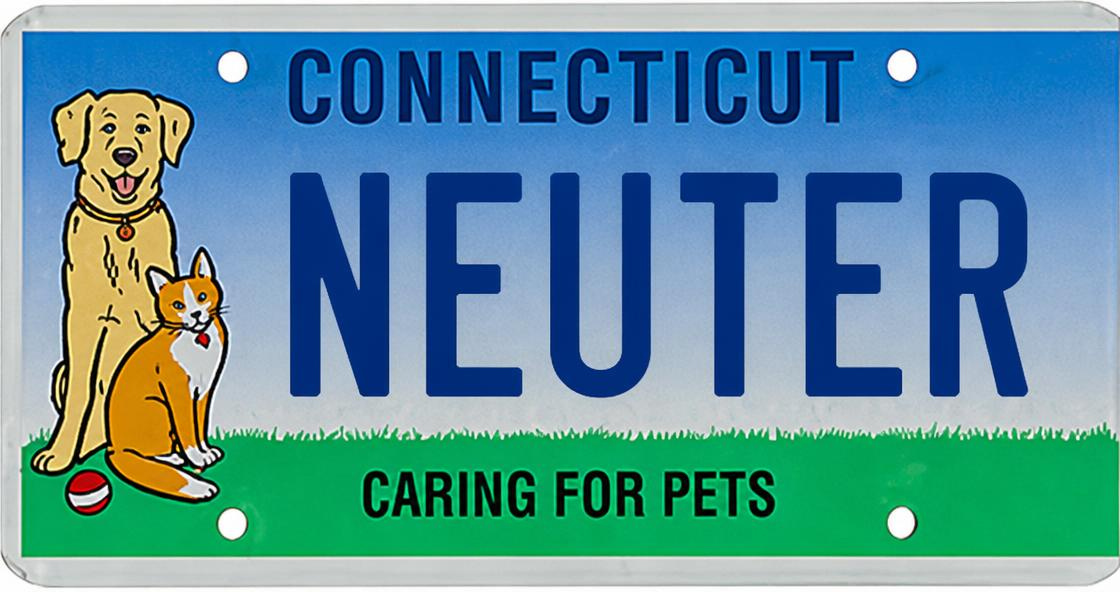
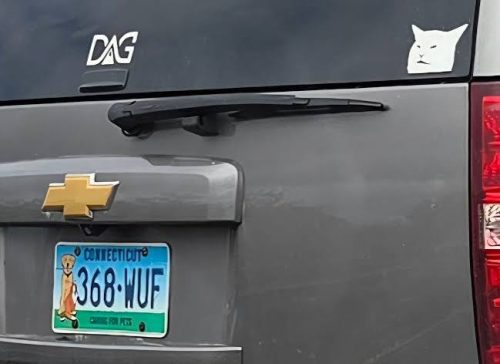
IF YOU HAVE DRIVEN the Merritt Parkway or spent time idling on I-95, you have likely seen it: a distinct license plate featuring a graphic of a dog and a cat, anchored by the letters PET. To the casual observer, it is a cute statement of a driver’s love for their furry companions. But to animal advocates across the state, that piece of aluminum represents a critical lifeline.
For nearly three decades, the “Caring for Pets” commemorative license plate has served as a primary engine driving Connecticut’s Animal Population Control Program (APCP)—a highly successful state initiative designed to curb pet overpopulation, boost adoptions, and dramatically reduce shelter euthanasia rates.
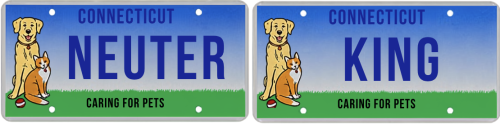
The Arrival of the “Neuter King”
To understand the history of the plate, one must look at the turbulent birth of the program it funds. In May 1995, the Connecticut General Assembly officially established the APCP under the Connecticut Department of Agriculture. The goal was simple but ambitious: provide vaccination and sterilization benefits for Connecticut residents who adopt pets from municipal pounds.
However, the program faced an immediate financial crisis.
“We had some growing pains,” recalled Frank Ribaudo, who stepped in as the APCP Program Director during its earliest formulation in 1994. “We were paying the vets too much and went belly-up after a year and a half”. Just one month after its legislative inception, the state ran completely out of funds, forcing a sudden suspension.
But Ribaudo was uniquely qualified to rescue the floundering initiative. Long before he began his work with the State of Connecticut, he had built a formidable reputation as a titan in the animal welfare space.
Ribaudo had previously carved out a name for himself over a stellar ten-year career with the Humane Society of the United States (HSUS), where he specialized in implementing pioneering initiatives to get dogs and cats spayed and neutered.
By the time Connecticut needed someone to fix its program, Ribaudo had already established himself as a national authority—so much so that friends and colleagues throughout the country playfully called him the “Neuter King.”
Bob Martin & Nicky Ratliff: Dual Mentorships That Forged a Vision
This unparalleled expertise was not built in a vacuum. Long before his time at the HSUS or the State of Connecticut, Ribaudo cut his teeth on the front lines of municipal animal care, building the operational framework that would define his life’s work through two crucial mentorships in Maryland.
The Tutelage of Bob Martin (Prince George’s County)
From the mid-1970s to the early 1980s, Ribaudo studied under a local visionary named Bob Martin, owner of the Glenn Oaks Doggy Motel (later known as Glen Oaks Boarding & Grooming, Inc.) at 8101 Springfield Road in Glenn Dale, Maryland. Operating as a “doggy motel”—a popular regional term for higher-end kennels featuring individualized, climate-controlled indoor/outdoor runs—the facility served the rapidly expanding suburban population of Prince George’s County.
Learning how to maintain a high-volume facility alongside Martin placed Ribaudo at the absolute epicenter of complex zoning, land use, and environmental discussions. He navigated strict county “special exception” permits regarding noise control and waste management as residential neighborhoods built up right next to the property line.
Furthermore, the facility sat directly in the path of shifting county logistics, forcing them to contend with the widening and environmental impacts of Springfield Road and nearby Annapolis Road (Route 450).
This intense era provided Ribaudo with the administrative stamina and corporate savvy necessary to execute massive animal welfare programs later in life.
Teaming up with ‘Mama Nick’ (Carroll County)
Transitioning to Carroll County, Ribaudo found another pivotal mentor in Nicky Ratliff at the Humane Society of Carroll County (HSCC). Throughout the 1980s, Ratliff and Ribaudo collaborated closely on the front lines of municipal animal care, specifically helping to manage and modernize animal control operations and shelters.
Their collective efforts centered around foundational shifts in regional animal welfare:
Launching the Littlestown Pike Shelter: When the new animal shelter opened on Littlestown Pike in 1981, Ratliff and Ribaudo were vital to managing the early, boots-on-the-ground operational expansion. They scaled the agency up from a tiny team of six employees to handle the county’s rapidly increasing volume of stray and surrendered animals.
Pioneering Mass Spay & Neuter Initiatives: Long before he became “The Neuter King” at the state level, Ribaudo cut his teeth working alongside Ratliff developing early population control protocols. During the 1980s, they shifted the shelter’s focus away from purely reactive animal trapping and toward aggressively reducing pet overpopulation through localized, low-cost voucher concepts.
Implementing the 1983 Livestock Holding Facility: Because Carroll County had a heavy agricultural footprint, loose, large farm animals posed a consistent safety issue. In 1983, Ratliff and Ribaudo collaborated on expanding the Westminster shelter’s infrastructure, using donated funds to erect a large, specialized livestock holding facility. This allowed animal control to humanely seize, safely shelter, and care for wandering horses, cattle, and swine without disrupting the domestic cat and dog populations.
Professionalizing Regional Animal Control: Together, both leaders worked to shift the public perception of “dog catchers” toward professionalized, humane law enforcement officers. They standardized local domestic animal laws, streamlined the county’s dog licensing systems, and built training protocols that would later influence statewide animal welfare legislation across Maryland.
Rebuilding and Launching the “PET” Plate
It took more than two years of restructuring, financial recalibration, and intense advocacy led by the “Neuter King” to get the initiative back on its feet. In October 1997, the APCP relaunched, buoyed by a new $6 surcharge on annual licenses for unsterilized dogs. While this fee provided a baseline framework, Ribaudo knew the program still desperately needed a sustainable, long-term stream of revenue to meet the massive demand for low-cost spay and neuter services.
Recognizing that dog licenses alone could not fully sustain the program, Ribaudo and state officials looked toward an emerging trend in creative public financing: the specialty license plate.
In May 2001, Governor John G. Rowland officially unveiled the “Caring for Pets” commemorative license plate. Production began with initial serial numbers starting at 100-PET or 101-PET.
Ribaudo took on the administrative brunt of the launch, utilizing his office at the Department of Agriculture to personally field applications and manage the distribution logistics alongside the DMV. From day one, the premise was clear: a portion of the proceeds from every single plate sold would go directly into the APCP fund.
Ribaudo’s efforts turned everyday vehicles into rolling billboards for animal welfare, allowing drivers to vote with their dashboards. The plate quickly became an indispensable funding mechanism, generating roughly $40,000 annually and accounting for a massive 65 percent of the program’s overall operating budget during its formative years.
Expanding the Mission: Boots on the Ground with Helping Paws
Ribaudo’s role went far beyond just balancing the books for pound adoptions. He was a hands-on director who wanted to tackle the root causes of overpopulation. When the General Assembly passed Public Act 07-105, it officially expanded the APCP to include a Low-Income Pet Sterilization program and a Feral Cat Grant Program.
To ensure these programs actually worked, Ribaudo didn’t just sit in a Hartford office. He personally went out into the field, embedding himself with local rescue groups to see the crisis firsthand.
A prime example was his collaboration with Helping Paws, a Connecticut-based rescue organization tackling community cat overpopulation. Ribaudo famously traveled out to visit the group and toured active feral cat colonies alongside their volunteers.
His goal was to understand the localized nature of the problem, map how colonies bred, and figure out how state-issued vouchers could most efficiently be distributed to caregivers who lacked the funds for veterinary bills.
This boots-on-the-ground teamwork solidified the Feral Cat Grant Program’s launch in 2007. In its very first cycle, Ribaudo oversaw the distribution of $40,000 in vaccination and sterilization vouchers to 11 grassroots Connecticut non-profits, immediately funding the safe treatment of 500 feral cats. His collaborative blueprint established an extraordinary legacy: the feral cat arm of the program historically boasts an unparalleled 98% to 100% compliance and utilization rate from local rescues.
The Lasting Impact
Before his retirement, Ribaudo’s decades of administrative stewardship yielded staggering results. Under his watch, Connecticut saw an incredible 30% decrease in municipal shelter impoundments and a drop in euthanasia rates by over 250%.
Today, the Connecticut DMV Special Plates Program carries on this legacy. A significant percentage of plate fees—alongside a $15 biennial renewal fee—is funneled straight into animal care. This steady stream of money allows the APCP to issue standard medical vouchers to residents, offsetting veterinary bills by providing fixed reimbursement rates for critical procedures:
| Animal Type | APCP Sterilization Reimbursement Rate |
| Male Cat | $80 |
| Female Cat | $120 |
| Male Dog | $180 |
| Female Dog | $200 |
THE NEXT TIME you see that stylized cat and dog passing you in the left lane, remember: it isn’t just an aesthetic choice. It is the living legacy of a community—and a leader like the “Neuter King” Frank Ribaudo—who figured out how to turn a routine bureaucratic registration into an ongoing act of compassion.