

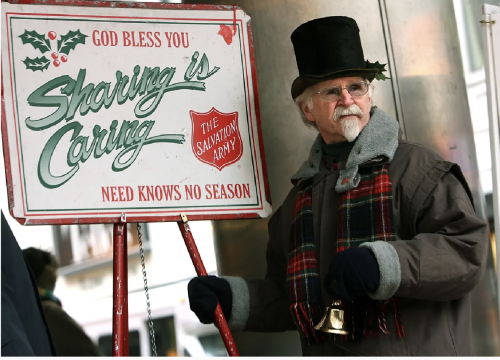
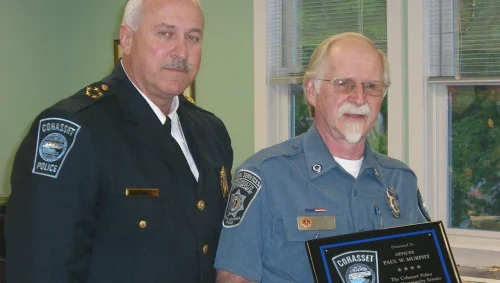
EVERY DECEMBER, outside a busy Stop & Shop in Weymouth, Massachusetts, shoppers encounter a man who looks as if he stepped cleanly out of a Charles Dickens novel. Donning a century-old Lampson & Davis top hat, a carefully preserved 1940s trench coat, and a snowy white beard, Paul Murphy rings a brass bell for the Salvation Army.
To the holiday shoppers rushing past, he is a cheerful local fixture. But to the animal welfare community of New England and beyond, Murphy is something far more profound: a pioneer who spent decades transforming the rough-and-tumble trade of “dog catching” into a highly respected, deeply empathetic profession.
Now in his 80s, the semi-retired Animal Control Officer for Cohasset and Norwell leaves behind a legacy that permanently altered how Massachusetts protects its most vulnerable creatures.
From Roxbury to the South Shore
Long before he was a national authority on animal welfare, Murphy was just a kid growing up in Roxbury, finding refuge in local community centers and later serving his country in the military. When he finally stepped into the role of an Animal Control Officer (ACO) on the South Shore, the landscape of animal enforcement was radically different than it is today.
In the late 20th century, the job was frequently viewed as purely punitive—focused on rounding up nuisances rather than safeguarding animal lives.
Murphy saw a different path. He understood that animal control was a vital arm of public health, community safety, and compassion.
To elevate the profession, Murphy joined forces with a handful of visionary peers to found the Animal Control Officers Association of Massachusetts (ACOAM).
The goal was simple but revolutionary: standardize training, advocate for stricter animal cruelty laws, and foster a network of professional education.
Decades later, his impact is crystallized in the association’s annual Paul Murphy Golden Bone Award, given to officers who go above and beyond the call of duty—a testament to the gold standard Murphy himself set.
All in a Nickname
Having worked side-by-side with Paul for years, I can tell you firsthand that our friendship was instantaneous.
But to understand the true dynamic of our bond, you have to look back to an early trip we took together for a Humane Society of the United States (HSUS) conference in San Diego.
Following a grueling, long day of dense presentations and professional meetings, Paul and I decided we needed to let off some steam. We headed out on the town, sharing laughs, enjoying a few adult beverages, and engaging in some classic post-conference shenanigans.
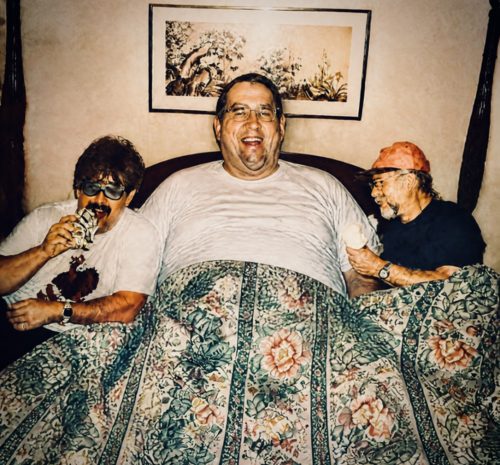
Before the sun rose, we had a picked up a third man to our pack—a 6’9″, 375-pound giant named Craig Segar, who oversaw major cruelty and abuse investigations for the Connecticut Humane Society throughout the 1980s and 90s. The moment the three of us locked into step, it was as if we were long-lost brothers.
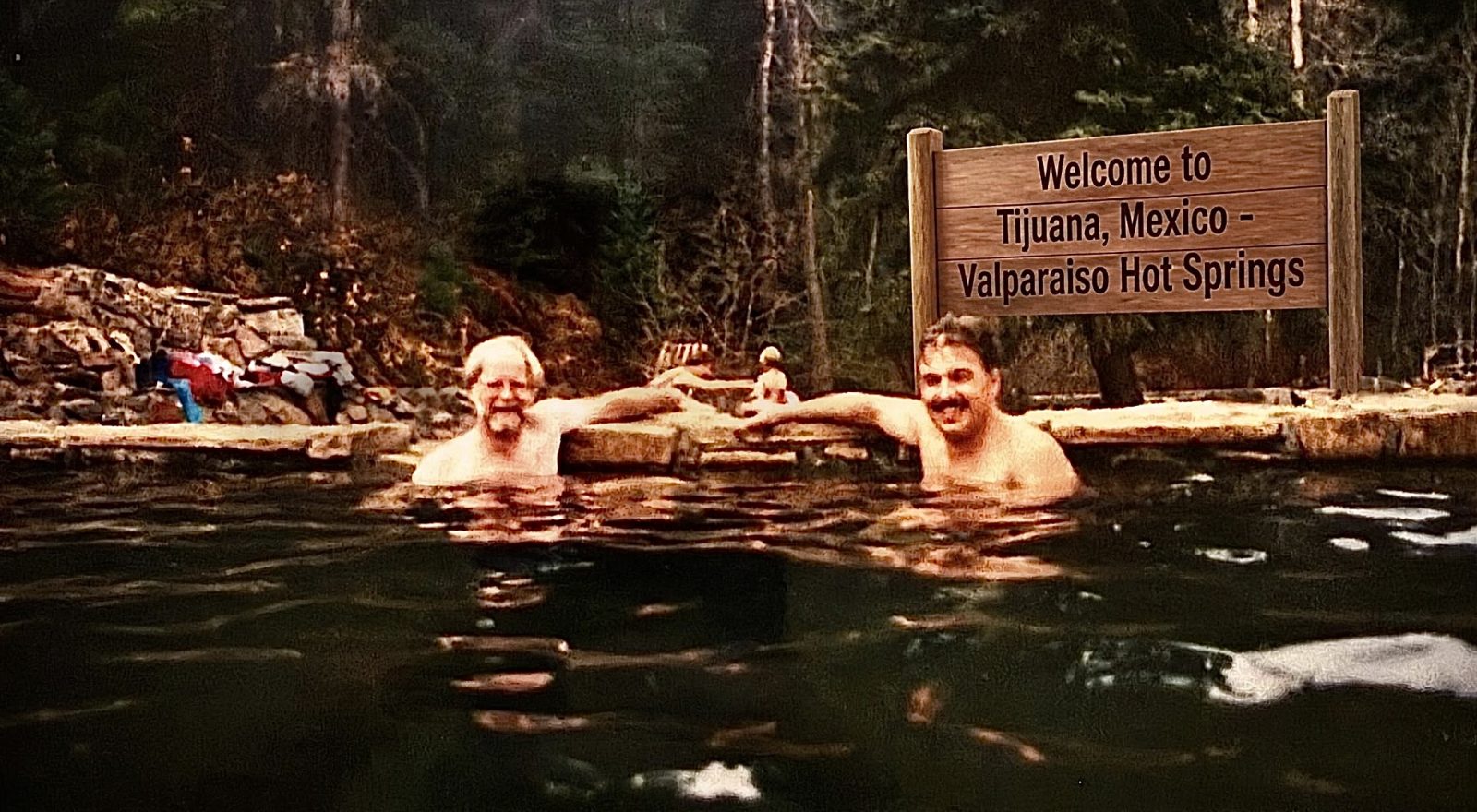
While the strict rules of journalistic discretion dictate that certain details of that evening remain off the record, the night eventually pulled our trio right over the border into Tijuana. But it wasn’t just a social visit. While unwinding after the conference, we had received some critical inside intel: endangered elephants were allegedly being slaughtered, and their parts were being illegally sold on the black market in Mexico, with one of the hot spots located right over the border.
Unable to just sit on that information, the three of us—all official HSUS enforcement and control officers—decided to poke around and see what we could find out. Once over the border, the locals were tight-lipped, offering little information.
Determined to investigate, we were driving down a pitch-black road outside a known black-market activity area when our headlights caught something on the shoulder. It was a dog, lying completely still on the side of the road. It appeared to be dead, its fur heavily drenched in what looked like thick motor oil.
Pulling over immediately, we jumped out of the car to see if we could help. To our shock, the canine was still breathing.
Suddenly, the darkness around us shifted. A group of a dozen or so local men emerged from the surrounding houses and alleyways, closing in on our position.
Standing our ground as HSUS authorities, we waited as one of the men walked over to confront us. After a tense back-and-forth conversation that was nothing short of a verbal tennis match I finally broke serve with their leader and the man’s demeanor softened. He shook hands with me, swearing that he loved his dog and agreed to provide better treatment for the animal.
As soon as the handshake broke, Murph looked over at me, his whimsical voice slicing through the thick tension of the night: “Frank, I think it’s a good idea we get the heck out of here now.”
We moved quickly. Amidst the blur of the early morning hours, we eventually made our way to a late-night Tijuana watering hole to regroup, which is precisely where Craig temporarily got separated from Murph and me. That was when a crew of thirty bikers rumbled up, parking a wall of decked-out Harley-Davidsons right outside.
Just as it felt like the night was about to take another highly unpredictable and potentially dangerous turn, Craig came bursting out of the bar. With total authority, he flashed his gold HSUS badge.
Remarkably, the entire biker pack yielded in absolute respect to the shield. Instead of trouble, the gesture bought us a legendary escort, ensuring that we were granted entirely safe passage back onto American soil and straight to our San Diego hotel.
By the following morning, every single attendee at the HSUS conference—alongside what felt like half the population of the city of San Diego out that night—affectionately knew Paul, Craig and me by a new set of monikers: “Guido 1”; “Guido 2” and “Big Craig”.
The nicknames stuck hard. To this very day, whenever Paul and I speak, those are the names we still call each other—a lasting badge of a night of wild laughter, a legendary trio, and a friendship that could never be broken.
A Lifetime of Heavy Lifting
To speak only of Murphy’s work with animals, however, is to miss the full, staggering scale of the man.
Around Hingham and the broader South Shore, Murphy is legendary not just for his empathy, but for a brand of neighborly altruism and almost mythical physical grit that feels like it belongs to a bygone era.
For years, summers for Murphy meant volunteering at the South Shore Music Circus.
He didn’t just show up for shifts; he practically lived the assignment, parking his camper right next to the stage -despite only living a couple of miles down the road- and sleeping on the grounds all summer long to personally oversee security and the grounds crew. When he wasn’t managing venues, he was covered in sawdust.
A master carpenter, Murphy’s hands have built countless decks, closets, and stairways for friends, family, and anyone who mentioned they needed a repair.
His carpentry projects often knew no geographic bounds when it came to helping those he cared about. Murphy once packed up his tools and drove all the way up to Biddeford, Maine, solely to build a brand-new deck for my mother, Mildred.
True to form, he stayed right there with her until the final board was securely in place, completely seeing the job through to its completion.
The two of them hit it off so famously during his stay that I couldn’t help but jokingly kid them both, asking if I was ultimately going to end up with a brand-new step-father.
That urge to protect extends deeply into civic life. Murphy is a fierce advocate for local fire and police departments, though his support bypasses simple financial check-writing. Instead, he donates his muscle and time, showing up to build, paint, or fix whatever the local stations need.
The same goes for the area’s vulnerable populations; soup kitchens and homeless shelters know him by name. If there is a holiday on the calendar, Murphy is guaranteed to be found handing out hot meals or sorting mountains of clothing donations.
At his home in Hingham, the doors are famously unlocked for the weary. Over the decades, Murphy has routinely lent out spare rooms and extra beds to people enduring hard times, providing a safe harbor to help neighbors get back on their feet.
Among those who found a welcoming home under his roof was my own son, Matt, now the publisher of BostonMan Magazine. When Matt first relocated from Connecticut to Massachusetts, he stayed with Paul in Hingham for a full year.
At the time, Matt was working as the Boston area district manager for American Eagle Outfitters, a role that required him to constantly wear and rotate through the brand’s latest, greatest, and most fashionable styles.
When Matt finally moved out into his own apartment, he left behind a massive treasure trove of top-tier American Eagle clothing he no longer needed.
True to form, Paul didn’t let a single thread go to waste. He orchestrated a massive donation effort, shipping the entire haul of premium apparel to impoverished communities in South America.
The impact was so profound that Paul eventually received personal letters of praise and deep gratitude from civic leaders in Guatemala and Peru. They marveled that their local citizens were suddenly sporting some of the finest, trendiest styles that had yet to even officially work their way down into those cultures.
Murphy’s Animal Kingdom
To truly understand Paul Murphy, one must realize that his protective instinct extends far beyond people and traditional house pets like dogs and cats.
He is a profound lover of all living, breathing things. Recognizing a need to support the displaced wildlife of the South Shore, Murphy brilliantly combined his passion for carpentry with his devotion to animals, building a custom wildlife sanctuary right on his property in Hingham.
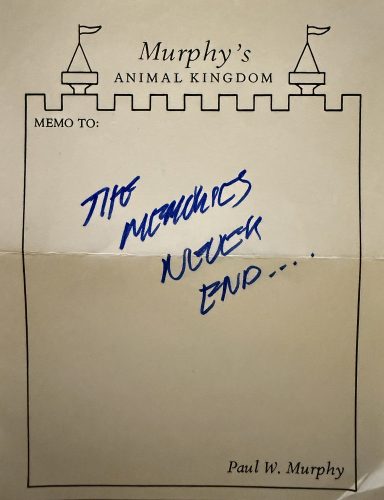
He aptly named the sanctuary “Murphy’s Animal Kingdom”—a much smaller, deeply personal tribute to the famous Disney World park in Orlando. Within this backyard haven, Murphy built specialized shelters designed for an assortment of birds, reptiles, and local wildlife.
The sanctuary operates on a beautiful philosophy: the animals are entirely free, able to come and go back into their natural habitats as they please. Yet, they always know that a safe retreat awaits them.
At Murphy’s Animal Kingdom, a nourishing meal, a few familiar friends, and a sturdy shelter from the New England elements are always readily available whenever they need them most.
But the sanctuary is only one piece of the wonderland Paul has constructed. Step onto his property, and you could easily be forgiven for thinking you had just stumbled upon a haul worthy of a Nicolas Cage-style National Treasure discovery mapped out on a weathered scroll.
Beyond his love for creatures, Murphy possesses an insatiable passion for the past. There is not an antique shop or junk store within a 100-mile radius of anywhere he has ever traveled that he has not thoroughly dissected and sorted through.
From rare paintings and vintage car parts to unique silverware, old pots, pans, furniture, obsolete electronic devices, classic records, and forgotten tools—if it holds even a hint of history and catches Murph’s eye, you can bet he is claiming it.
Once he acquires a rare find, it is immediately sent back to Hingham to become part of his ever-growing hoard.
Because of this, Murphy’s Animal Kingdom looks like an antique itself—the sort of whimsical, weathered creation you might find tucked away in the back lot of a historic curiosity shop.
Ultimately, walking through his house and yard is like stepping directly into a movie set: it is one part Indiana Jones, one part National Treasure, and one part The Goonies.
Steel Grit and Heroic Bounds
Perhaps nothing defines Murphy more than his absolute, ironclad rule: Always finish the job. It is a mantra he has lived out through circumstances that would leave normal men sidelined.
Take his carpentry years, when a workplace accident saw a co-worker accidentally fire a high-powered nail gun directly into Murphy’s eye. With the heavy nail fully lodged in his face, Murphy refused to drop his tools. He finished the entire day’s work before finally walking into the hospital to have the nail—and ultimately the eye—permanently removed.
After temporarily donning a pirate’s patch over his socket Murph eventually opted for a custom glass eyeball to be surgically implanted into his face. Today, he proudly sports the glass eye as a badge of unbelievable stoicism.
Then there are the children, for whom Murphy will do absolutely anything. In his semi-retirement, he stepped up to serve as a school crossing guard, ensuring local kids made it across busy intersections safely. One morning, a speeding vehicle blew past the stop signals, barreling directly toward a group of crossing children. Without a second thought, Murphy threw his own body in front of the car.
The vehicle struck Murphy, running him over in full view of the intersection.
Remarkably—and entirely true to form—Murphy pulled himself up off the asphalt, dusted himself off, and finished out the remainder of his morning shift to ensure every last child made it to class. Only after the bells rang did he finally check into the hospital for X-rays. Thanks to his split-second shield, not a single child was scratched.
Yet the true measure of Murphy’s character came afterward in the courtroom. When the driver stood trial, Murphy stubbornly stuck to his personal code of silence, flatly refusing to testify against the man. Instead, he made a direct suggestion to the court that jail time was entirely unnecessary.
The driver, who was nearly 90 years old, had simply made a terrible mistake. Thanks to Murphy’s plea for mercy, the elderly driver was spared any time behind bars or severe punishment. He simply lost his license and was ordered by the court to stay away from school zones.
The True Test: New Orleans
It was this exact blend of unflinching endurance and fierce protectiveness that made Murphy the perfect choice when national crises called. His local reputation as an immovable force of good was forged into history in late August 2005.
When Hurricane Katrina breached the levees of New Orleans, it triggered one of the worst companion-animal disasters in American history. Thousands of families were forced to evacuate, often ordered at gunpoint to leave their pets behind.
Recognized as a prominent authority in the field, Murphy was dispatched to the disaster zone by the Humane Society. For two weeks, amid toxic floodwaters, staggering heat, and total infrastructure collapse, Murphy oversaw harrowing rescue operations. He navigated ruined neighborhoods to rescue stranded dogs from rooftops, pull cats from flooded attics, and manage the overwhelming influx of displaced, traumatized animals.
“Right in the middle of all that destruction,” Murphy recalls. “It was the shared humanity of rescuers and volunteers that kept me going.”
The experience solidified his status as a national figure in disaster animal management.
Bury Me Under the Flag
This past August, Murphy celebrated his 88th birthday. With that milestone, the man who has spent a lifetime rescuing others has begun to look at his own mortality just a little bit.
With no children of his own, he now splits his time traveling back and forth between his roots on the South Shore and the warmth of Arizona.
A few years ago, he reached an agreement with his nephew to take over as the primary caretaker of his house and estate in Hingham.
But the passing of the torch came with one very clear, non-negotiable stipulation from the old soldier:
“When the good Lord finally calls my name, I want to be buried underneath the flagpole in my yard.”
As a proud military veteran, the request is deeply meaningful. His home and yard have served as a sanctuary for decades, extending radical generosity, commitment, and love to his beloved community.
It is only fitting that his final resting spot be right where he offered a lending hand and a home to countless humans and animals alike. In a sense, being laid to rest beneath that flagpole ensures a beautiful continuation of his life’s work—allowing Murph to forever look over, and look after, the world he built.
An Unofficial Desk and a Century-Old Hat
Though officially retired from active field duty, Murphy’s bond with the South Shore remains unbroken. For years, he continued to work the front desk at the Cohasset Police Department, stepping in to handle phones and logistics just to give the younger officers a well-deserved break.
When December rolls around, his focus shifts back to that Weymouth kettle. For Murphy, standing in the freezing New England air ringing a bell isn’t a chore; it’s a way to pay back the community organizations that supported him during his Roxbury youth and fed his rescue teams in the ruins of New Orleans.
“I offered to give them my time,” Murphy said of his volunteering. “But they’ve given me so much more.”
In a world that can often feel increasingly fractured, Paul Murphy’s life stands as a blueprint for a life well-lived: one dedicated entirely to protecting those who cannot speak for themselves.
__________________
SIDEBAR: ‘The Memories Never End’
_______
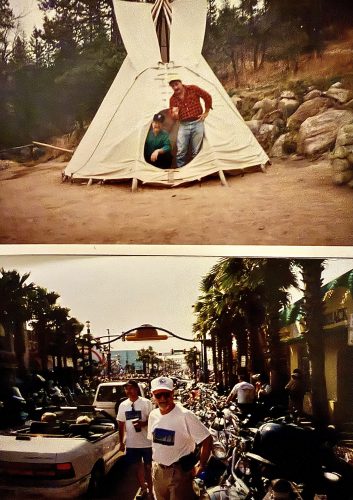
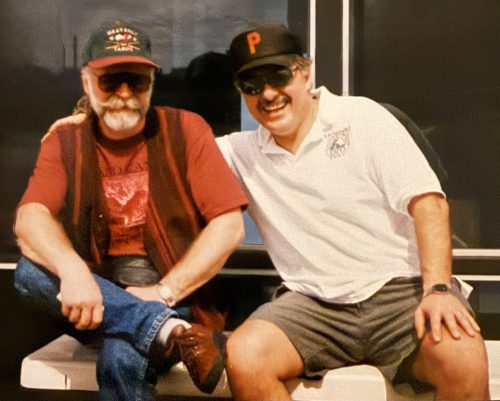
Guido 1 and I live by an old adage: “We can’t tell all of the stories, but we can share some of them..”
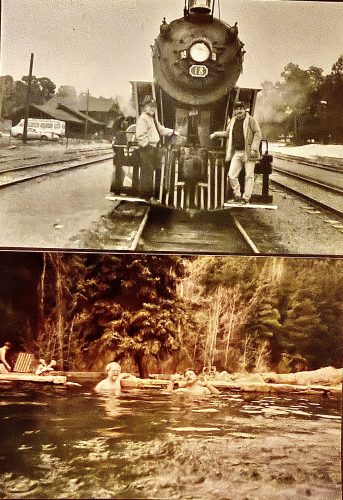
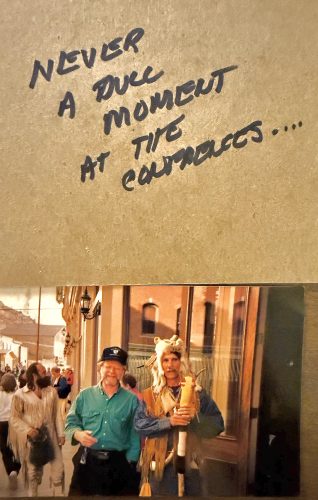
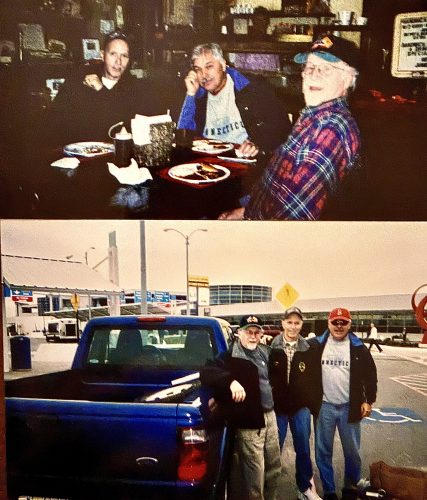
And then there is another old adage, one a little more common, that says: “Sometimes a picture is worth more than a thousand words.”
With that I’ll leave you with some pictures that perhaps tell a few more of the stories I wasn’t quite ready to put into words yet. But then again, anytime Paul Murphy and I are in the same room together, you’re sure to get these and a whole lot more.
It’s been an honor to be your co-pilot all of these years Guido 1. Thank you for taking me under your wing and showing me the way. You truly are The Guardian of the Strays.
_____
_____
_____
____
_____
____
_____
